
Sun Feb 22 09:48:53 UTC 2026: ### Modi Inaugurates Delhi-Meerut RRTS, Boosting Regional Connectivity
The Story:
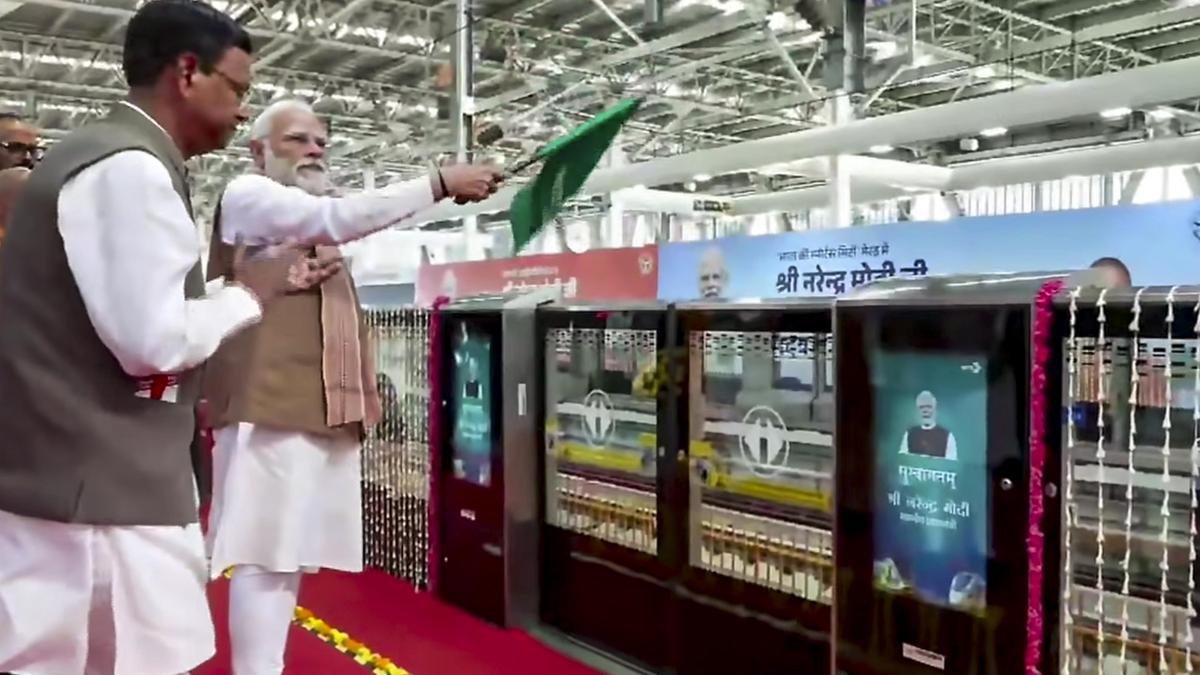
On February 22, 2026, Prime Minister Narendra Modi flagged off the Namo Bharat train and Meerut Metro services from Shatabdi Nagar station in Meerut, Uttar Pradesh. The inauguration marks the completion of the 82 km Delhi-Meerut Namo Bharat corridor and the operationalization of the Meerut Metro. Modi also inaugurated and dedicated various development projects worth around ₹12,930 crore in Meerut. The new infrastructure aims to provide high-speed intercity travel and swift intra-city movement, significantly reducing travel times and decongesting road traffic.
Key Points:
- February 22, 2026: PM Modi inaugurated the Meerut Metro and Namo Bharat train services.
- The entire 82 Km Delhi-Meerut Namo Bharat corridor is now operational.
- The Namo Bharat train has a design speed of 180 km per hour.
- The Meerut Metro will operate on the same infrastructure as Namo Bharat, with a maximum operational speed of around 120 kmph.
- The inauguration included development projects worth around ₹12,930 crore in Meerut.
- Sarai Kale Khan station is a major multi-modal hub connecting railway, metro, ISBT, and the ring road.
Critical Analysis:
The inauguration occurred on a day filled with PM Modi addressing various topics, including digital scams, political criticism, and tributes to Jayalalithaa. This suggests a strategic deployment of the Prime Minister’s time, using infrastructure projects to bolster his public image and highlight the government’s development initiatives alongside addressing contemporary issues.
Key Takeaways:
- The Delhi-Meerut RRTS aims to revolutionize regional connectivity in the National Capital Region (NCR).
- The integration of Namo Bharat and Meerut Metro on the same infrastructure is a novel approach to urban and regional transit.
- The project is expected to significantly reduce travel times and vehicular emissions.
- The inauguration serves as a visible demonstration of the government’s commitment to infrastructure development and improving the ease of living for citizens.
Impact Analysis:
The operationalization of the Delhi-Meerut RRTS and Meerut Metro is expected to have a significant long-term impact on the region. It will facilitate faster and more efficient commutes, boosting economic activity and property values along the corridor. The reduction in road traffic will contribute to improved air quality and a lower carbon footprint. This project sets a precedent for future integrated urban and regional transit systems in India, promoting sustainable and efficient transportation solutions nationwide.
 First Piper