
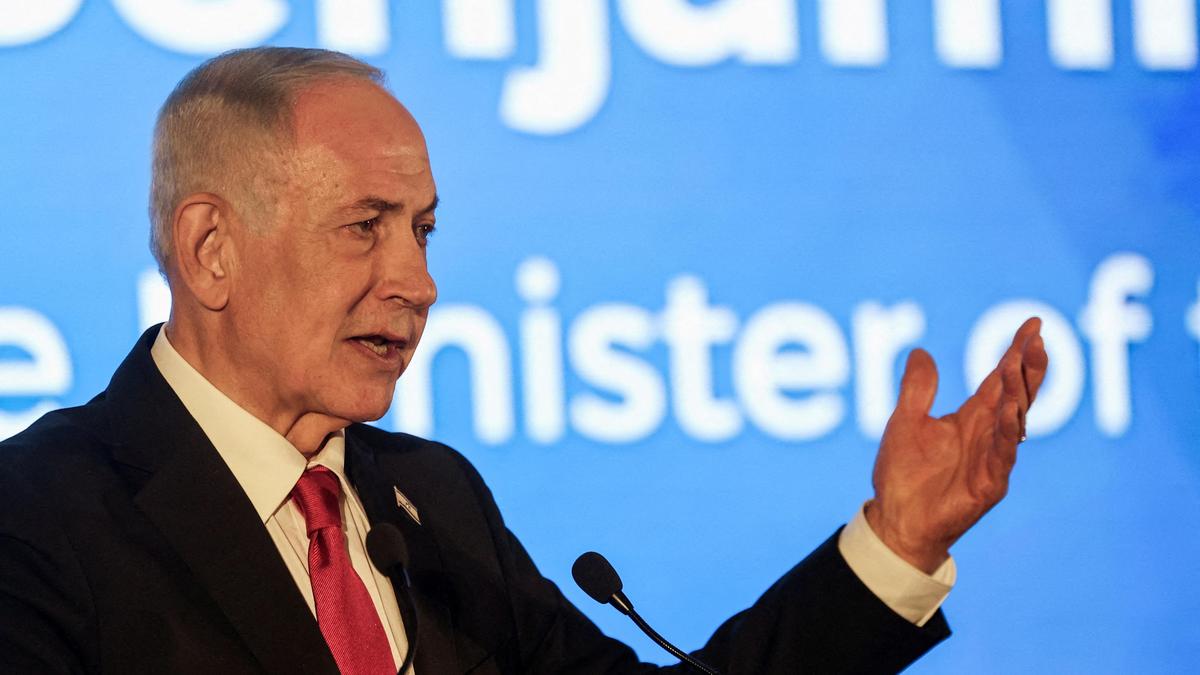
Sun Feb 15 22:42:09 UTC 2026: Headline: Netanyahu Demands Full Nuclear Dismantlement from Iran as U.S. Prepares for Potential Military Action
The Story:
In a statement delivered on February 15, 2026, Israeli Prime Minister Benjamin Netanyahu declared to the Conference of Presidents of Major American Jewish Organizations that any U.S. deal with Iran must necessitate the complete dismantling of Iran’s nuclear infrastructure, exceeding a mere halt to enrichment. This declaration coincides with the resumption of U.S.-Iran negotiations aimed at resolving their long-standing dispute over Tehran’s nuclear program. Simultaneously, the U.S. is bolstering its military presence in the region, signaling readiness for a potential military campaign should diplomatic efforts fail. Netanyahu also outlined plans to phase out U.S. military aid to Israel within the next 10 years, transitioning towards a partnership based on a thriving Israeli economy.
Key Points:
- Netanyahu insists on dismantling Iran’s nuclear infrastructure, not just halting enrichment.
- A second round of U.S.-Iran talks is scheduled for this week (February 17-21, 2026).
- The U.S. has deployed a second aircraft carrier to the region, preparing for potential military action.
- Netanyahu aims to end U.S. military aid to Israel within 10 years, starting after the current deal expires in 2028.
- Israel has reportedly dismantled 150 km of an estimated 500 km of tunnels in Gaza.
Critical Analysis:
The events are unfolding in a predictable pattern. Israel, under Netanyahu, has consistently advocated for a hard-line stance against Iran’s nuclear ambitions. The U.S. deployment of military assets serves as both a deterrent and a pressure tactic during negotiations. The timing of Netanyahu’s announcement, coinciding with the renewed talks and the U.S. military build-up, indicates a coordinated effort to exert maximum leverage on Iran.
Key Takeaways:
- The U.S.-Iran nuclear talks remain highly precarious, with significant obstacles to reaching an agreement.
- Israel is strategically positioning itself to influence the terms of any potential U.S.-Iran deal.
- The possibility of military confrontation in the region remains a credible threat.
- Israel’s long-term goal is to achieve economic independence and transition from aid recipient to strategic partner with the U.S.
- The Gaza tunnel situation remains a pressing security concern for Israel.
Impact Analysis:
The failure of the U.S.-Iran talks could trigger a significant escalation of tensions in the Middle East, potentially leading to military conflict. A successful deal, on the other hand, could reshape regional dynamics and create new opportunities for economic cooperation. Israel’s move towards economic independence from U.S. aid could alter the nature of the U.S.-Israel alliance in the long term, potentially leading to a more balanced partnership. The ongoing situation in Gaza continues to be a destabilizing factor.
 First Piper