
Fri Feb 20 04:29:37 UTC 2026: # NASA Successfully Rehearses SLS Rocket Launch, Eyes Firm Date for Artemis 2
The Story:
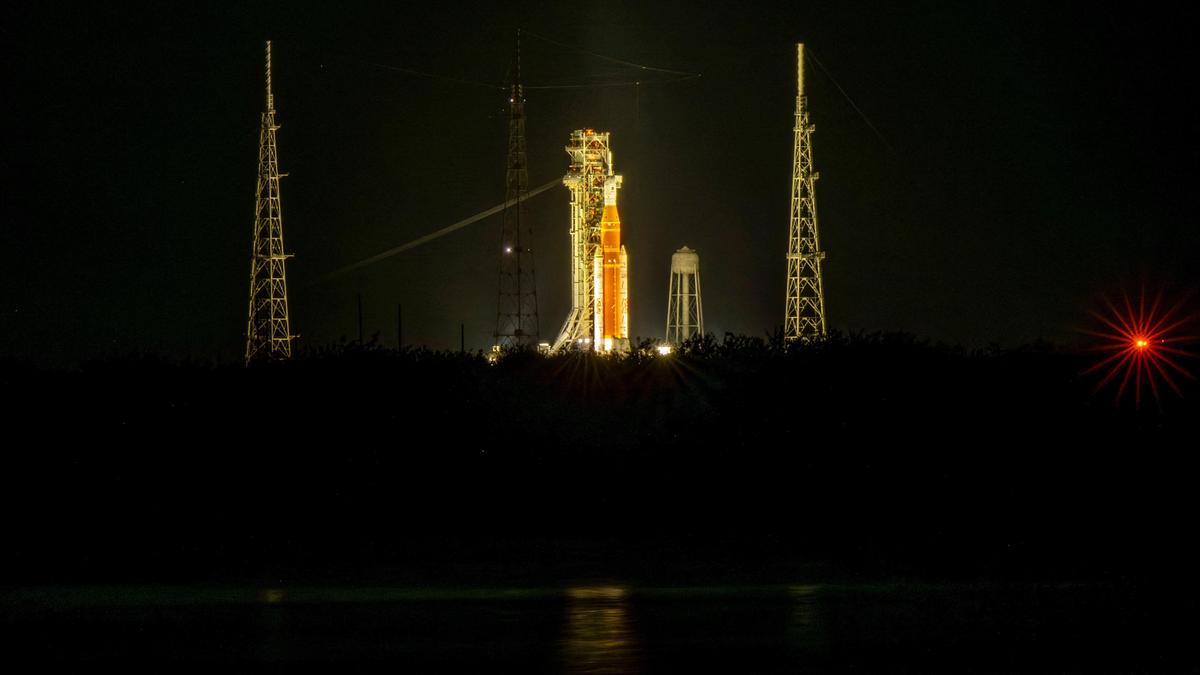
NASA announced on February 19, 2026, the successful completion of a wet dress rehearsal for its Space Launch System (SLS) rocket, intended to send astronauts around the Moon as part of the Artemis 2 mission. This follows a previous attempt in early February 2026 that was cut short due to technical problems, including a liquid hydrogen leak. The successful rehearsal, concluding at “T-29 seconds” in the countdown, paves the way for NASA to potentially set a firm launch date.
Key Points:
- NASA successfully rehearsed the launch of the SLS rocket on February 19, 2026.
- The wet dress rehearsal, conducted at Cape Canaveral, Florida, simulates real launch conditions.
- A previous rehearsal attempt in early February 2026 was hampered by technical issues.
- The Artemis 2 mission aims to send three Americans and one Canadian around the Moon.
- NASA is expected to brief the media on February 20, 2026.
Critical Analysis:
The historical context indicates a pattern of technical difficulties and delays surrounding the Artemis program. The initial failed wet dress rehearsal in early February, followed by the articles from February 21, 2026, explicitly stating that a March launch is ruled out due to technical issues, paints a picture of a program struggling to meet deadlines despite the successful rehearsal announced in the primary article. The article “Beyond the hardware: How a ‘toxic’ culture at NASA and Boeing stranded two astronauts” suggests that the problems may run deeper than just hardware malfunctions.
Key Takeaways:
- The Artemis 2 mission faces significant technical challenges, as evidenced by the initial failed rehearsal and subsequent delays.
- Despite the successful rehearsal, a March launch is unlikely, suggesting that unresolved issues remain.
- The program’s success hinges not only on technological advancements but also on addressing potential cultural or organizational issues within NASA and its partners.
- Transparency and realistic scheduling are crucial for maintaining public trust and managing expectations surrounding the Artemis program.
- The successful completion of the wet dress rehearsal is a positive step, but further scrutiny is needed to ensure the overall readiness of the mission.
Impact Analysis:
The Artemis program represents a significant investment in space exploration and has the potential to revitalize public interest in space travel. However, repeated delays and technical setbacks could erode public confidence and jeopardize future funding for NASA and related projects. Successfully addressing the technical and cultural challenges facing the program is essential for realizing its long-term goals and securing its place in the history of space exploration. The mission’s success is pivotal for establishing a sustainable lunar presence and paving the way for future crewed missions to Mars.
 First Piper