
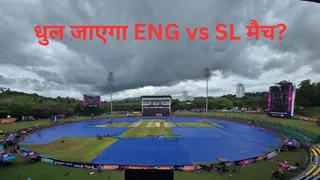
Sun Feb 22 12:10:00 UTC 2026: ### Rain Threatens England vs. Sri Lanka T20 World Cup Super-8 Clash
The Story:
A crucial Super-8 match in the 2026 T20 World Cup between England and Sri Lanka is under threat due to a high probability of heavy rainfall in Pallekele, Sri Lanka. This follows a washout of the Pakistan vs. New Zealand match in Colombo, raising concerns about the tournament schedule. The weather forecast predicts approximately three hours of heavy rain during the day, potentially impacting the match scheduled to begin at 3:00 PM. With no reserve day for Super-8 matches, a washout would result in both teams sharing a point, further tightening the competition in the group.
Key Points:
- The England vs. Sri Lanka T20 World Cup Super-8 match in Pallekele faces a significant risk of being affected by heavy rain.
- The weather forecast predicts at least three hours of heavy rainfall during the day in Pallekele.
- There is no reserve day for Super-8 matches; a washout would result in a shared point.
- England seeks to replicate their pre-tournament T20 series win against Sri Lanka.
- Both teams plan to leverage spin bowling, with key bowlers like Mahesh Theekshana (Sri Lanka) and Adil Rashid (England) expected to play crucial roles.
- A washout would leave all four teams in the group (England, Sri Lanka, Pakistan, and New Zealand) tied on points, increasing the pressure on remaining matches.
Critical Analysis:
The context of “El Nino is brewing” and “NOAA issues updated spring weather outlook” suggests that the weather disturbances affecting the T20 World Cup are part of a broader pattern of unusual or severe weather conditions. This makes it harder to plan outdoor events, and the lack of reserve days for the Super-8 stage appears to be a significant oversight, potentially skewing the tournament’s outcome due to uncontrollable weather factors.
Key Takeaways:
- Adverse weather conditions are posing a serious challenge to the 2026 T20 World Cup.
- The absence of reserve days for Super-8 matches increases the risk of matches being abandoned and impacting team standings.
- Teams must now prioritize not only winning their remaining matches but also focusing on net run rate due to the possibility of multiple teams finishing with the same number of points.
- Climate patterns and long-range weather forecasting should be considered in scheduling future tournaments to mitigate weather-related disruptions.
- The reliance on weather forecasts highlights the increasing importance of meteorological data in sports planning and decision-making.
Impact Analysis:
The potential for multiple washouts in the Super-8 stage could significantly alter the dynamics of the tournament. Teams might adopt more aggressive strategies in their remaining matches to maximize their chances of victory and improve their net run rate. This could lead to more exciting, high-stakes encounters. Furthermore, the experience may prompt the International Cricket Council (ICC) to re-evaluate its scheduling policies, particularly the allocation of reserve days, for future major tournaments.
 First Piper