
Sun Feb 22 02:55:49 UTC 2026: ### Delhi-Meerut Connectivity Revolutionized as Namo Bharat and Meerut Metro Become Fully Operational
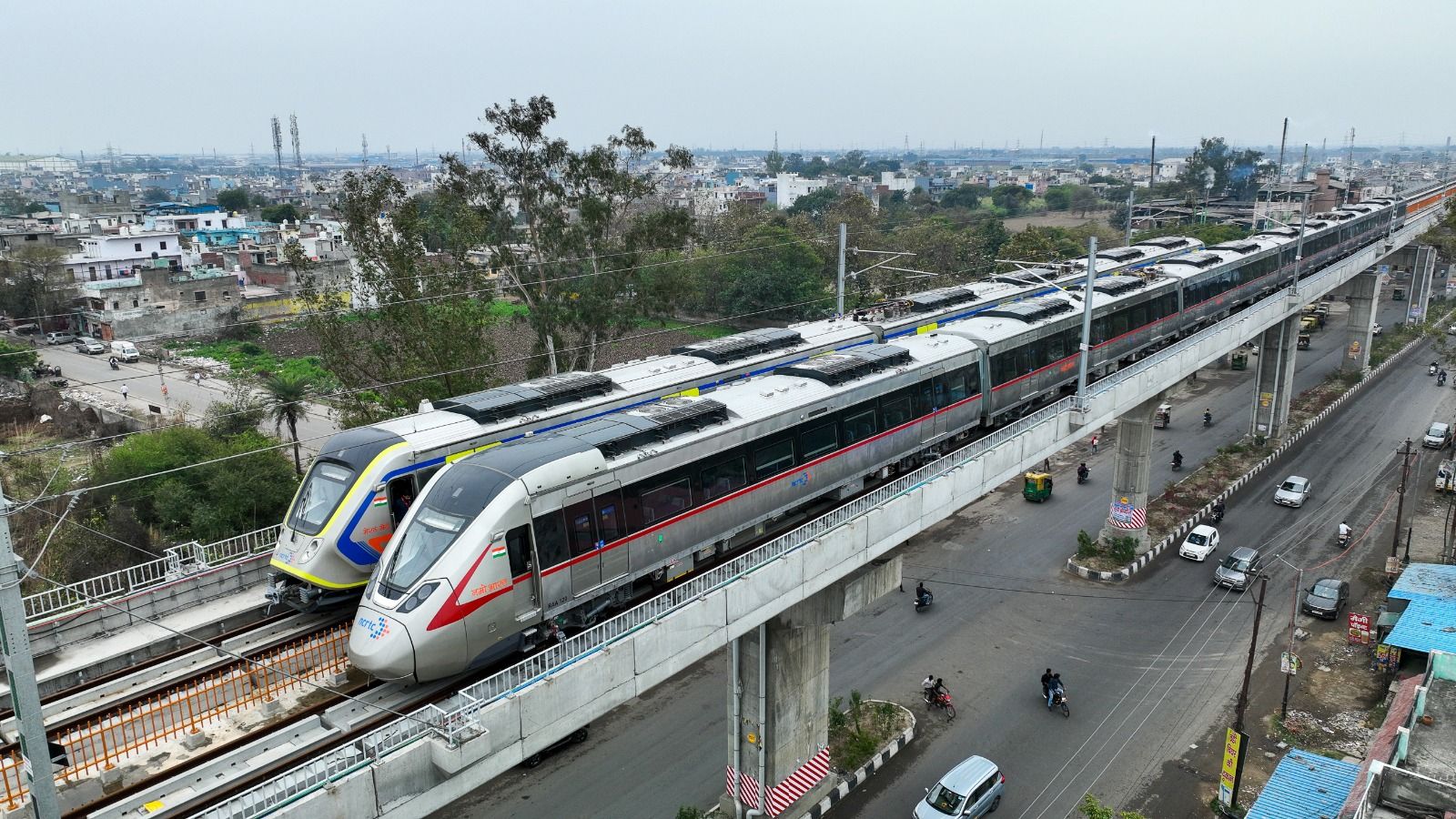
The Story: The full stretch of the Delhi-Ghaziabad-Meerut Namo Bharat corridor, alongside the Meerut Metro project, commenced operations today, February 22, 2026. The 82.15 km Namo Bharat corridor, India’s first Regional Rapid Transit System (RRTS), now connects Sarai Kale Khan in Delhi to Modipuram in Uttar Pradesh. Complementing this, the 23-km Meerut Metro line runs from Meerut South to the Modipuram Depot, promising enhanced intra-city connectivity.
The Namo Bharat train boasts a design speed of 180 kmph with a maximum operational speed of 160 kmph, while the Meerut Metro is designed for a top speed of 135 kmph and a maximum operational speed of 120 kmph, making it potentially the fastest metro system in the country.
Key Points:
- The 82.15 km Delhi-Ghaziabad-Meerut Namo Bharat corridor is now fully operational.
- The 23-km Meerut Metro line is also operational, connecting Meerut South to Modipuram Depot.
- Namo Bharat has a design speed of 180 kmph and an operational speed of 160 kmph.
- Meerut Metro is designed for a top speed of 135 kmph and an operational speed of 120 kmph.
- Namo Bharat will halt at 16 stations between Delhi and Meerut.
- Meerut Metro will halt at 13 stations.
- PM Modi flagged off the Meerut Metro and Namo Bharat train today.
Critical Analysis:
The flurry of news regarding the launch and commencement of operations of both the Namo Bharat and Meerut Metro on the same day, February 22, 2026, following closely on the heels of the announcement of the Panvel-Alipurduar Amrit Bharat Express, indicates a strategic push by the government to significantly enhance regional connectivity. The Prime Minister personally flagging off the projects underscores their national importance.
Key Takeaways:
- The launch of the Namo Bharat and Meerut Metro represents a major upgrade in regional transportation infrastructure.
- The focus on high-speed rail and metro systems suggests a commitment to reducing travel times and improving urban mobility.
- The simultaneous operationalization of these projects hints at a coordinated national strategy for infrastructure development.
- The Prime Minister’s direct involvement highlights the political significance of these projects.
Impact Analysis:
The operationalization of the Delhi-Meerut Namo Bharat and Meerut Metro is expected to have a significant long-term impact. The enhanced connectivity will likely boost economic activity in the region, facilitate easier commutes for residents, and reduce traffic congestion on existing roadways. The development could also spur real estate development along the corridor, leading to further urbanization. Furthermore, the success of these projects could serve as a model for similar regional rapid transit systems in other parts of India, thus transforming the nation’s transportation landscape.
 First Piper