
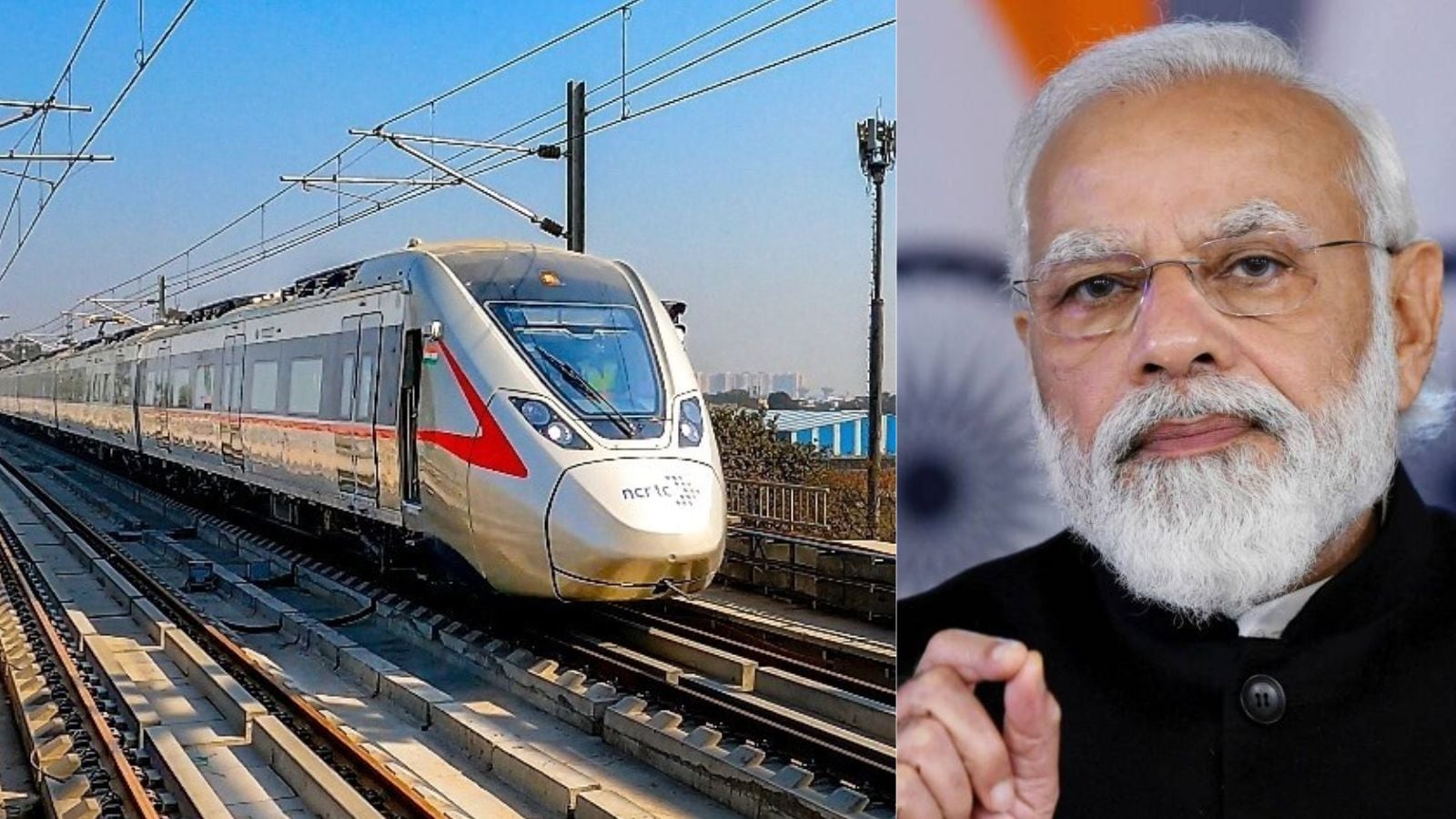
Sun Feb 22 08:10:34 UTC 2026: ### Namo Bharat Inaugurated: Cutting Delhi-Meerut Travel Time
The Story:
Prime Minister Narendra Modi inaugurated India’s first Regional Rapid Transit System (RRTS), dubbed “Namo Bharat,” on Sunday, significantly reducing travel time between Delhi and Meerut in Uttar Pradesh to under an hour. The 82-km Delhi-Meerut corridor, costing approximately Rs 30,000 crore, features 16 stations connecting key urban centers. Currently, 55 km of the corridor, specifically the stretches between New Ashok Nagar and Meerut South, and the new extensions of Sarai Kale Khan to New Ashok Nagar (5 km) and Meerut South to Modipuram (21 km), along with the 23-km Meerut Metro line, are open to the public.
Key Points:
- The Namo Bharat RRTS aims to facilitate commuting between Delhi and surrounding areas.
- The Delhi-Meerut corridor is the first of several planned RRTS lines within the National Capital Region (NCR).
- Future corridors, including Delhi-Karnal and a portion of Delhi-Alwar, are slated for approval within the current financial year.
- All corridors are planned to converge at Sarai Kale Khan station in Delhi, designed as a major multi-modal transport hub.
- The RRTS boasts a design speed of 180 kmph and an average speed of 90 kmph.
Critical Analysis:
The inauguration of the Namo Bharat RRTS represents a significant step towards addressing the growing challenges of urbanization and transportation in the National Capital Region. Given the historical context of planned reduction in travel time between Meerut and Delhi, it is evident that this project has been a long-term strategic initiative.
Key Takeaways:
- The Namo Bharat RRTS marks a significant infrastructure development aimed at improving connectivity and reducing travel time in the NCR.
- The project reflects a focus on integrated transport solutions with the Sarai Kale Khan station serving as a multi-modal hub.
- The planned expansion of the RRTS network suggests a long-term commitment to decongesting Delhi and promoting regional development.
- The project’s high speed capability is intended to reduce travel time.
- The project will allow people to live outside Delhi but commute to the national capital for work.
Impact Analysis:
The Delhi-Meerut RRTS is likely to have a substantial impact on the region’s economy and urban landscape. The reduced travel time will facilitate greater economic integration between Delhi and Meerut, potentially leading to increased investment and job creation in the latter. It will also enable people to live in more affordable areas outside Delhi while still maintaining access to employment opportunities in the capital. The development of multi-modal transport hubs will further enhance connectivity and promote sustainable urban development. Over the long term, the expansion of the RRTS network could reshape the NCR, fostering the growth of satellite cities and reducing pressure on Delhi’s infrastructure.
 First Piper