
Sun Feb 22 12:11:43 UTC 2026: # Modi Slams Congress Over “Shirtless” Protest at AI Summit, Citing “Dirty and Shameless” Politics
The Story:
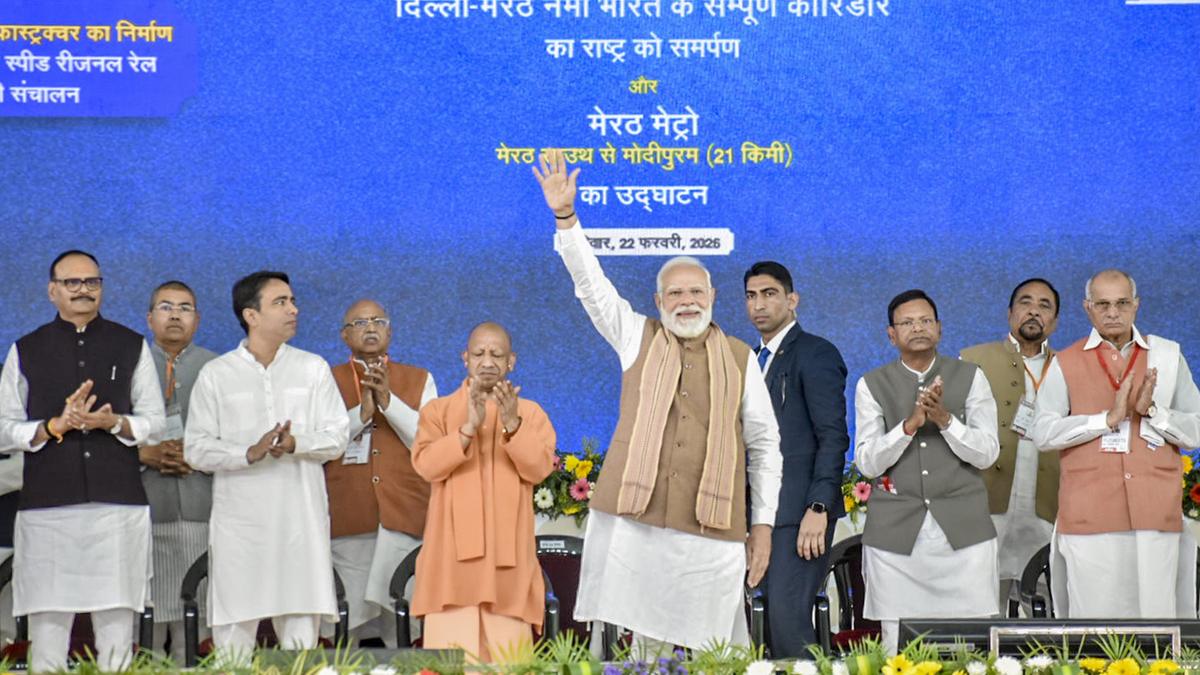
Prime Minister Narendra Modi strongly criticized the Congress party on February 22, 2026, for staging a “shirtless” protest during the Global Artificial Intelligence Summit in Delhi. Addressing a public gathering in Meerut after inaugurating development projects, including the Namo Bharat rail and Meerut Metro Rail extension, Modi accused Congress of turning an international event into an arena for “dirty and shameless” politics. He asserted that the party’s actions demonstrated ideological bankruptcy and impoverished political standing, drawing widespread criticism and damaging the nation’s reputation on the global stage.
Key Points:
- The protest occurred at the Global Artificial Intelligence Summit in Delhi, attended by representatives from over 80 countries and heads of state from around 20 nations.
- Prime Minister Modi used strong language, describing the Congress protest as “gandi aur nangi” (dirty and shameless).
- He thanked other opposition parties for criticizing the Congress’ actions, highlighting a sense of national unity in condemning the protest.
- Modi also criticized Congress for disrupting parliamentary proceedings, referencing a February 4, 2026 incident where women MPs approached the Prime Minister’s seat in Lok Sabha with banners.
- He emphasized that the AI Summit was a national event, not a BJP program, and that Congress’ actions were detrimental to the country’s image.
Key Takeaways:
- The incident reveals a highly polarized political climate in India, with deep animosity between the ruling BJP and the Congress party.
- The Prime Minister’s strong condemnation suggests the government views the protest as a significant affront to national pride and international relations.
- The event highlights the potential for domestic political tensions to spill over into international forums, impacting India’s global image.
- The criticism of Congress’ parliamentary conduct reinforces concerns about political gridlock and the functioning of democratic institutions.
 First Piper