
Sun Feb 22 01:15:25 UTC 2026: ### Headline: U.S. Supreme Court Limits Presidential Tariff Power, Drawing Parallels with Indian Judicial Restraint
The Story:
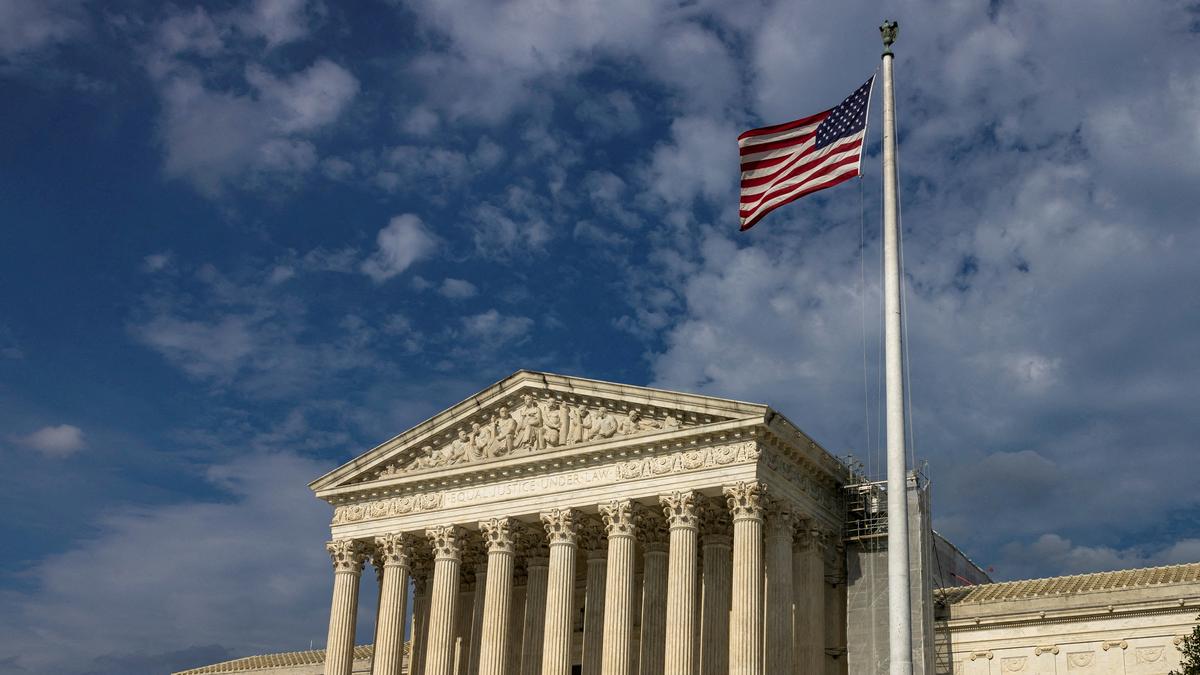
In a 6:3 ruling, the U.S. Supreme Court declared that President Donald Trump overstepped his authority by unilaterally imposing unbounded tariffs under the International Emergency Economic Powers Act (IEEPA) of 1977 during peacetime. The court’s decision, grounded in Article I, Section 8 of the Constitution, affirms Congress’s exclusive power to impose tariffs. Mr. Trump criticized the ruling as unpatriotic and influenced by foreign interests.
The ruling invokes the Major Questions Doctrine, stating Congress must specifically delegate consequential legislative powers to the Executive with strict limits. The article draws parallels between this ruling and the Indian Supreme Court’s stance on executive power, particularly concerning economic policy. While the Indian Supreme Court has shown deference in economic policy matters, it also maintains that executive actions must have a statutory foundation and cannot infringe on fundamental rights.
Key Points:
* The U.S. Supreme Court ruled against President Trump’s use of IEEPA to impose unlimited tariffs.
* The ruling was based on the constitutional principle that Congress holds the power to impose tariffs.
* The court invoked the Major Questions Doctrine, limiting the executive branch’s ability to assume significant powers without explicit congressional authorization.
* The article draws comparisons to the Indian Supreme Court’s approach to executive power, highlighting the principle that the executive must operate within statutory bounds.
* The Indian Supreme Court has shown deference to economic policy, but will intervene when fundamental rights are affected or executive actions are arbitrary.
* President Trump has criticized the Supreme Court and has stated that there would be no changes to the India-U.S. deal post court ruling.
Critical Analysis:
The historical context highlights a few key trends. First, the mention of an Indian-origin lawyer at the center of the verdict shows the increasing influence of Indian diaspora in the American legal system. Second, the mention of Netanyahu tightening alliances with allies, and calling India a gigantic power, shows the growing importance of India in global politics.
Key Takeaways:
- The U.S. Supreme Court’s decision reinforces the separation of powers principle in the U.S. government.
- The ruling underscores the importance of clear statutory authorization for executive actions, particularly those with significant economic consequences.
- The comparison with the Indian Supreme Court highlights the ongoing debate about the appropriate level of judicial review of executive actions, especially in the economic sphere.
- The ruling has the potential to impact future trade policy and the President’s ability to unilaterally impose tariffs.
- The President’s criticism of the Supreme Court raises concerns about the erosion of trust in democratic institutions.
Impact Analysis:
This ruling has significant long-term implications. It limits the president’s ability to use tariffs as a tool for economic policy and trade negotiations. This could reshape international trade relations and potentially lead to more predictable trade policies. Businesses and international partners can expect a more constrained presidential role in tariff implementation. The ruling could also encourage Congress to be more assertive in defining the scope of executive power in trade matters, potentially leading to new legislation clarifying the limits of presidential authority.
 First Piper