
Sun Feb 22 12:18:53 UTC 2026: ### Headline: NCR Rapid Rail Expansion Gains Momentum with New Corridors and Operational Extensions
The Story:
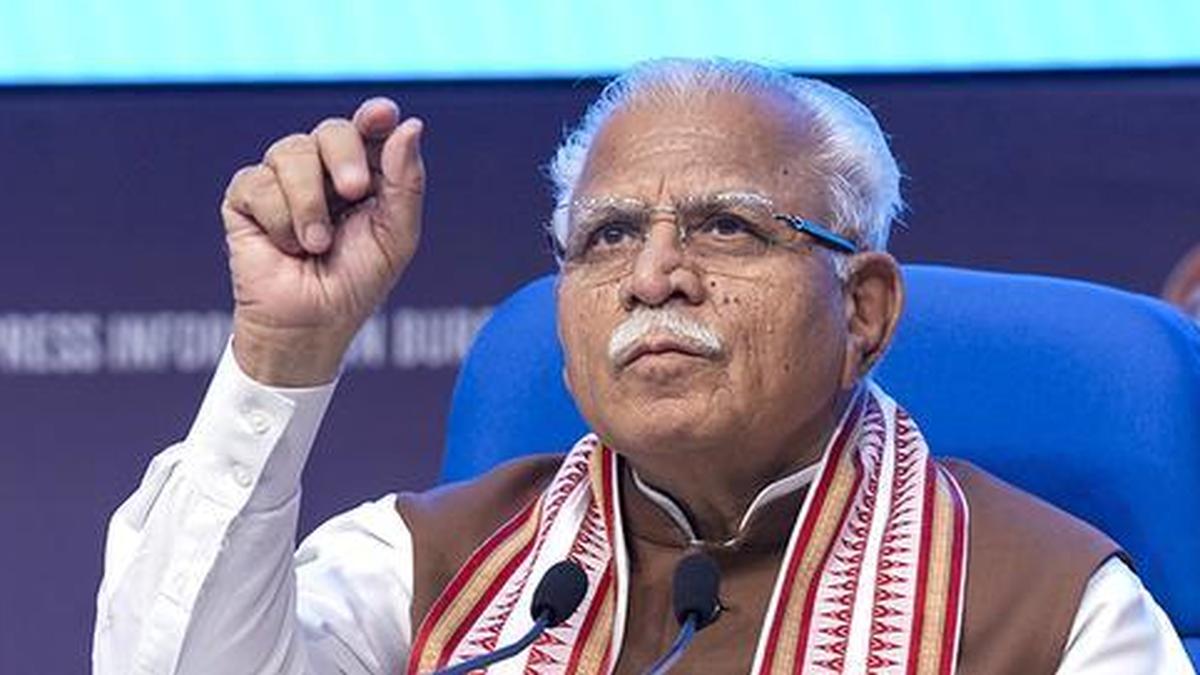
Union Housing and Urban Affairs Minister Manohar Lal Khattar announced on Sunday, February 22, 2026, the anticipated approval of two new rapid rail corridors originating from Sarai Kale Khan in Delhi. This announcement coincided with the inauguration of the Sarai Kale Khan station on the Delhi-Ghaziabad-Meerut Rapid Rail Transit System (RRTS). The proposed corridors aim to significantly enhance regional connectivity, reducing travel time between Delhi and neighboring states. The Namo Bharat services on the Delhi-Ghaziabad-Meerut corridor have also been extended on both ends, and Meerut Metro services will commence on the Meerut South-Modipuram section.
Key Points:
- Two new rapid rail corridors are proposed from Sarai Kale Khan: one to Karnal in Haryana (approx. 125-130 km, 1.5 hours travel time) and another to Babarpur (Haryana) and Neemrana (Rajasthan).
- The Sarai Kale Khan station was inaugurated virtually by Prime Minister Narendra Modi from Meerut.
- Rapid rail and metro expansion is considered essential due to Delhi’s growth as a major economic center.
- Transit-oriented development is emphasized, with housing and commercial spaces planned around stations.
- Operational metro networks now span over 1,100 km across 24 cities, compared to 248 km in 5 cities a little over a decade ago.
- Daily metro ridership in Delhi has risen to around 1.25 crore passengers.
- Namo Bharat services extended to New Ashok Nagar in Delhi and Modipuram in Uttar Pradesh.
- Meerut Metro services commencing on the Meerut South-Modipuram section.
Critical Analysis:
The expansion of rapid rail networks in the NCR is a strategic move to address the growing pressure on Delhi’s infrastructure due to its economic growth. The emphasis on transit-oriented development indicates a long-term vision to reduce dependence on road travel and distribute economic activity across the region. The concurrent developments in Mumbai’s suburban rail network expansion (Central Railway executes mega block at Thane for 15-coach EMU train expansion) and the advancement of the Mumbai-Ahmedabad bullet train project showcases a nationwide focus on improving rail infrastructure.
Key Takeaways:
- The Indian government is prioritizing the development of rapid rail infrastructure to improve connectivity and ease congestion in major urban centers.
- Transit-oriented development is becoming a key strategy for urban planning in India.
- The expansion of metro and rapid rail networks is seen as crucial for supporting economic growth and reducing reliance on road transport.
- The integration of rapid rail with metro services aims to provide seamless connectivity for commuters.
- The extension of existing services demonstrates a commitment to incremental improvements alongside large-scale projects.
Impact Analysis:
The expansion of the NCR rapid rail network is expected to have a significant long-term impact:
- Economic Growth: Improved connectivity will facilitate economic activity across the NCR, allowing businesses to expand and access a wider pool of talent.
- Reduced Congestion: Shifting commuters from road to rail will alleviate traffic congestion in Delhi and surrounding areas.
- Environmental Benefits: Reduced road traffic will lead to lower emissions and improved air quality.
- Regional Development: The rapid rail network will promote the development of satellite cities and towns in the NCR, easing the burden on Delhi’s infrastructure.
- Increased Property Values: Areas around rapid rail stations are likely to experience increased property values due to improved accessibility and connectivity.
 First Piper