
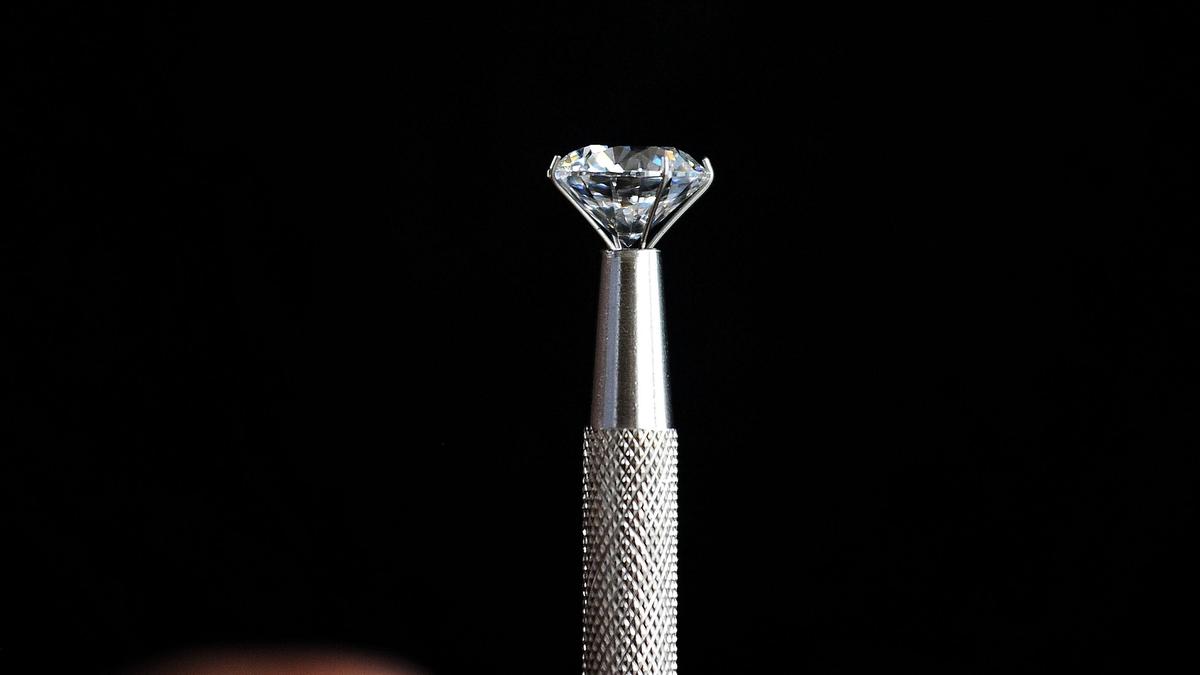
Tue Feb 10 04:49:14 UTC 2026: ### Lab-Grown Diamonds: India Reclaims its Place in the Global Diamond Industry
The Story: An article published in The Hindu February 15, 2026, explores the history of diamonds, from their origins in India to the development of lab-grown diamonds. It details the work of Howard Tracy Hall, who successfully created synthetic diamonds in 1955 while working for General Electric (GE). The article further highlights India’s resurgence as a major player in the lab-grown diamond industry, becoming a global powerhouse in its production.
Key Points:
- Diamonds were first discovered in India around 3,000 years ago, and the country maintained a monopoly on their supply for over a millennium.
- Howard Tracy Hall successfully synthesized diamonds in December 1955 after years of research at GE.
- Hall felt unappreciated by GE and left to become a professor at Brigham Young University, where he invented a new diamond-making apparatus.
- Hall co-founded MegaDiamond, which became a major competitor to GE in the lab-grown diamond industry.
- India is now emerging as a leading producer of lab-grown diamonds globally.
- The High-Pressure High-Temperature (HPHT) method remains the most common technique for creating synthetic diamonds.
Critical Analysis:
The article highlights a full circle moment. India once had complete control over the natural diamond market. Hall’s discovery shifted the industry by allowing diamonds to be manufactured outside of India. Now, India is scaling up to produce lab-grown diamonds.
Key Takeaways:
- The history of diamonds is deeply intertwined with India, which was the sole source of the precious stone for thousands of years.
- The development of lab-grown diamonds revolutionized the industry, offering an alternative to mined diamonds.
- India is strategically positioning itself as a major player in the growing lab-grown diamond market.
- The story of Howard Tracy Hall underscores the importance of individual innovation and the challenges of corporate recognition.
- The diamond industry continues to evolve with new technologies and shifting global dynamics.
Impact Analysis:
The resurgence of India in the lab-grown diamond market has significant implications. First, it could potentially disrupt the traditional diamond mining industry. Second, India’s growing role may lead to changes in pricing and availability, making diamonds more accessible. Lastly, it could stimulate further technological advancements in diamond synthesis and applications, impacting various sectors beyond jewelry, including electronics and medicine.
 First Piper