
Sun Feb 15 13:05:43 UTC 2026: ### Headline: Pakistan Elects to Field First Against India Amidst Lingering Tensions
The Story:
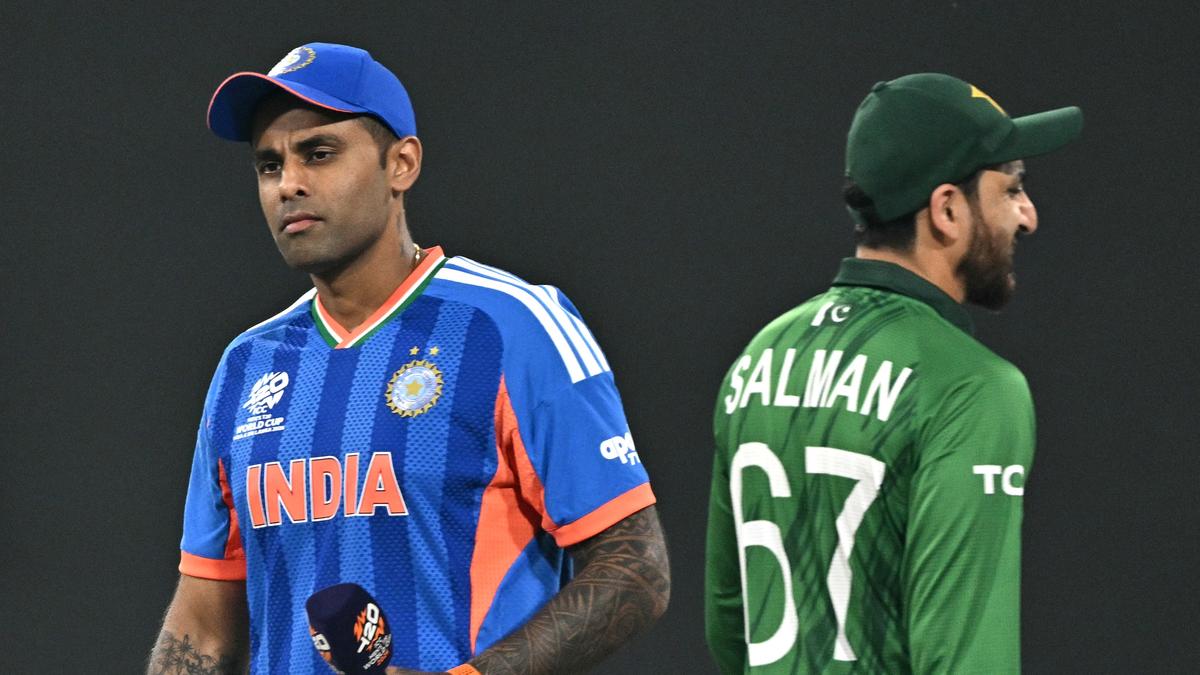
In Colombo on Sunday, February 15, 2026, Pakistan captain Salman Agha won the toss and chose to field first against India in their ICC Twenty20 World Cup Group A match. Indian captain Suryakumar Yadav announced two changes to his side, bringing in Abhishek Sharma and Kuldeep Yadav in place of Sanju Samson and Arshdeep Singh. Pakistan opted for an unchanged XI. Despite the on-field competition, tensions remain evident, with the Indian team continuing its policy of not shaking hands with their Pakistani counterparts before or after the game, a practice that began during the Asia Cup 2025.
Key Points:
- Pakistan won the toss and decided to field first.
- India made two changes to their playing XI: Abhishek Sharma and Kuldeep Yadav replacing Sanju Samson and Arshdeep Singh.
- Pakistan retained the same XI.
- India continues its “no-handshake” policy with Pakistan, established during the Asia Cup 2025.
- India holds a dominant T20I record against Pakistan, with 13 wins out of 16 matches. In T20 World Cups, India’s record against Pakistan is 7-1.
- There is a 13% chance of rain during the match.
Critical Analysis:
The decision by the Indian team to continue the “no-handshake” policy underscores the persistent political tensions between the two nations, despite the occasional sporting encounters. The context of PM Modi’s remarks about negotiating trade pacts “from a position of strength” and the restoration of investor confidence, suggest a broader strategy of asserting India’s dominance, which extends beyond economics and potentially influences diplomatic and even sporting interactions. Suryakumar Yadav’s dismissive remarks about Pakistani spinner Usman Tariq adds another layer of competitive rivalry and possibly a subtle assertion of superiority.
Key Takeaways:
- Sporting events between India and Pakistan are heavily influenced by the broader political climate.
- The “no-handshake” policy is a deliberate symbolic gesture, reflecting ongoing tensions.
- India appears to be leveraging its economic and political strength in its interactions with Pakistan.
- Despite the sporting event, the relationship between the two countries remains guarded.
- The comments by Suryakumar Yadav could be interpreted as psychological warfare before the crucial match.
Impact Analysis:
The ongoing tensions, as displayed by actions such as the “no-handshake” policy, will likely continue to influence public perception of India-Pakistan relations. While sporting events offer brief respites, the underlying political complexities will likely prevent a true thaw in relations in the near future. The on-field actions and statements, amplified by media coverage, will further solidify existing narratives and perceptions within both countries. This could potentially impact future diplomatic engagements and cultural exchanges.
 First Piper