
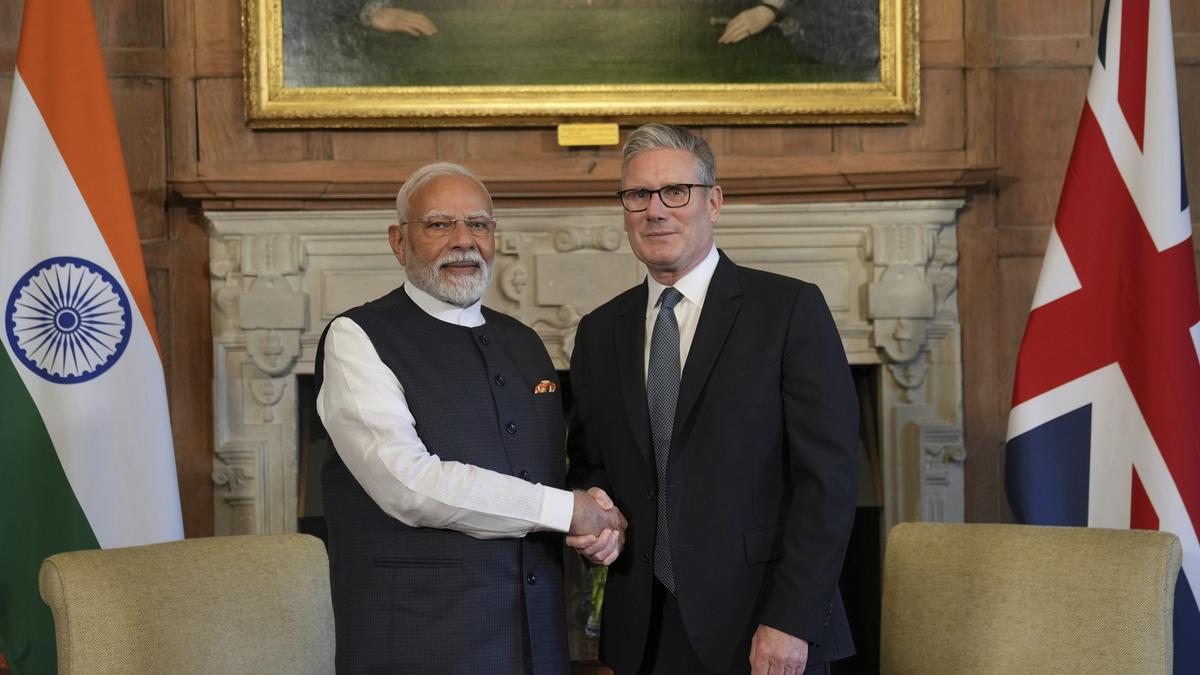
Sun Feb 15 12:15:59 UTC 2026: ### India-U.K. Free Trade Agreement Poised for Implementation in April 2026
The Story:
The India-U.K. Comprehensive Economic and Trade Agreement (CETA), signed on July 24, 2025, is expected to be implemented in April 2026. This agreement aims to significantly boost trade between the two nations, targeting a doubling of the current $56 billion trade volume by 2030. Key aspects include zero-duty access to the British market for 99% of Indian exports and reduced tariffs on British goods entering India. The agreement also includes a Double Contributions Convention (DCC) to streamline social security levies for temporary workers.
Key Points:
- The India-U.K. CETA is likely to be implemented in April 2026.
- Signed on July 24, 2025, the CETA aims to double trade between India and the U.K. to $56 billion by 2030.
- 99% of Indian exports will enter the U.K. at zero duty.
- The Double Contributions Convention (DCC) will prevent duplicate social levies for temporary workers.
- The agreement awaits approval from the U.K. Parliament.
Critical Analysis:
The timeline for implementation, while ambitious, reflects a determined effort on both sides to capitalize on the potential economic benefits. The U.K.’s focus on securing trade deals post-Brexit positions India as a significant partner, while India aims to gain greater access to a key global market. The reference to Chris Bryant’s statement about the CETA going “well beyond India’s precedent” hints at the strategic importance the U.K. places on this agreement, potentially signifying a shift in trade dynamics and offering unprecedented opportunities for U.K. businesses in India.
Key Takeaways:
- The India-U.K. CETA represents a major step towards enhanced economic cooperation between the two countries.
- The zero-duty access for Indian exports to the U.K. is a significant win for Indian businesses.
- Parliamentary approval in the U.K. remains a crucial step for the agreement’s implementation.
- The agreement aligns with the U.K.’s post-Brexit trade strategy.
- The 2030 target for doubling trade suggests long-term commitment and confidence in the agreement’s success.
Impact Analysis:
The successful implementation of the India-U.K. CETA is poised to have a significant long-term impact on both economies:
- Economic Growth: Increased trade flows are expected to stimulate economic growth in both countries, creating new opportunities for businesses and employment.
- Trade Diversification: The agreement provides India with greater access to a developed market, diversifying its export destinations. Similarly, it offers the U.K. a strategic foothold in one of the world’s fastest-growing economies.
- Geopolitical Significance: The strengthened economic ties can lead to closer political and strategic cooperation between India and the U.K.
- Sector-Specific Impacts: Sectors like automotive, spirits (whisky), textiles, and consumer goods (chocolates, cosmetics) are likely to experience significant changes due to tariff reductions and increased market access.
- Global Trade Landscape: This agreement may serve as a model for future trade agreements between major economies, emphasizing comprehensive coverage and mutual benefits.
 First Piper