
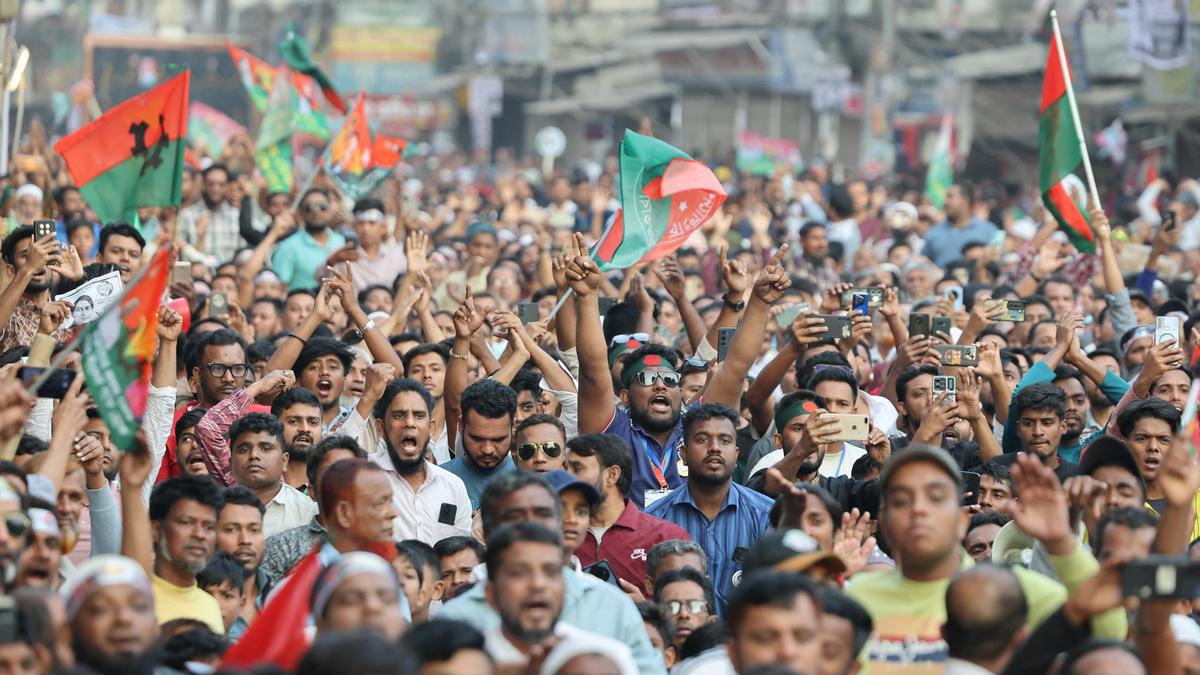
Sun Feb 15 04:39:19 UTC 2026: ### Tarique Rahman Set to Become Prime Minister of Bangladesh Following BNP Victory
The Story:
Tarique Rahman is poised to become the next Prime Minister of Bangladesh after leading the Bangladesh Nationalist Party (BNP) to a historic victory in the February 12, 2026 election. This marks a significant moment in Bangladeshi politics, given the BNP’s complex history, which traces back to the turbulent years following the 1971 Liberation War. The BNP’s origin is rooted in the legacy of Ziaur Rahman, who declared Bangladesh’s independence in 1971 and later founded the party in 1978.
The article highlights the historical context of BNP’s emergence, its ideological underpinnings based on “Bangladeshi nationalism,” and the key figures who shaped its trajectory, including Khaleda Zia, Ziaur Rahman’s widow. As Tarique Rahman prepares to assume office, the focus will be on his ability to navigate the complex political landscape and address the nation’s challenges.
Key Points:
* Tarique Rahman is credited with leading the BNP to victory in the February 12, 2026 election.
* Ziaur Rahman, Tarique’s father, declared the independence of Bangladesh in 1971 and founded the BNP in 1978.
* The BNP’s ideology is based on “Bangladeshi nationalism,” defined territorially as the nationalism of the citizens living within Bangladesh.
* Khaleda Zia, Ziaur Rahman’s widow, took charge of the BNP in 1984 and brought the party back to power in 1991.
* The BNP emerged during a period when the Awami League was weakened, led by Zohra Tajuddin and Abdel Malek Ukil.
Critical Analysis:
The events surrounding the 2026 Bangladesh election reveal strategic depth. Tarique Rahman’s win, coupled with his “Bangladesh First” response regarding ties with India, suggests a calculated approach to prioritize national interests. The invitation extended to PM Modi for the swearing-in ceremony signals a willingness to engage in diplomatic relations. The strong opposition presence indicates a potentially dynamic and competitive parliamentary environment.
Key Takeaways:
* Tarique Rahman’s leadership marks a new chapter for the BNP, carrying the legacy of Ziaur Rahman into the 21st century.
* The BNP’s victory reflects a shift in the political landscape of Bangladesh, potentially altering its domestic and foreign policy directions.
* The focus on “Bangladeshi nationalism” could have implications for regional relations, particularly with India.
* A strong opposition suggests a check on the BNP’s power and the potential for robust debates on national policies.
* The invitation to PM Modi indicates a potential opening for diplomatic engagement between Bangladesh and India.
Impact Analysis:
The BNP’s victory and Tarique Rahman’s impending premiership have long-term implications for Bangladesh. His leadership style, policy decisions, and approach to regional relations will shape the country’s trajectory in the coming years. Specifically:
- Domestic Policy: Rahman’s administration will likely focus on consolidating BNP’s power, addressing economic challenges, and managing internal political dynamics. The strong opposition will play a critical role in shaping these policies through parliamentary debates and public discourse.
- Foreign Policy: Rahman’s “Bangladesh First” approach could lead to a recalibration of foreign policy, prioritizing national interests while maintaining diplomatic relations. The relationship with India will be closely watched, as will Bangladesh’s engagement with other regional and international powers.
- Regional Stability: The political stability of Bangladesh is crucial for the entire region. Rahman’s ability to govern effectively, address societal divisions, and maintain peaceful relations with neighboring countries will have a significant impact on regional stability.
- Economic Development: Rahman’s economic policies will be critical for addressing poverty, promoting sustainable development, and attracting foreign investment. His administration’s success in these areas will determine Bangladesh’s long-term economic prospects.
 First Piper