
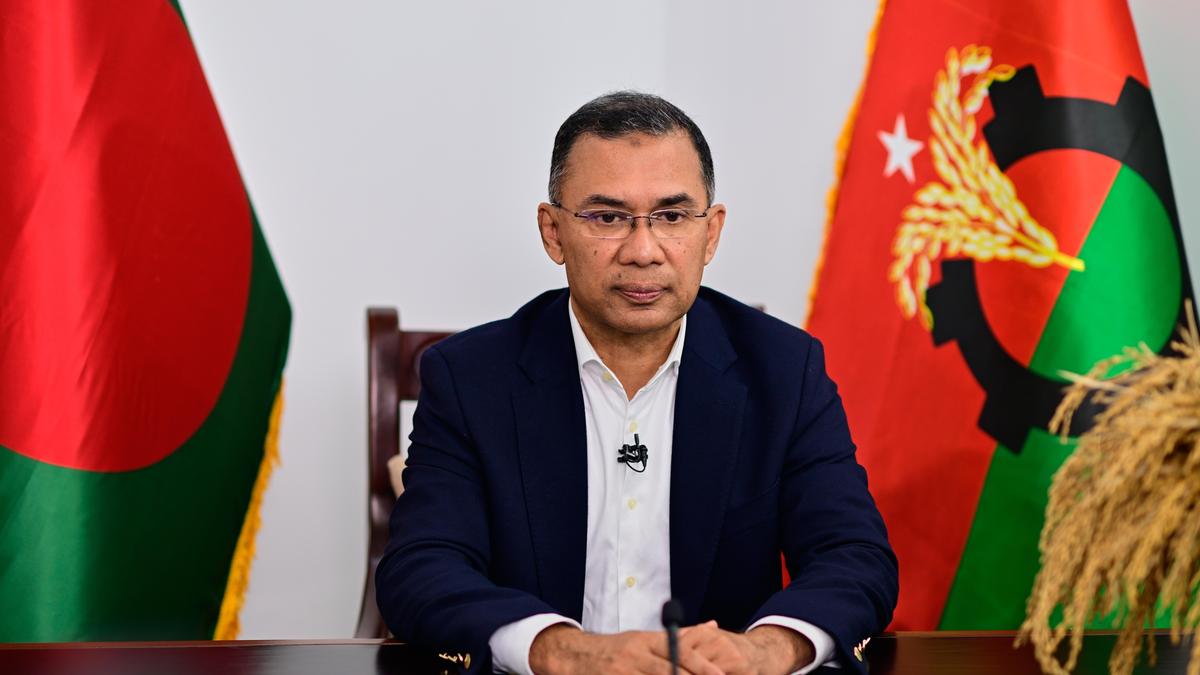
Fri Feb 13 09:34:42 UTC 2026: # Tarique Rahman’s Historic Victory: A New Chapter for Bangladesh
The Story:
Tarique Rahman, chairman of the Bangladesh Nationalist Party (BNP), has achieved a historic victory in the 2026 elections, winning two constituencies and positioning himself to potentially become the next Prime Minister. After returning from a 17-year exile in London on December 25, 2025, Rahman campaigned on a platform of inter-communal harmony and addressing allegations leveled against the BNP by the deposed Awami League. While his victory signals a significant shift in Bangladeshi politics, the emergence of Jamaat-e-Islami as the second-largest party presents immediate challenges.
Key Points:
* Tarique Rahman, chairman of the BNP, won the Dhaka-17 and Bogura-6 constituencies.
* Rahman returned to Bangladesh on December 25, 2025, after 17 years in exile.
* He addressed allegations of the BNP being “pro-Pakistan,” emphasizing the party’s connection to the 1971 Liberation War.
* Jamaat-e-Islami emerged as the second-largest party, securing at least 71 seats.
* Prime Minister of India Narendra Modi and the United States have already reached out to congratulate Rahman.
* Rahman will have to deal with the positive outcome to the referendum on ‘July Charter’ that requires BNP to change the constitution of Bangladesh.
* Key issues requiring immediate attention include law and order and the Ganga Waters Agreement.
* The election victory secured almost 218 seats for BNP, granting an absolute majority in the Jatiyo Sansad.
Critical Analysis:
The resurgence of Tarique Rahman and the BNP appears to be built on strategically reclaiming historical narratives and capitalizing on public sentiment against the previous regime. Rahman is attempting to mirror Sheikh Hasina’s success by leveraging his father’s legacy, but he also faces the challenge of reconciling his party’s image with past allegations of extremism. The simultaneous rise of Jamaat-e-Islami signifies a potential fracturing of the political landscape and raises questions about the future direction of Bangladesh.
Key Takeaways:
- The victory marks a significant shift in Bangladesh’s political landscape.
- Rahman’s ability to navigate international relations, particularly with India, will be crucial.
- The rise of Jamaat-e-Islami poses a complex challenge to Rahman’s leadership.
- Internal political reconciliation will be critical.
- The need to resolve the Ganga Waters Agreement is a priority.
Impact Analysis:
Tarique Rahman’s victory has far-reaching implications for Bangladesh’s domestic and foreign policies. Domestically, the power-sharing dynamic with Jamaat-e-Islami and student led-party NCP, and the resolution of constitutional amendments, will significantly shape the country’s political future. Internationally, Rahman’s approach to relations with India, particularly regarding longstanding issues like water sharing and border management, will be closely watched. The extent to which he addresses concerns about extremism and fosters regional stability will define his legacy and influence Bangladesh’s role in South Asia for years to come.
 First Piper