
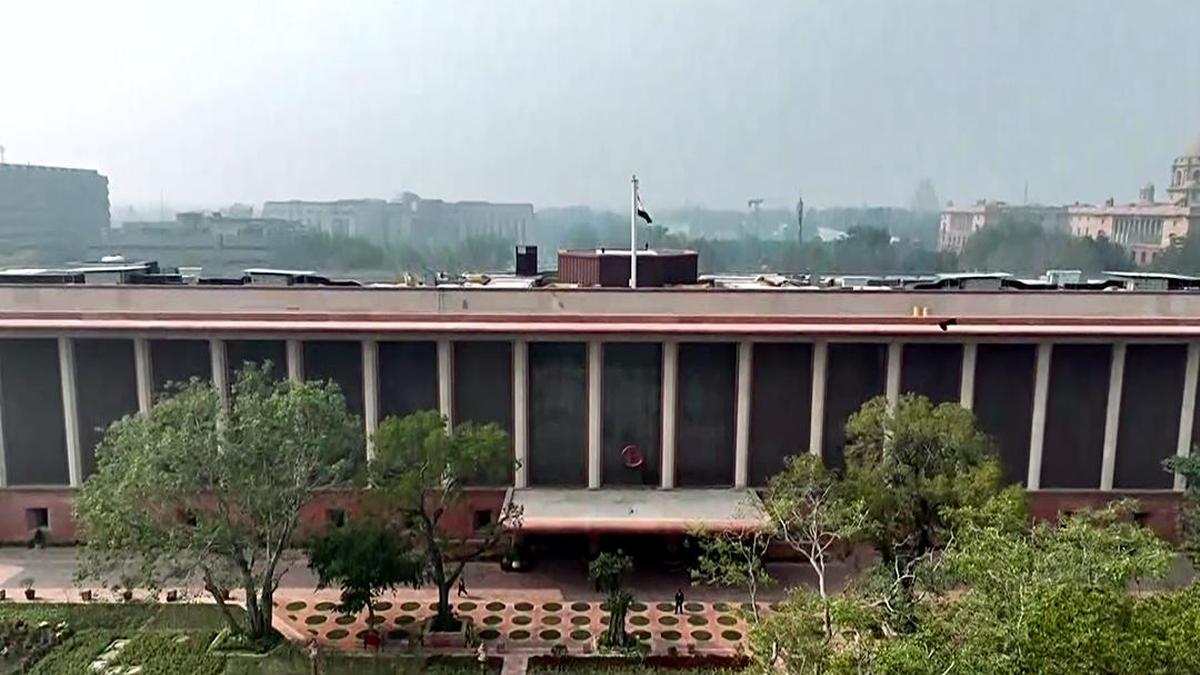
Sat Feb 14 13:32:08 UTC 2026: ### Seva Teerth: PMO Shifts from South Block, Symbolizing India’s Transition to ‘Viksit Bharat’
The Story: On February 14, 2026, the Union Cabinet formally resolved to shift the Prime Minister’s Office (PMO) from the historic South Block on Raisina Hill to the newly constructed ‘Seva Teerth’ complex. The resolution, adopted after the last Cabinet meeting in South Block on February 13, 2026, frames the move as a symbolic departure from a colonial past towards a future of “Viksit Bharat” (Developed India). Union Minister Ashwini Vaishnaw emphasized that the shift signifies a transition from a culture of power to one of service, reflecting a commitment to modern, citizen-centric governance. The South and North Blocks will be repurposed into the ‘Yuge-Yugeen Bharat National Museum’, preserving India’s civilizational legacy.
Key Points:
- The Union Cabinet adopted a resolution to move the PMO from South Block to ‘Seva Teerth’.
- The move is portrayed as a symbolic break from India’s colonial past and a step towards “Viksit Bharat”.
- South Block and North Block will be converted into the ‘Yuge-Yugeen Bharat National Museum’.
- The resolution highlights the British construction of South Block and North Block as tools for control over India.
- The Cabinet expressed gratitude for PM Modi’s leadership in transforming governance.
- The resolution highlighted India’s progress and achievements while operating out of the South Block.
Critical Analysis:
While the article emphasizes the symbolic nature of the PMO’s relocation, it’s important to consider the broader context. The move aligns with the current government’s agenda of decolonizing institutions and promoting a nationalistic narrative. Framing the South Block as a symbol of colonial rule allows the government to present the new ‘Seva Teerth’ as a symbol of progress, efficiency, and a commitment to service. However, it also risks erasing the historical significance of the South Block and the many important decisions made there by successive Indian governments. The timing, combined with the trade deal with the U.S. as a sign of economic and diplomatic success, suggests a strategic effort to consolidate the government’s image as a driver of national development and global prominence.
Key Takeaways:
- The PMO relocation is more than just a change of venue; it’s a symbolic act with political messaging.
- The event reinforces the government’s narrative of breaking away from colonial legacies.
- The conversion of South and North Blocks into a national museum aims to shape historical memory and national identity.
- The move is a strong visual and narrative element in the ongoing promotion of “Viksit Bharat”.
Impact Analysis:
The long-term impact of this move could be significant. The creation of the ‘Yuge-Yugeen Bharat National Museum’ will shape how future generations understand India’s history and its transition from colonial rule to an independent nation. The narrative surrounding the move, emphasizing “service” and “development,” could influence public perception of the government’s priorities and legitimacy. The physical shift to a modern, technologically advanced complex could also streamline government operations and increase efficiency. The strategic communication around the event could further solidify the government’s image as a transformative force in Indian society.
 First Piper