
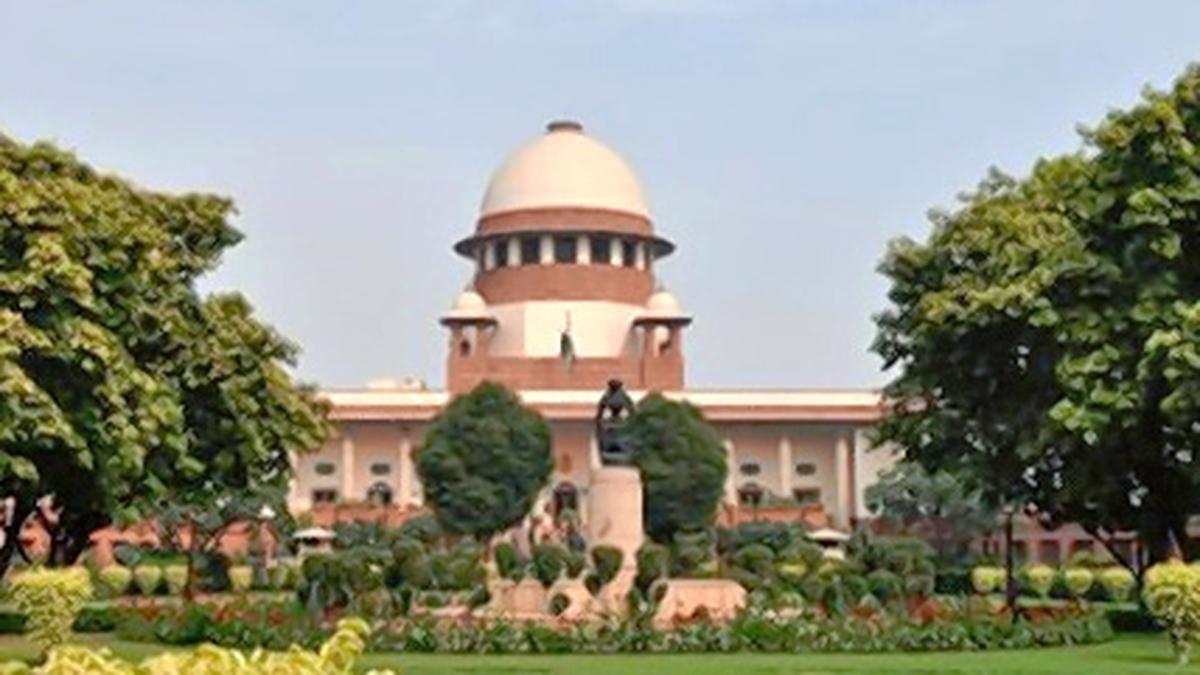
Thu Feb 12 10:15:57 UTC 2026: ### Supreme Court Declines to Halt Puja at Disputed Karnataka Shrine
The Story:
The Supreme Court on February 12, 2026, refused to grant a plea seeking to prevent the holding of Hindu prayers at the Ladle Mashak Dargah and the samadhi of Hindu Saint Raghava Chaitanya in Aland, Karnataka, during Mahashivaratri. The shrine, historically a shared place of worship for both Sufi Muslims and Hindus, has been the site of rising tensions since 2022 due to disputes over religious rights. The court cited the ongoing proceedings in the Karnataka High Court and the petitioner’s pursuit of a declaration from the Waqf Tribunal as reasons for its decision.
Key Points:
- The Supreme Court rejected a plea to stop Hindu prayers at a shared religious site in Aland, Karnataka.
- The site is the Ladle Mashak Dargah and the samadhi of Hindu Saint Raghava Chaitanya.
- Tensions have been escalating since 2022 due to disputes over religious rights.
- The petitioner, Khaleel Ansari, sought to prevent interference with the property, claiming it is a waqf property.
- The court noted the ongoing case in the Karnataka High Court and the need for a Waqf Tribunal decision.
- In February 2025, the Karnataka High Court permitted 15 Hindu devotees to perform Shivaratri rituals at the Raghava Chaitanya Shivaling.
Critical Analysis:
The Supreme Court’s decision to abstain from intervention underscores a judicial preference for lower courts and tribunals to address local disputes, particularly those with religious dimensions. The ongoing proceedings in the Karnataka High Court and the pending Waqf Tribunal decision indicate a structured legal framework already in place to handle the dispute, making immediate intervention from the Supreme Court unnecessary. The reference to the Places of Worship Act by the petitioner’s advocate suggests a complex legal landscape that the court likely wants to navigate cautiously, given the sensitivity of religious matters and their potential to escalate into wider social unrest.
Key Takeaways:
- The Supreme Court favors allowing lower courts and tribunals to handle religious property disputes.
- The Places of Worship Act remains a relevant, though contested, legal framework in such disputes.
- Communal tensions related to shared religious sites continue to be a sensitive issue in India.
- The judiciary is taking a cautious approach to avoid potentially exacerbating religious tensions.
Impact Analysis:
This event will likely reinforce existing legal precedents regarding religious property disputes and the role of different judicial bodies. The court’s decision to let the process unfold in the High Court and Waqf Tribunal could set a precedent for similar cases, emphasizing the importance of local legal frameworks in resolving such conflicts. The continued tension surrounding shared religious sites highlights the need for sustained dialogue and community engagement to prevent future escalations. The ruling could embolden similar claims and counter-claims on religious sites, making this a crucial point of observation for future judicial and social developments.
 First Piper