
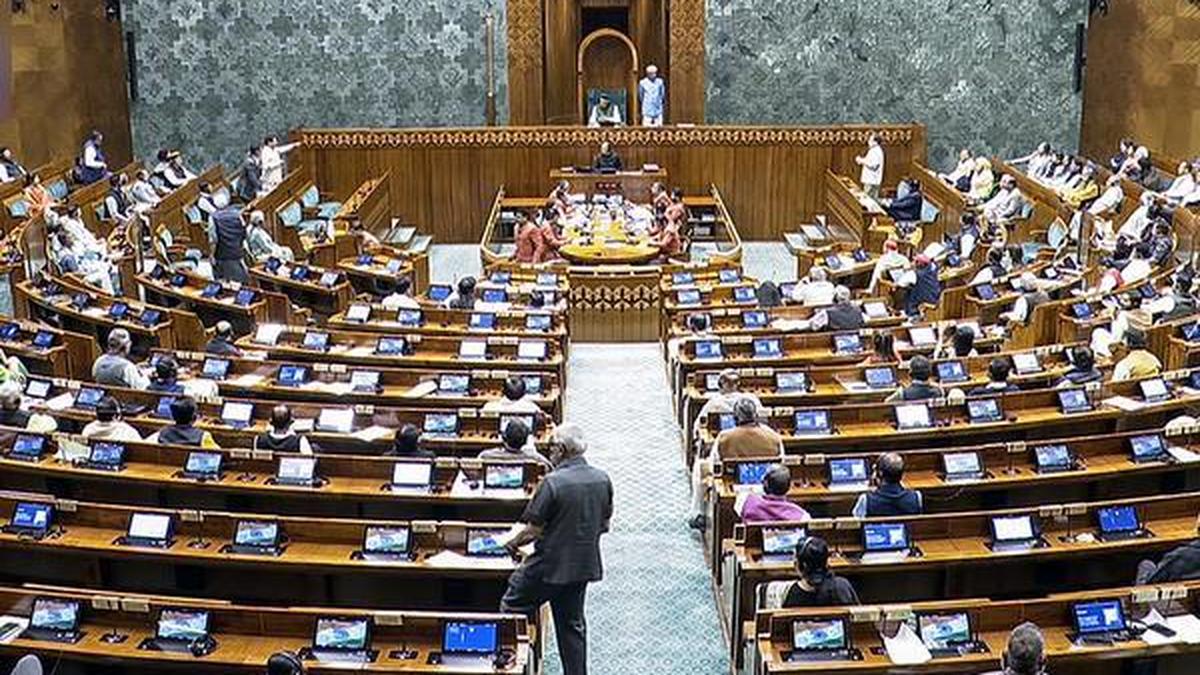
Thu Feb 12 10:11:19 UTC 2026: ### Lok Sabha Debates Industrial Code Amendment Bill Amidst Opposition Protests and India-U.S. Trade Deal Concerns
The Story:
On February 12, 2026, the Lok Sabha debated the Industrial Code Amendment Bill, which aims to consolidate and update existing laws relating to trade unions, industrial employment, and industrial disputes. The session was marked by significant disruptions from Opposition members, led by Rahul Gandhi, who launched a sharp attack on the government regarding the interim trade agreement with the U.S. The protests also included a motion seeking the removal of Lok Sabha Speaker Om Birla. The day also saw extensive discussion on the Union Budget 2026, with members raising concerns about income inequality, unemployment, and the impact on farmers and laborers.
Key Points:
- The Industrial Code Amendment Bill, 2026, replacing the Trade Unions Act, 1926, the Industrial Employment (Standing Orders) Act, 1946, and the Industrial Disputes Act, 1947, was debated.
- Opposition protests disrupted Lok Sabha proceedings, leading to an adjournment shortly after commencement.
- Rahul Gandhi criticized the India-U.S. interim trade agreement, alleging it ignored the interests of workers and farmers.
- The Lok Sabha Speaker will not preside over the House until the motion seeking his removal is addressed.
- A nationwide strike by central trade unions, excluding BMS, took place to protest against the labor codes.
- BJP MP Nishikant Dubey initiated a substantive motion against Rahul Gandhi accusing him of colluding with “anti-India elements.”
Critical Analysis:
The events unfolding in the Lok Sabha are characterized by intense political polarization and ideological clashes. The opposition’s protest against the India-U.S. trade deal, combined with the labor unions’ strike, underscores a growing discontent with the government’s economic policies. Accusations by BJP MP Nishikant Dubey of collusion with anti-India forces against Rahul Gandhi demonstrates heightened political tensions and personal attacks, making constructive dialogue difficult.
Key Takeaways:
- The Industrial Code Amendment Bill is a significant piece of legislation that could substantially alter labor relations in India.
- Opposition unity and strategic protests are becoming increasingly prominent in challenging government policies.
- The India-U.S. trade deal is a contentious issue that has the potential to create divisions within the political landscape.
- The motion seeking the removal of the Lok Sabha Speaker reflects deep-seated tensions and lack of trust between the government and the opposition.
- Accusations by BJP MP Nishikant Dubey against Rahul Gandhi exemplifies the increased political tensions and personal attacks.
Impact Analysis:
The passage of the Industrial Code Amendment Bill could have far-reaching consequences for workers’ rights, industrial relations, and economic growth in India. The ongoing protests and strikes may escalate if the government fails to address the concerns raised by unions and opposition parties. The India-U.S. trade deal could reshape trade dynamics, affecting both farmers and various industries. The political climate remains volatile, with potential implications for future policy decisions and governance.
 First Piper