
Wed Feb 11 07:54:50 UTC 2026: # Netanyahu Rushes to Washington to Harden Trump’s Stance on Iran Nuclear Talks
The Story:
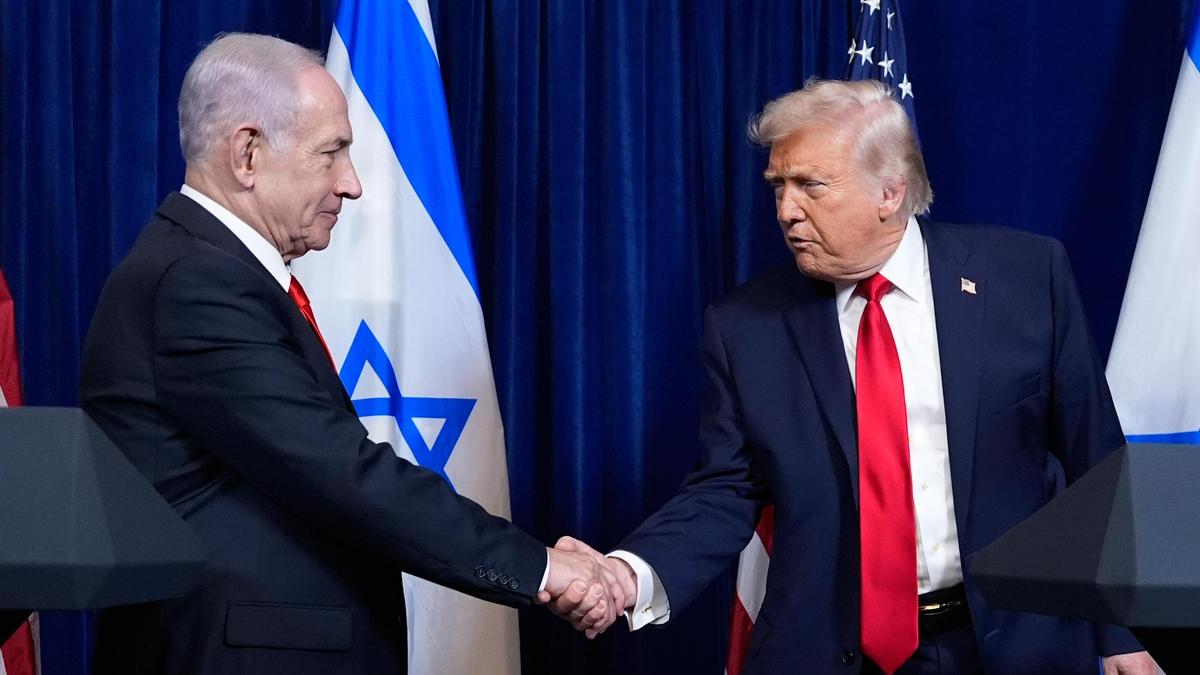
Israeli Prime Minister Benjamin Netanyahu expedited his trip to Washington to meet with U.S. President Donald Trump on February 11, 2026, amidst ongoing U.S.-Iran nuclear talks in Oman. Netanyahu aims to persuade Trump to adopt a tougher stance on Iran’s nuclear program and ballistic missile development. Trump, contemplating sending a second “armada” to the Middle East to pressure Tehran, reaffirmed his demand for a deal encompassing no nuclear weapons and missiles. The meeting occurs against a backdrop of growing international concern over Israeli measures to tighten control of the occupied West Bank.
Key Points:
- Netanyahu moved his visit to Washington forward due to ongoing U.S.-Iran talks.
- Trump is considering deploying a second U.S. “armada” to the Middle East.
- Netanyahu seeks a harder U.S. line on Iran’s ballistic missile program.
- The meeting follows a war in June where the US ordered strikes on Tehran’s nuclear sites.
- Iran has rejected expanding talks beyond its nuclear program.
- International outrage is growing over Israeli measures in the West Bank.
- This is the sixth meeting between Trump and Netanyahu on U.S. soil since January 2025.
Critical Analysis:
The urgency of Netanyahu’s visit underscores Israel’s deep-seated anxiety regarding the potential outcome of the U.S.-Iran nuclear talks. Given President Trump’s previous actions, including strikes against Iranian nuclear sites, Netanyahu likely aims to reinforce a hardline approach and ensure the deal addresses Iran’s ballistic missile capabilities, a crucial point of contention for Israel. The timing of the meeting, coinciding with international criticism of Israel’s West Bank policies, suggests Netanyahu may also be attempting to secure U.S. support or at least avoid direct criticism on that front.
Key Takeaways:
- Israel views the U.S.-Iran nuclear talks with considerable apprehension, seeking to influence the terms of any potential agreement.
- President Trump is leveraging the threat of military force to pressure Iran into a nuclear deal.
- The meeting highlights the complex interplay between nuclear negotiations, regional security concerns, and the Israeli-Palestinian conflict.
- Despite international pressure, Israel seems determined to pursue its policies in the West Bank.
- The close relationship between Trump and Netanyahu continues to be a central dynamic in Middle East diplomacy.
Impact Analysis:
The outcome of the Netanyahu-Trump meeting could significantly impact the trajectory of the U.S.-Iran nuclear talks. A strengthened U.S. stance could lead to a more comprehensive deal, addressing not only Iran’s nuclear program but also its missile development. However, it could also lead to a breakdown in negotiations, potentially escalating tensions in the region. Furthermore, the ongoing disputes regarding the West Bank have the potential to further inflame regional dynamics. This meeting shapes the immediate future of diplomacy and stability in the Middle East, carrying the potential for positive breakthroughs or dangerous escalation.
 First Piper