
Thu Feb 12 09:28:16 UTC 2026: ### Trade Union Protests Erupt in Bengaluru Over Labor Codes
The Story:
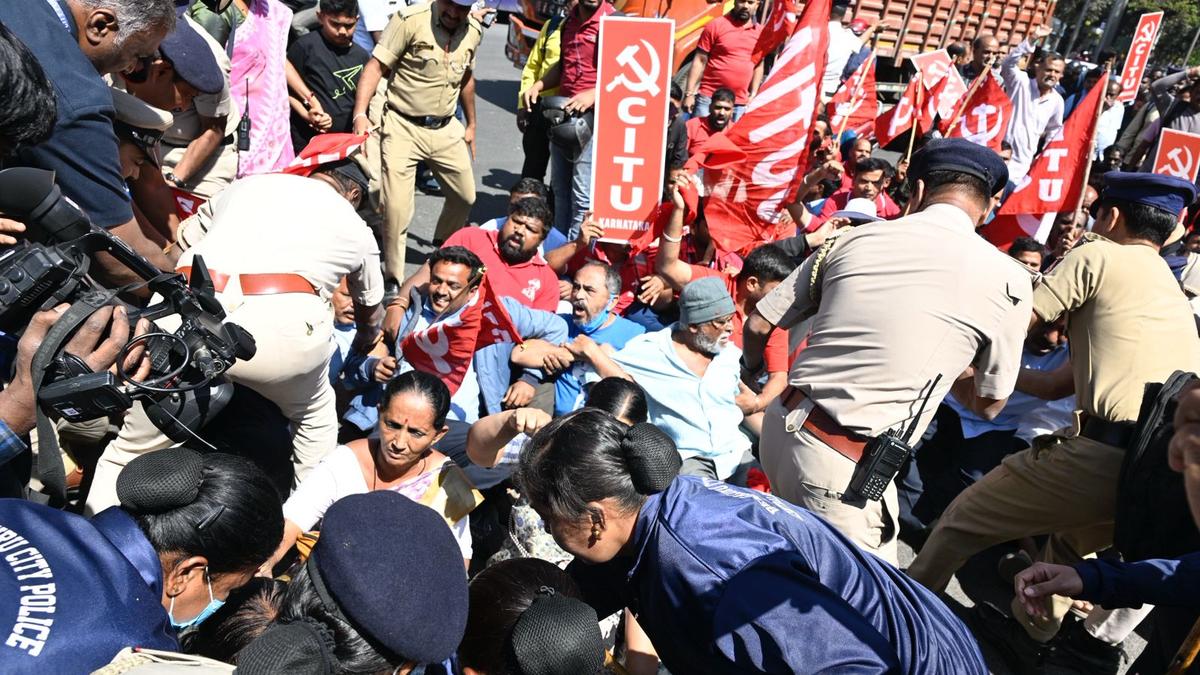
On February 12, 2026, thousands of workers and trade union activists congregated at Town Hall in Bengaluru as part of an all-India general strike. The strike, organized by a joint committee of trade unions, was a direct response to the implementation of four controversial labor codes. Protesters demanded the repeal of these codes and the reinstatement of the MGNREGA program. Police intervened, detaining and arresting protesters, who were then transported to the CAR police grounds in Adugodi, where the demonstration continued.
Key Points:
- The protest occurred in Bengaluru on February 12, 2026.
- The demonstration was part of an all-India general strike.
- The strike was organized by a joint committee of trade unions.
- The primary grievances were the four labor codes and the call for reinstatement of MGNREGA.
- Police detained and arrested protesters, moving them to Adugodi.
Critical Analysis:
The provided historical context reveals a nationwide pattern of protests related to the new labor codes. News reports indicate similar strikes and demonstrations in Hubballi, Dharwad, Kerala, and across various states in India. The Congress party has also voiced its support for the nationwide strike and criticized the central government’s trade deals and labor laws. This widespread discontent suggests a deeply rooted opposition to the government’s labor policies and potentially signals a larger, coordinated effort to challenge these reforms.
Key Takeaways:
- The February 12, 2026, protests in Bengaluru are not isolated incidents but part of a larger nationwide movement.
- The four labor codes have become a significant point of contention between trade unions and the government.
- The involvement of political parties like Congress indicates the politicization of the labor issue.
- The persistence of protests, even after arrests, highlights the strong resolve of the demonstrators.
Impact Analysis:
The continued opposition to the labor codes, as evidenced by the nationwide strikes and the Congress party’s backing, suggests these labor codes will be an ongoing source of social and political tension. The long-term impact could include:
* Policy Revisions: The government may need to reconsider or revise the labor codes to address the concerns of trade unions and workers.
* Increased Labor Unrest: If the government fails to address these concerns, further strikes and protests are likely, potentially disrupting economic activity.
* Political Polarization: The issue could further polarize the political landscape, with opposition parties leveraging the discontent for political gain.
* Economic Impact: Prolonged labor unrest could negatively impact foreign investment and economic growth.
 First Piper