
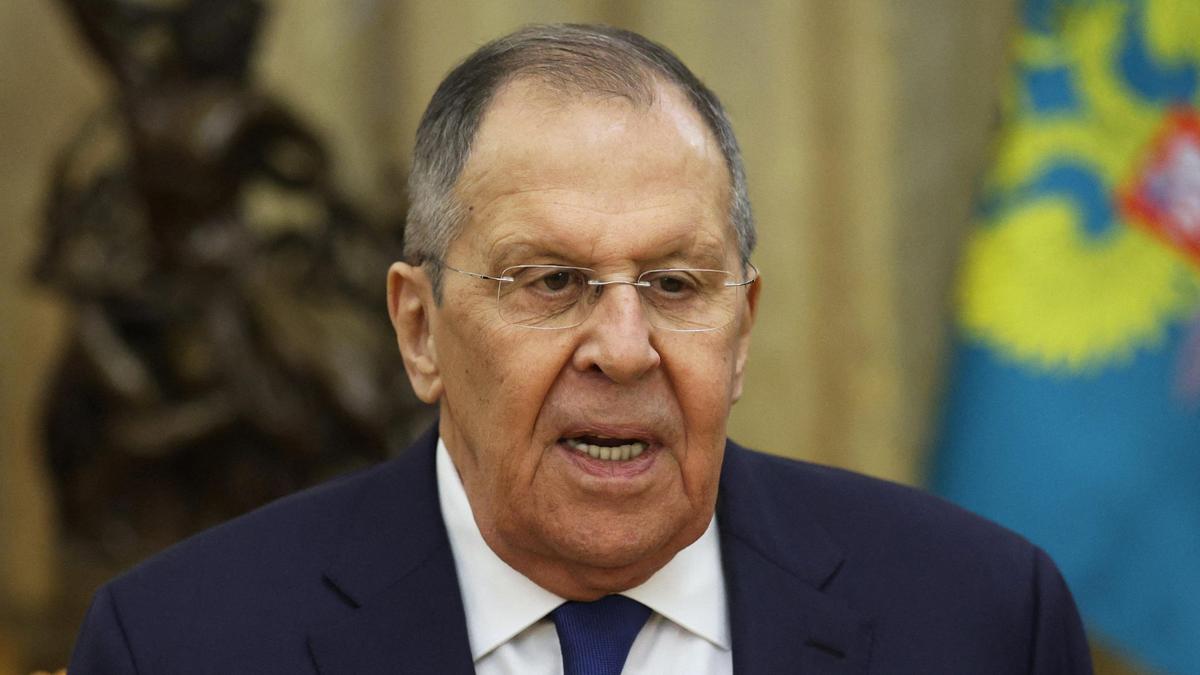
Wed Feb 11 16:51:17 UTC 2026: ### Trump’s Claim on India’s Russian Oil Imports Contested by Lavrov
The Story:
Russian Foreign Minister Sergei Lavrov publicly disputed claims made by U.S. President Donald Trump that India had agreed to cease purchasing Russian oil. This statement came after Russia accused the U.S. of employing coercive measures, including sanctions and tariffs, to impede India and other nations from trading with Russia. Lavrov emphasized the strong and growing relationship between Russia and India, especially with India assuming the BRICS chairmanship on January 1, 2026, highlighting energy security as a key focus for the upcoming summit.
Key Points:
- Sergei Lavrov denies Donald Trump’s claim that India will stop buying Russian oil.
- Russia accuses the U.S. of using coercive measures, such as tariffs and sanctions, to prevent countries like India from purchasing Russian oil.
- S. Jaishankar, India’s External Affairs Minister, prioritizes energy security during India’s BRICS chairmanship.
- Vladimir Putin’s December 2025 state visit to India strengthened the “special, privileged strategic partnership” between the two countries.
- India intends to maintain multiple sources for crude oil purchases, with national interests guiding procurement decisions.
- Donald Trump rolled back an additional 25% tariff on India that he imposed in August 2025 for India’s procurement of crude oil from Russia.
Critical Analysis:
The events unfold in a context of escalating geopolitical tensions, with the U.S. seemingly attempting to isolate Russia economically. Trump’s announcement of a trade deal with India coincides with the assertion that India will cease Russian oil purchases. However, the EU’s parallel efforts to counter pressure from Russia, China, and Trump (as indicated in the historical context) suggest a broader struggle for influence. The EU’s involvement indicates a complex dynamic where multiple global powers are vying for strategic advantage.
Key Takeaways:
- The U.S. is actively trying to limit Russia’s economic influence, particularly in the energy sector, by pressuring countries like India.
- India is navigating a complex geopolitical landscape, attempting to balance its relationships with both Russia and the U.S. while prioritizing its own energy security.
- Russia is actively cultivating its relationship with India, viewing it as a key strategic partner, especially within the BRICS framework.
- Donald Trump’s statements regarding trade deals should be regarded cautiously as the claims are often challenged by the counterparty, in this case, Russia.
- The EU’s moves to counter pressure from Trump, Russia, and China add layers of complexity and underscore the broader competition for influence.
Impact Analysis:
This situation has significant long-term implications. India’s energy policy will be closely watched as it balances its geopolitical relationships. The effectiveness of U.S. sanctions as a foreign policy tool is being tested. The future of the BRICS alliance, under India’s chairmanship, depends heavily on its ability to navigate these global pressures. The events described highlight the ongoing shift in the global power structure, with the U.S., Russia, China, and India all vying for influence. Furthermore, the trade relationships are increasingly political, meaning policy changes can easily change the landscape.
 First Piper