
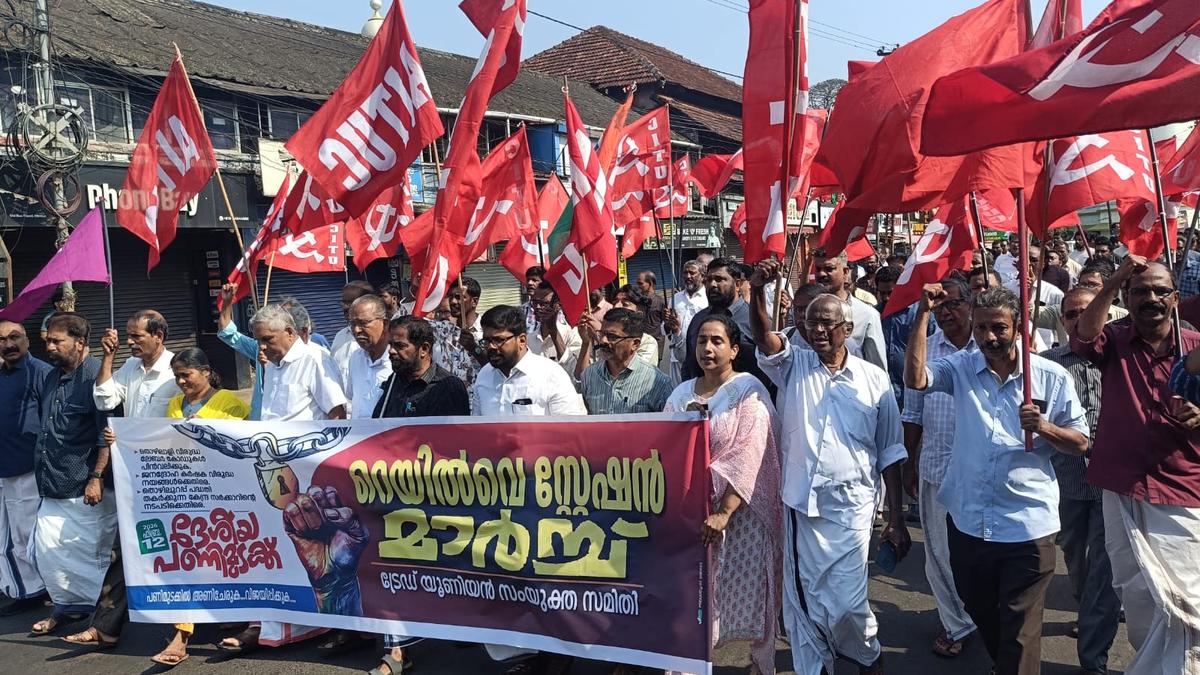
Thu Feb 12 08:03:01 UTC 2026: # Nationwide Strike Paralyses Kerala, Reflects Broader Labor Discontent
The Story:
A 24-hour nationwide strike, spearheaded by a coalition of 10 Central trade unions, brought life to a standstill in the Kannur and Kasaragod districts of Kerala on Thursday, February 12, 2026. The strike was a demonstration against what unions perceive as “anti-worker” labor codes and policies enacted by the central government, as well as measures allegedly weakening employment guarantee schemes. While the strike disrupted daily life, including transport and commerce, no major incidents of violence were reported.
Key Points:
- The strike was called by a joint platform of 10 Central trade unions.
- Kannur and Kasaragod districts in Kerala were particularly affected, with near-total shutdowns.
- The strike was organized in protest against “anti-worker labor codes, anti-people and anti-farmer policies of the Centre.”
- Transport services were severely disrupted, with buses, auto-rickshaws, and taxis staying off the roads.
- Essential services, such as milk supply, newspapers, hospitals, and medical shops, were exempted.
- Major trade unions except the BMS (Bharatiya Mazdoor Sangh) supported the strike.
Critical Analysis:
The nationwide strike reflects a growing discontent among trade unions regarding the central government’s labor policies. The timing of the strike, occurring in the backdrop of upcoming Assembly elections in Kerala, adds a layer of political significance, with different political factions maneuvering to capitalize on the labor unrest. The INTUC’s (Indian National Trade Union Congress) decision to stay away from a joint protest due to a KPCC (Kerala Pradesh Congress Committee) directive highlights these political tensions.
Key Takeaways:
- The strike demonstrates the continued influence of trade unions in India, particularly in states like Kerala.
- Labor reforms enacted by the central government are facing stiff resistance from unions who believe they are detrimental to workers’ rights.
- The political climate, especially during election periods, significantly impacts the dynamics of labor movements.
- The BMS’s non-participation underscores divisions within the labor movement itself.
- The event series, including other related strikes across the country indicate a widespread and coordinated effort to pressure the government on labor policies.
Impact Analysis:
This nationwide strike, and others like it across India, represent a significant challenge to the central government’s economic reform agenda. The disruptions caused by such strikes can negatively impact economic productivity and investor confidence. More importantly, the ongoing labor unrest may compel the government to re-evaluate its approach to labor reforms and consider revisions to address the concerns raised by trade unions, potentially leading to policy adjustments that balance economic growth with worker welfare. The increased polarization between labor organizations and the government could also lead to more frequent and intense protest actions in the future, requiring proactive conflict resolution mechanisms.
 First Piper