
Thu Feb 12 09:52:24 UTC 2026: # National Strike Paralyzes Chennai Over Labor Code Implementation
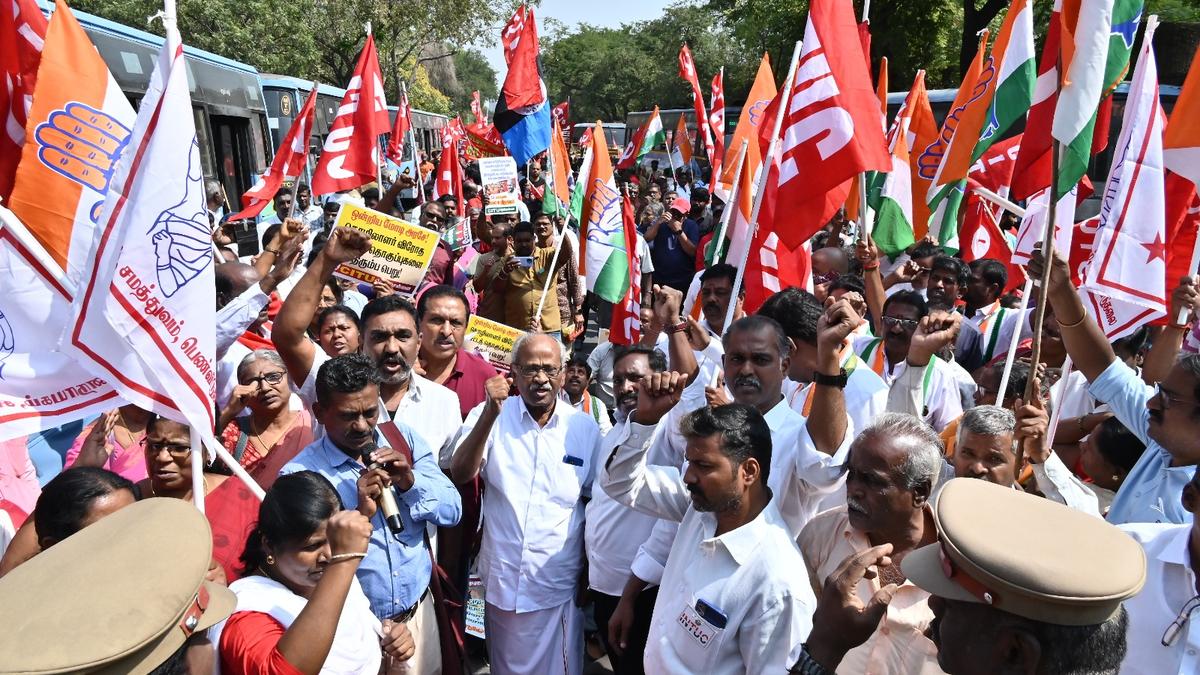
The Story: On February 12, 2026, a nationwide strike, “Bharat Bandh,” brought Chennai to a standstill as trade unions protested the implementation of four labor codes. These codes are viewed by the unions as “anti-worker, anti-farmer, and anti-national,” favoring corporate interests over the welfare of the working class. Major demonstrations took place across the city, with thousands participating in acts of civil disobedience. The strike was supported by ten central trade unions, including INTUC, AITUC, CITU, AIUTUC, and LPF.
The protests extended beyond Chennai, with demonstrations occurring at 234 locations throughout Tamil Nadu. Workers from various sectors, including transport, electricity, port, public sector undertakings, and private factories, participated in the strike. Various forms of agitation were employed, including rail blockades, protests in front of government offices, and road blockades.
Key Points:
- Nationwide strike, “Bharat Bandh,” occurred on February 12, 2026, impacting Chennai.
- Protests focused on the implementation of four labor codes.
- Ten central trade unions organized the strike, including INTUC, AITUC, CITU, AIUTUC, and LPF.
- Major protests occurred at five locations in Chennai.
- Workers from transport, electricity, port, public sector undertakings, and private factories participated.
- Trade unions claim the labor codes facilitate “imperialist exploitation” and are against national interest.
- 500 protesters were arrested near Guindy post office, led by A. Soundararajan (CITU).
- 600 protesters were arrested near Tarapore Tower, led by Sukumaran (CITU).
Critical Analysis:
The timing of the “Bharat Bandh” in relation to the ongoing U.S. trade pact negotiations, highlighted in the historical context (“India to receive same garment benefits as Bangladesh under U.S. trade pact: Goyal” and “Congress backs nationwide strike; Rahul Gandhi, Kharge attack Centre over trade deal and labour laws”) suggests a strategic attempt by the trade unions and opposition parties to pressure the government. The protests aim to highlight perceived disadvantages to Indian workers and farmers in the face of increased foreign trade and investment driven by government policy. The unions directly link the labor reforms to the government’s pursuit of a free trade agreement with the United States, framing it as “modern-day colonial domination.” This suggests a deeper concern about the erosion of national sovereignty and the potential exploitation of Indian resources and labor by foreign interests.
Key Takeaways:
- The “Bharat Bandh” represents a significant challenge to the central government’s economic policies and labor reforms.
- Trade unions are actively mobilizing against perceived threats to workers’ rights and national interests.
- The strike underscores the tension between economic liberalization and the protection of domestic labor.
- The protests reflect a broader political struggle between the ruling party and opposition forces.
- Framing the labor codes as “anti-national” aims to galvanize wider public support and delegitimize the government’s policies.
Impact Analysis:
The long-term impact of this event will likely depend on the government’s response to the protests and the extent to which the trade unions can sustain their mobilization efforts. This strike may lead to:
- Policy Reconsideration: The government might be compelled to re-evaluate or amend certain aspects of the labor codes to address the concerns raised by the unions.
- Increased Labor Unrest: If the government does not adequately address the concerns, further strikes and protests are likely, potentially disrupting economic activity and investment.
- Political Polarization: The event will likely further deepen the political divide, with the opposition parties using the issue to challenge the government’s legitimacy.
- Investor Confidence: Prolonged labor unrest could negatively impact investor confidence and hinder the government’s efforts to attract foreign investment.
- Electoral Implications: The handling of this issue could have significant implications for future elections, potentially influencing voter sentiment towards the ruling party.
 First Piper