
Sat Feb 07 19:22:04 UTC 2026: # India Solidifies Position in Global Semiconductor Landscape with Major Investments and Technological Advancements
The Story:
Union Minister Ashwini Vaishnaw conducted a semiconductor and chip tour in Bengaluru on Saturday, February 7, 2026, visiting key players in the semiconductor ecosystem. The tour included meetings with Texas Instruments (TI) and Qualcomm, both upstream entities involved in IC design and component manufacturing, as well as Zetwerk Electronics, a downstream player providing electronics manufacturing services. The Minister also inaugurated TI’s new product research and development (R&D) center and Zetwerk Electronics’s advanced manufacturing facility.
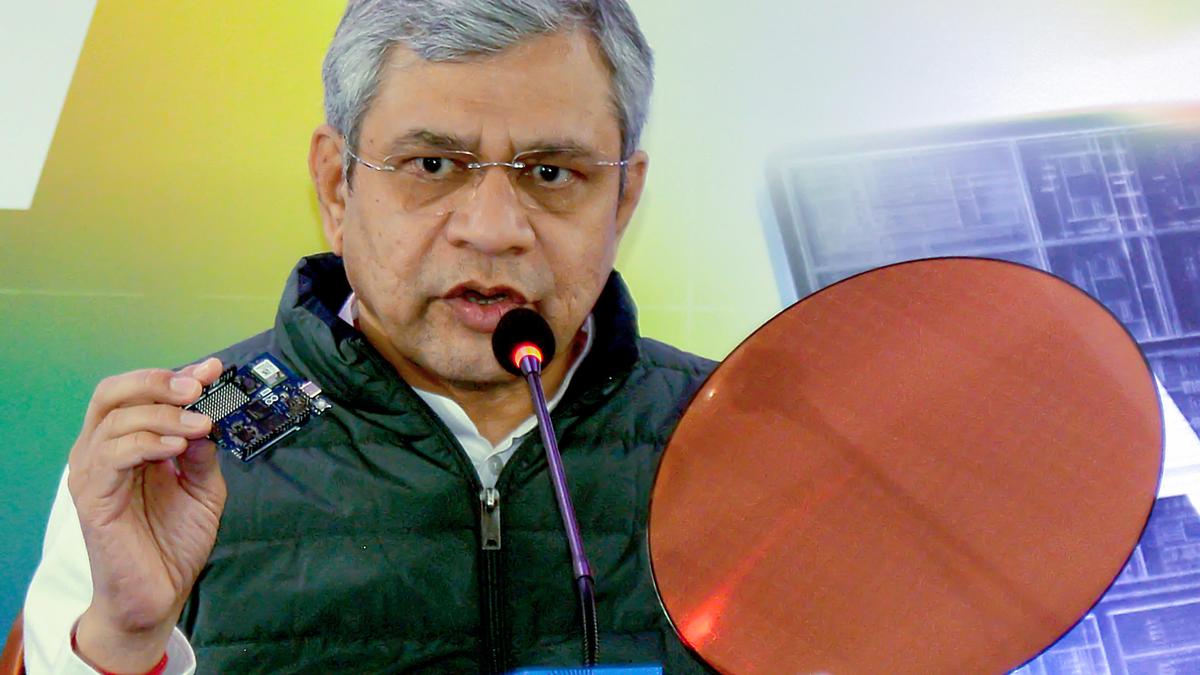
The tour highlighted India’s growing prominence in the semiconductor industry, with Minister Vaishnaw projecting potential investments exceeding $200 billion in the coming years due to accelerating AI adoption and demand for advanced chips. Notably, Qualcomm unveiled a 2-nanometre semiconductor chip designed and developed at its Bengaluru facility, marking a significant advancement in India’s chip design capabilities.
Key Points:
- Union Minister Ashwini Vaishnaw toured semiconductor facilities in Bengaluru on February 7, 2026.
- He visited Texas Instruments (TI), Qualcomm, and Zetwerk Electronics.
- TI inaugurated a new 550,000-square-foot R&D center in Bengaluru.
- Zetwerk Electronics launched an advanced manufacturing facility at the KIADB Hi-Tech Hardware Park.
- Qualcomm unveiled a 2-nanometre semiconductor chip designed and developed in Bengaluru.
- Minister Vaishnaw anticipates semiconductor investments in India exceeding $200 billion in the coming years.
Critical Analysis:
The historical context shows Vaishnaw was actively engaged with the US for electronics and IP. This shows the semiconductor development in India is in line with trade objectives with the US.
Key Takeaways:
- India is rapidly developing its semiconductor industry, attracting significant investment and technological innovation.
- The establishment of R&D and manufacturing facilities by major players like TI and Zetwerk Electronics demonstrates confidence in India’s potential.
- Qualcomm’s development of a 2-nanometre chip in India signifies the country’s growing capabilities in advanced chip design.
- Government support and strategic partnerships are crucial drivers of this growth.
- The focus on AI-ready chips positions India as a key player in the future of intelligent electronics.
Impact Analysis:
The events detailed in the article have substantial long-term implications for India’s economy and technological landscape:
- Economic Growth: The projected $200 billion investment will create numerous jobs and boost economic activity across various sectors.
- Technological Independence: Developing advanced semiconductor capabilities reduces India’s reliance on foreign suppliers, enhancing national security and strategic autonomy.
- Global Competitiveness: India’s emergence as a semiconductor hub will attract further foreign investment and talent, increasing its competitiveness in the global technology market.
- AI Advancement: The focus on AI-ready chips will accelerate the development and deployment of AI applications across industries, transforming India into an AI-driven economy.
- Skill Development: The expansion of semiconductor R&D and manufacturing will drive demand for skilled engineers and technicians, necessitating investments in education and training programs.
 First Piper