
Sun Feb 08 02:30:00 UTC 2026: ### India-U.S. Trade Deal Sparks Farmer Outrage, Demands for Goyal’s Resignation
The Story:
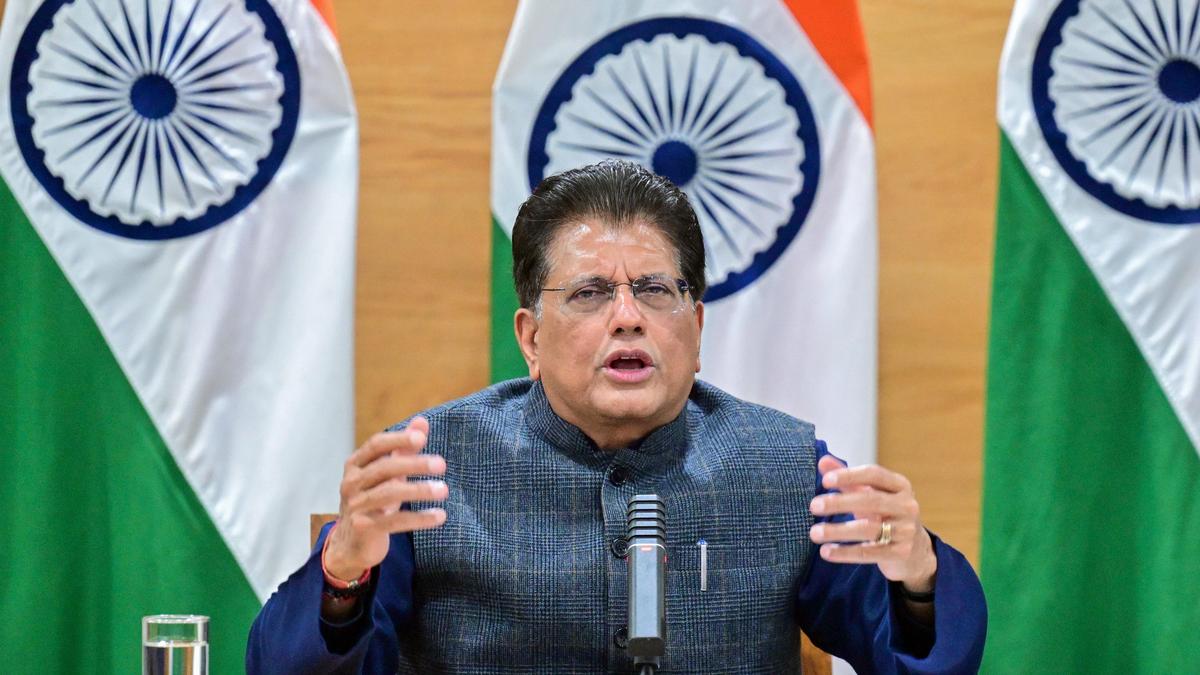
A newly announced India-United States bilateral trade agreement has ignited a firestorm of protest from the Samyukt Kisan Morcha (SKM), a prominent farmers’ collective. Following Commerce Minister Piyush Goyal’s unveiling of the agreement’s details on February 7, 2026, the SKM immediately demanded his resignation, accusing him of betraying farmers and the nation. Apple and cotton growers also expressed strong concerns, fearing disastrous consequences for states dependent on these crops. The SKM is calling for widespread protest demonstrations on February 12, 2026, aligning with a general strike by workers, in what they describe as a response to the “anti-people Modi government.”
Key Points:
- SKM leaders claim the trade agreement represents a “total surrender” to U.S. agricultural giants.
- Specific concerns include the inclusion of dried distillers’ grains (DDGs), red sorghum, tree nuts, fruits, soybean oil, and wine & spirits, which the SKM fears will lead to a U.S. monopoly in the animal feed market.
- The SKM alleges that while U.S. tariffs on Indian goods have increased, Indian tariffs on U.S. agricultural products have been drastically reduced, placing Indian agriculture at a disadvantage.
- Apple and cotton growers from states like Jammu and Kashmir, Himachal Pradesh, Maharashtra, and Gujarat anticipate significant negative impacts on their livelihoods.
- The SKM’s Rakesh Tikait questioned the need for imported animal feed, highlighting concerns about the potential inclusion of non-vegetarian items in U.S. feed.
- Cotton farmers are worried about the impact of U.S. cotton imports on the domestic cotton market, where Indian cotton is already more expensive than alternatives like Brazilian cotton.
Critical Analysis:
The immediate and vehement reaction from the SKM indicates deep-seated distrust of the government’s trade policies, particularly regarding agriculture. This distrust likely stems from previous farmer protests and concerns over market liberalization. The timing of the announcement, coinciding with planned marches supporting farmer demands, suggests a potential escalation of tensions.
Key Takeaways:
- The India-U.S. trade agreement faces significant opposition from key agricultural stakeholders.
- The SKM’s strong stance indicates a willingness to mobilize large-scale protests.
- The agreement highlights the challenges of balancing international trade relations with the protection of domestic agricultural interests.
- The farmers’ concerns revolve around fair competition and the potential dominance of U.S. corporations in the Indian market.
- The situation poses a significant political challenge for the Modi government.
Impact Analysis:
The controversy surrounding the India-U.S. trade agreement could have far-reaching consequences:
- Political Instability: Widespread protests could destabilize the government, especially if they merge with other labor strikes and opposition movements.
- Economic Impact: The agreement’s actual impact on the Indian agricultural sector needs careful monitoring to determine whether the farmers’ fears are justified. Negative consequences could trigger long-term economic disruptions in affected regions.
- Trade Relations: The backlash could strain India-U.S. relations and potentially impact future trade negotiations.
- Policy Revisions: The government may be forced to reconsider and revise aspects of the agreement to address the farmers’ concerns, leading to prolonged negotiations and uncertainty.
 First Piper