
Sun Feb 08 09:50:00 UTC 2026: # Chennai’s Stray Cattle Problem: GCC Cattle Shelters Offer Fresh Milk Alternative
The Story:
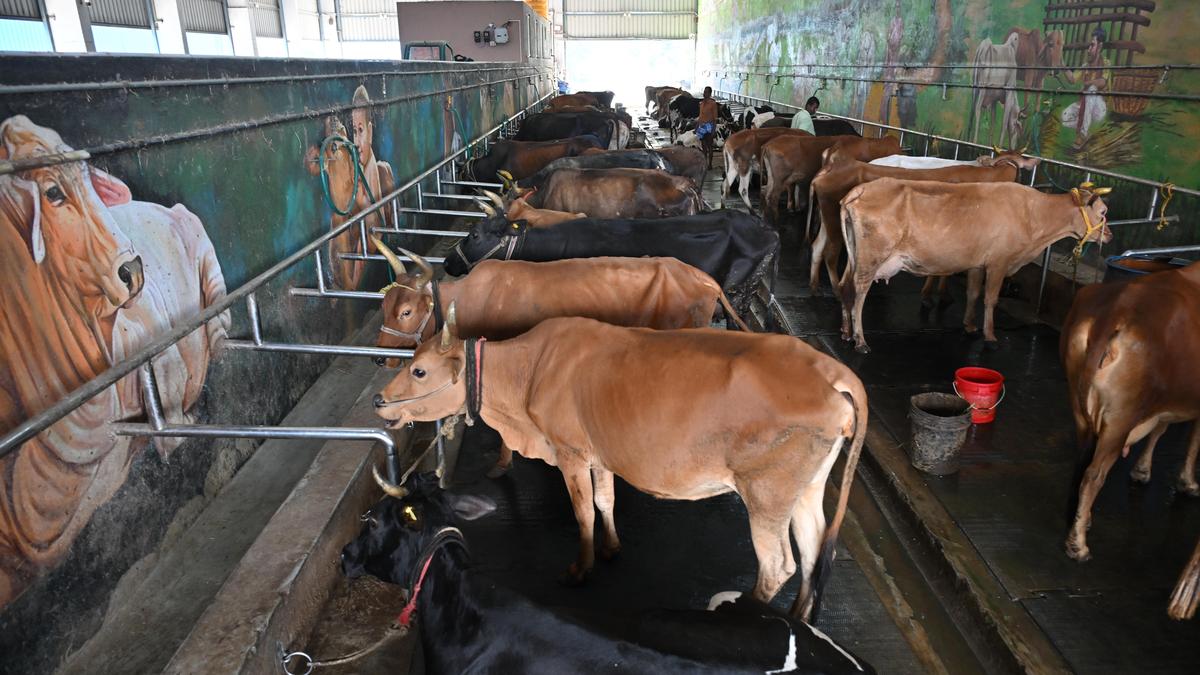
The Greater Chennai Corporation (GCC) has established cattle shelters in 17 locations, providing Chennai residents with a source of fresh cow and buffalo milk. These shelters aim to address the issue of stray cattle roaming the streets, feeding on garbage, and causing public safety concerns. Residents can purchase milk directly from the shelters during morning and evening hours. The initiative has been running for seven months at the Royapuram facility and three months in Manali. A new shelter is planned for Krishnapuram in March.
Key Points:
- GCC cattle shelters provide fresh cow and buffalo milk to Chennai residents.
- Milk prices vary by location: Cow milk retails at ₹80 per litre at Peter’s Road and Manali, ₹60 at Basin Bridge, and buffalo milk at ₹80 at Basin Bridge.
- The GCC does not regulate sales or pricing; transactions occur directly between customers and cattle owners.
- Veterinarians conduct daily health screenings at the shelters, and the Basin Bridge facility is monitored by 12 CCTV cameras.
- Cattle owners pay a daily rental of ₹10 per head to the GCC.
- The primary objective is to clear streets of stray cattle to mitigate man-animal conflict.
- A new shelter is planned for Krishnapuram to further address the stray cattle problem.
Critical Analysis:
The timing of this article in February 2026 in relation to the other headlines provides a crucial context to the unfolding of events. The TNPSC exam postponement due to center allocation errors highlights the operational challenges and potential administrative lapses within the state. The news of arrests for assaults in Chennai underscores public safety concerns. The article on AI’s impact on corporate America suggests an ongoing shift in the economic landscape that could have secondary impacts on livelihood and agricultural practices, potentially influencing how the dairy sector operates. All these elements contribute to a broader picture of systemic issues that the GCC’s initiative aims to alleviate by improving urban management and public health.
Key Takeaways:
- The GCC’s cattle shelter initiative provides a dual benefit: supplying fresh milk and reducing the number of stray cattle.
- The scheme’s decentralized pricing model reflects the varying costs and management structures across different shelters.
- While the initiative shows promise, stray cattle remain a problem in some areas, necessitating further expansion and improved enforcement.
- Public perception is positive, with residents preferring the fresh milk from shelters over commercially packaged milk.
- The initiative indirectly supports local cattle owners by providing a safe environment and a steady market for their milk.
Impact Analysis:
The GCC’s cattle shelter initiative has potential long-term impacts on Chennai’s urban environment and economy.
- Public Health: Reduced stray cattle population leads to improved sanitation and decreased risk of disease transmission. The availability of fresh, unadulterated milk enhances public health, especially for infants and children.
- Urban Management: The initiative demonstrates a proactive approach to managing urban animal populations and mitigating man-animal conflict. Success can be replicated in other cities facing similar challenges.
- Local Economy: Supporting local cattle owners through shelter rentals and milk sales contributes to the local economy. It also promotes ethical and sustainable dairy farming practices.
- Environmental Impact: By providing a controlled feeding environment, the initiative reduces the number of cattle feeding on plastic and garbage, contributing to a cleaner environment. The environmental impact is directly related to broader issues of public safety, operational challenges, and economical shifts occurring in the region, providing crucial context to the unfolding of these events.
 First Piper