
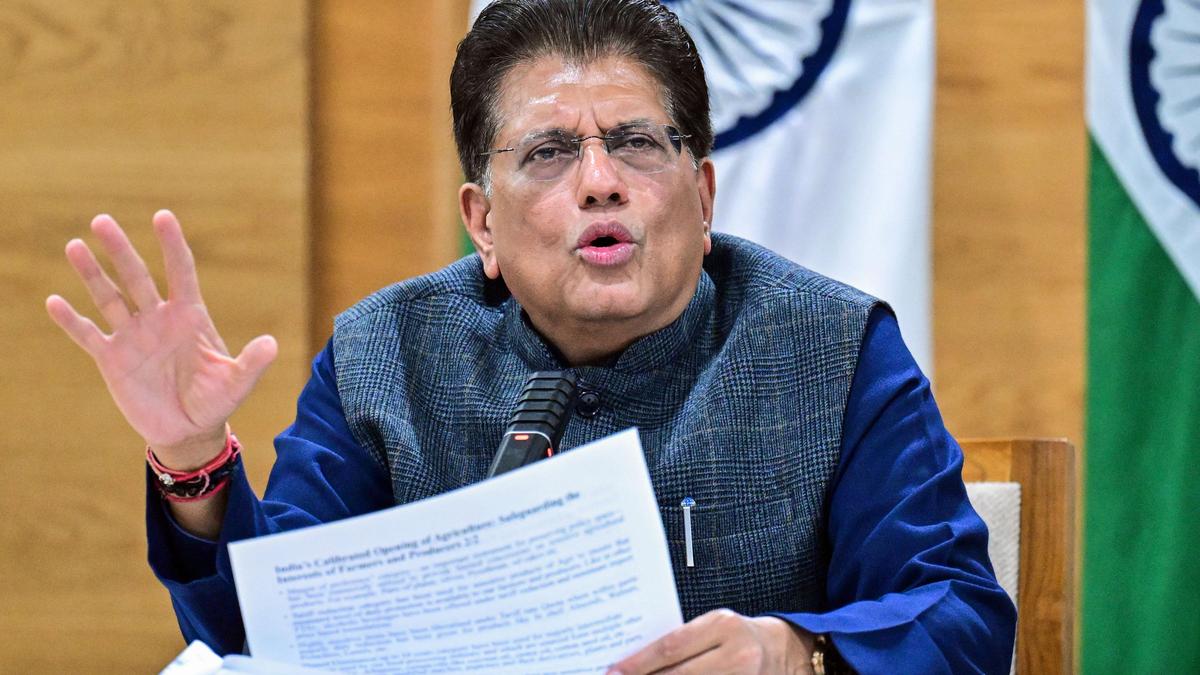
Sun Feb 08 12:01:58 UTC 2026: ### Trade War of Words: Congress Leader Challenges Commerce Minister Over Trade Policies
The Story:
A political spat has erupted between Commerce Minister Piyush Goyal and Congress leader Anand Sharma over trade policies dating back to the UPA era. The argument stems from Goyal’s criticism of past trade deals, specifically those concerning palm oil imports, made during a press conference on February 7, 2026. Sharma has retaliated by challenging Goyal to cancel existing trade agreements with ASEAN nations, Japan, South Korea, Malaysia, Indonesia, and Singapore if they are detrimental to India’s interests.
Sharma defended the UPA’s import policies, citing the need to meet domestic demand for edible oils, particularly palm oil. He also accused Goyal of undermining international relations by allegedly referring to ASEAN as a “B-team of China” and pressed for transparency regarding the Indo-U.S. trade deal, expressing concerns over potential compromises on national sovereignty and multilateral trade commitments.
Key Points:
- Commerce Minister Piyush Goyal criticized UPA-era trade deals, focusing on palm oil imports.
- Congress leader Anand Sharma dared Goyal to cancel trade pacts with ASEAN, Japan, South Korea, Malaysia, Indonesia, and Singapore.
- Sharma defended palm oil imports, stating that India’s domestic production of 10.5-10.6 million tonnes is insufficient compared to the 16 million tonnes imported annually.
- India spent approximately $18.3 billion on edible oil imports in 2024-25.
- Sharma raised concerns about the Indo-U.S. trade deal, questioning potential concessions on agriculture, dairy, and oil purchases from the U.S. and Russia.
Key Takeaways:
- The political debate highlights ongoing tensions between the ruling party and the opposition regarding trade policy and economic strategy.
- The focus on palm oil imports suggests it is a politically sensitive commodity, possibly due to its impact on domestic agriculture or trade relations with specific countries.
- The controversy surrounding the Indo-U.S. trade deal indicates deeper concerns about the balance between national interests and international agreements.
- The timing of the dispute, coinciding with Prime Minister Modi’s ASEAN outreach tour, adds another layer of complexity and potential diplomatic implications.
- The challenge to cancel existing trade deals is a strong political statement aimed at forcing the government to justify its trade policies.
 First Piper