
Sun Feb 08 12:26:54 UTC 2026: # Shah Sets Deadline to Eliminate Maoist Insurgency in Chhattisgarh
The Story:
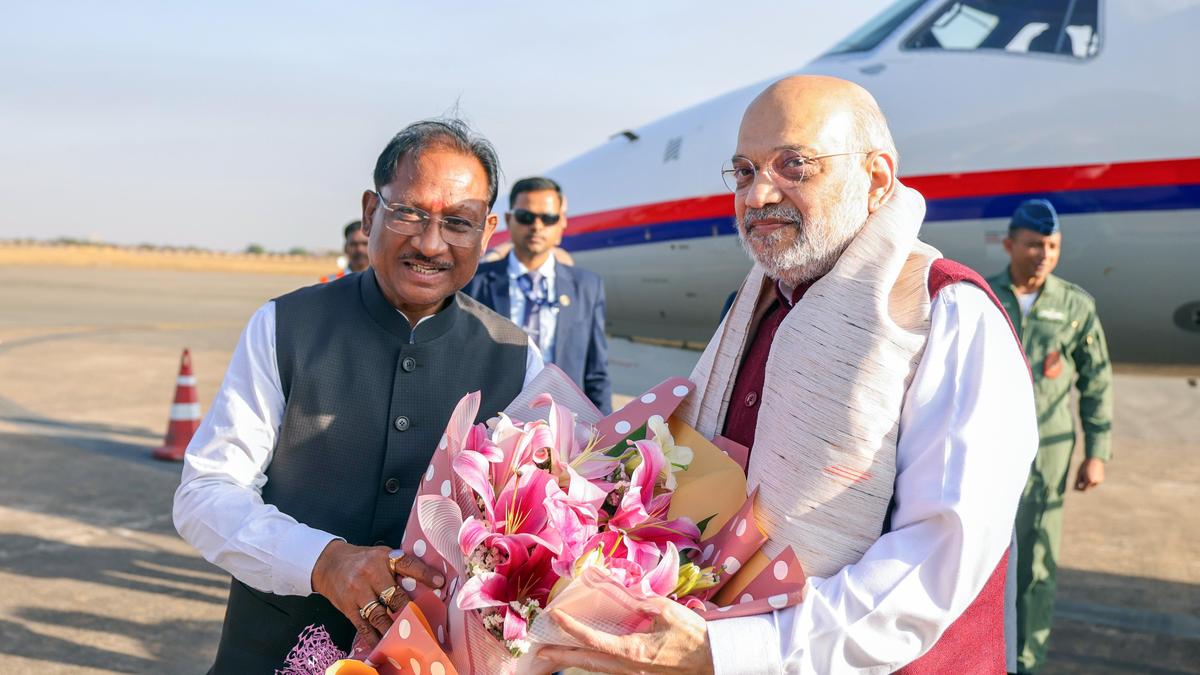
Union Home Minister Amit Shah chaired a high-level security review meeting in Raipur, Chhattisgarh on February 8, 2026, focusing on Left-Wing Extremism (LWE). This meeting comes weeks before the Centre’s ambitious deadline of March 31, 2026, to eradicate the Maoist insurgency from India. The meeting was attended by key officials including Chhattisgarh Chief Minister Vishnu Deo Sai, Deputy Chief Minister Vijay Sharma, Union Home Secretary, intelligence chiefs, and top security officers from multiple states.
Key Points:
- The meeting took place in Nava Raipur Atal Nagar.
- Participants included officials from Chhattisgarh, Odisha, Maharashtra, Jharkhand, and Telangana, along with heads of CRPF, BSF, ITBP, and NIA.
- Amit Shah emphasized the effectiveness of security-centric strategies, infrastructure development, and disrupting Maoist financial networks.
- He reiterated the government’s commitment to eliminate Naxalism by March 31.
- Since January 2024, over 500 Maoists have been killed in encounters in Chhattisgarh, approximately 1,900 arrested, and over 2,500 surrendered.
- Chhattisgarh’s Bastar region, bordering multiple states, is a Maoist stronghold, but has faced intensified anti-Maoist operations.
Critical Analysis:
- The timing of this meeting, so close to the March 31 deadline, indicates significant pressure and scrutiny on the anti-Maoist operations. The high-level participation from multiple states suggests a coordinated, multi-state effort.
- The claim of over 500 Maoists killed and thousands arrested or surrendered since January 2024 hints at a possible acceleration of operations, potentially driving Maoists to surrender due to increased pressure.
Key Takeaways:
- The Indian government is prioritizing the elimination of Left-Wing Extremism with a strict deadline.
- The strategy involves a combination of security operations, infrastructure development, and financial disruption.
- Chhattisgarh’s Bastar region remains a key focus in the fight against Maoist insurgency.
- The government’s success will be judged by whether it meets the March 31, 2026 deadline, making it a crucial test for the current administration.
- Multi-state cooperation is essential for tackling the issue, given the Maoists’ ability to operate across state borders.
Impact Analysis:
The success or failure of eradicating Maoist insurgency by March 31, 2026, will have significant long-term implications:
- Economic Development: Eliminating LWE would unlock economic development in affected regions by allowing infrastructure projects and business ventures to flourish.
- Security Landscape: A successful eradication would significantly improve the internal security landscape of India, freeing up resources for other security challenges.
- Political Impact: Failure to meet the deadline could damage the government’s credibility and potentially lead to increased instability in the affected regions.
- Social Cohesion: Reducing LWE could lead to greater social cohesion in affected areas by reducing displacement and promoting development.
- International Image: A successful anti-Maoist campaign could enhance India’s image as a stable and secure destination for investment and tourism.
 First Piper