
Sat Feb 07 03:13:04 UTC 2026: ### Tamil Nadu Government Boosts Textile Industry with New Integrated Policy
The Story:
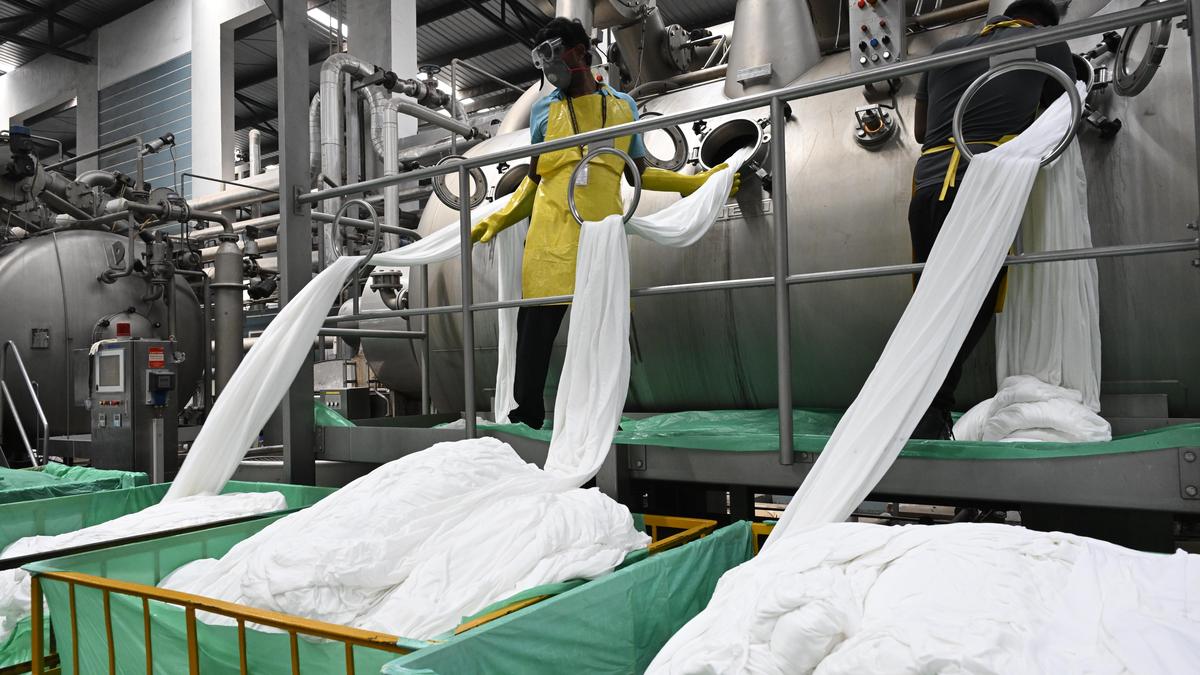
The Tamil Nadu government announced a new integrated textile policy last month, aimed at stimulating investment in the textile sector, particularly in processing, weaving, and technical textiles. Sixteen textile associations met with Chief Minister M.K. Stalin on Friday, February 7, 2026, to express their gratitude for the measures implemented over the past four years. The policy includes interest subventions, capital subsidies for modernization and upgrades, and incentives for establishing new units and expanding existing ones.
Key Points:
- The policy offers a 1.6% interest subvention for all spinning machines.
- A 20% capital subsidy is provided for modernizing 1,000 looms to shuttleless looms.
- A 50% capital subsidy is available to upgrade 3,000 powerlooms to raiper shuttleless looms.
- Subsidies range from 5% to 25% for establishing worksheds for shuttleless looms in powerloom clusters.
- A 25% capital investment subsidy is available for setting up new textile processing units and individual ETPs (Effluent Treatment Plants), as well as for expansion, modernization, or upgradation of existing textile processing units and IETPs.
- A 25% capital investment subsidy is offered to set up manufacturing facility for non-conventional fibres/yarn.
- ₹15 crore is allocated to accelerate growth and promote diversification into technical textiles.
- ₹25 crore is allocated for a research and business development fund for technical textiles and manmade fibre.
- A 50% capital investment subsidy is available for purchase of fully computerised cutting machine with CAD / CAM software.
- The Tamil Nadu government has removed 1% market committee cess on seed cotton, cotton waste, and cotton lint.
- The Cotton Corporation of India has been advised to commence depot sales in Tamil Nadu.
- The PM MITRA Park is being implemented at Virudhunagar.
- Machinery has been included in addition to infrastructure and made the mini textile park scheme investment friendly.
- A sustainable cotton mission has been launched for increasing cotton production and productivity in Tamil Nadu.
- A viscose fibre production factory is planned near Thoothukudi.
Key Takeaways:
- The Tamil Nadu government is actively supporting the textile industry through a multi-pronged approach, including financial incentives and infrastructure development.
- The focus is on modernizing the industry, particularly by promoting the adoption of shuttleless looms and advanced technologies like CAD/CAM.
- The government is also investing in the production of non-conventional fibers and technical textiles, indicating a forward-looking strategy.
- The removal of the market committee cess is a welcome relief for cotton producers and traders.
- These measures collectively aim to enhance the competitiveness of the Tamil Nadu textile industry and boost economic growth in the state.
Impact Analysis:
The new integrated textile policy, coupled with the initiatives already undertaken, is likely to have a significant long-term impact on the Tamil Nadu textile industry. The modernization efforts will improve efficiency and product quality, while the focus on technical textiles and non-conventional fibers will open up new markets and opportunities. The increased cotton production and the establishment of a viscose fiber factory will strengthen the supply chain and reduce reliance on imports. The overall effect is expected to be increased investment, job creation, and economic growth in the state. The policy may also serve as a model for other states in India looking to revitalize their textile industries.
 First Piper