
Sat Feb 07 16:46:23 UTC 2026: ### Headline: Tadoba Tiger Successfully Tranquilized and Relocated in Andhra Pradesh, Rehabilitation Efforts Underway
The Story:
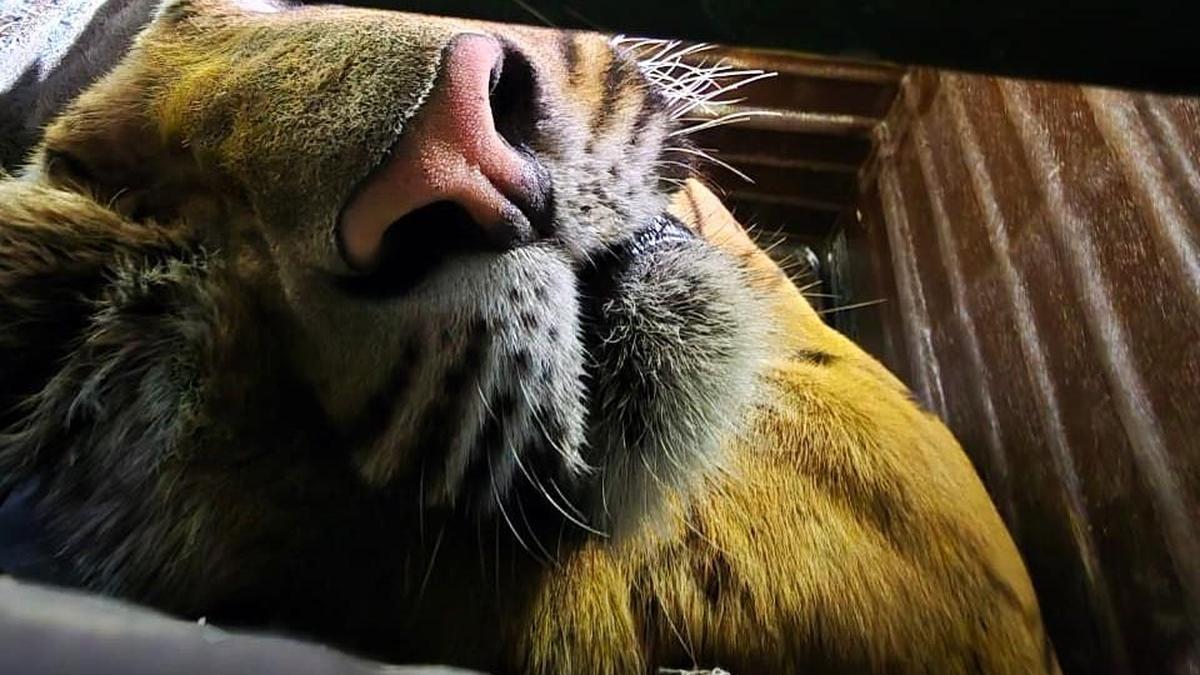
On February 6, 2026, a male tiger native to the Tadoba-Andhari Tiger Reserve in Maharashtra was successfully tranquilized in a village in East Godavari district, Andhra Pradesh, after venturing into human-dominated areas. The tiger, which had been preying on cattle but avoided attacking humans, was transported to the Animal Rescue Centre (ARC-Visakhapatnam) on February 7, 2026. A special committee has been formed by the Forest Department to monitor the tiger’s health and determine the best course of rehabilitation, following National Tiger Conservation Authority (NTCA) guidelines.
The tranquilization process was hampered by onlookers who disturbed the tiger, highlighting the challenges of wildlife management in close proximity to human populations. While deemed healthy by officials like Chief Conservator of Forest B.N.N. Murthy, concerns have been raised by wildlife experts regarding the suitability of the rewilding facility in the Nagarjuna Srisailam Tiger Reserve (NSTR) for the tiger’s long-term rehabilitation.
Key Points:
- A male tiger from the Tadoba-Andhari Tiger Reserve was tranquilized in East Godavari district on February 6, 2026.
- The tiger did not attack any humans, despite venturing into human habitats.
- The tiger was admitted to the Animal Rescue Centre (ARC-Visakhapatnam) on February 7, 2026.
- A special committee has been formed to monitor the tiger’s rehabilitation.
- The Standard Operating Procedure (SOP) of the NTCA supports releasing healthy tigers back into the wild.
- Concerns have been raised about the upkeep of the rewilding facility in the Nagarjuna Srisailam Tiger Reserve (NSTR).
Key Takeaways:
- The incident highlights the ongoing challenges of human-wildlife conflict in India, specifically concerning tiger populations.
- The successful tranquilization and relocation demonstrate the Forest Department’s capacity to respond to such situations, but crowd control remains a significant issue.
- The debate over the suitability of the rewilding facility underscores the need for improved infrastructure and management of protected areas.
- The tiger’s healthy condition and adherence to NTCA guidelines suggest a potential for successful reintroduction into a suitable habitat.
- Public awareness and responsible behavior are crucial in minimizing disturbances during wildlife rescue operations.
Impact Analysis:
The successful handling of this particular tiger incident may inform future protocols for dealing with similar situations. The concerns raised about the rewilding facility in NSTR could prompt a review and upgrade of its infrastructure and management practices. This incident could also lead to increased public awareness campaigns on responsible behavior around wildlife, emphasizing the importance of maintaining a safe distance and avoiding interference during rescue operations. The long-term impact will depend on the tiger’s successful rehabilitation and the Forest Department’s ability to mitigate human-wildlife conflict in the region.
 First Piper