
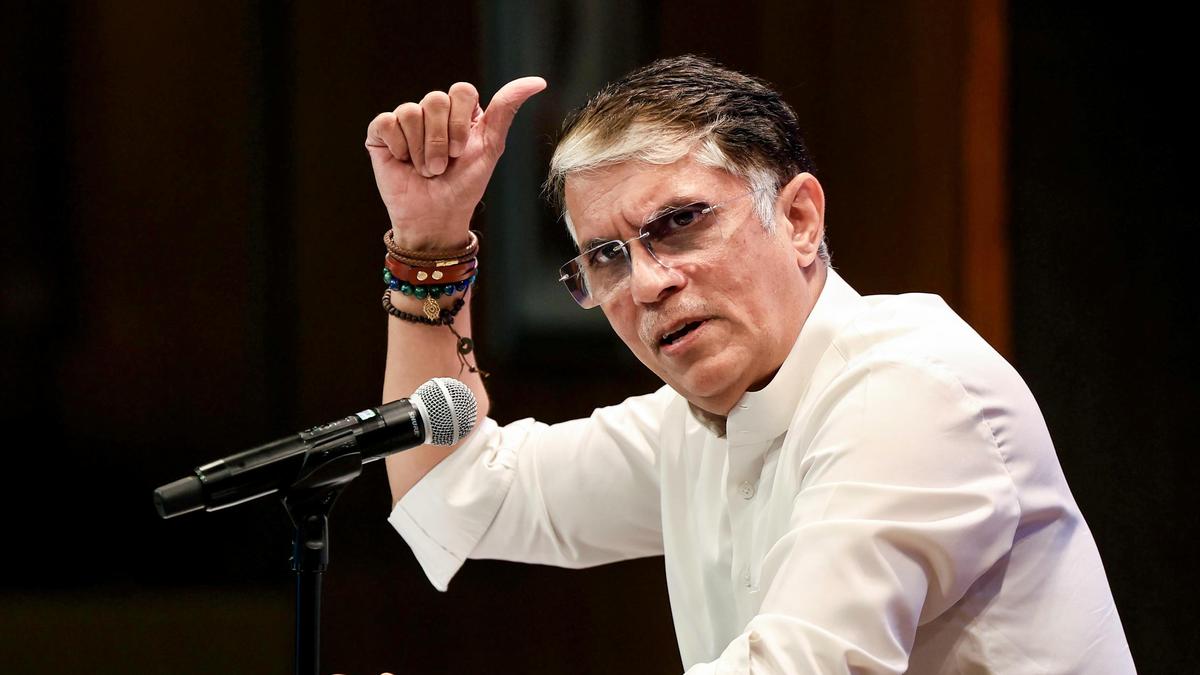
Sat Feb 07 13:42:44 UTC 2026: ### Indo-U.S. Trade Pact Sparks Political Firestorm in India
The Story:
A newly announced interim trade agreement between India and the United States is facing fierce opposition from the Indian National Congress. On February 7, 2026, Congress leader Pawan Khera labeled the pact a “surrender” of India’s interests, predicting a flood of American products that will harm Indian farmers and small businesses. The ruling BJP party, led by Commerce Minister Piyush Goyal, defends the deal, claiming it secures zero tariffs on several Indian goods and does not compromise on dairy products. The agreement aims to reduce import duties on a range of goods to boost two-way trade.
Key Points:
- The Congress party alleges the Indo-U.S. trade pact is a “betrayal” and a “surrender” of India’s self-esteem and interests.
- Pawan Khera claims India will become a “dumping ground” for American products, negatively impacting farmers and MSMEs.
- Commerce Minister Piyush Goyal asserts that India has not conceded on dairy products and that the agreement will result in zero tariffs for several Indian goods in the U.S.
- The agreement outlines a framework for an interim trade deal with reduced import duties on select goods.
- India intends to purchase $500 billion worth of U.S. energy products, aircraft, precious metals, technology, and coking coal over the next five years.
- The U.S. will reduce tariffs on Indian goods to 18% from the current 50%.
- The deal aims to open a $30 trillion market for Indian exporters, particularly MSMEs, farmers, and fishermen.
Critical Analysis:
The timing of this trade deal amidst Prime Minister Modi’s efforts to present India as a trusted partner for growth in Malaysia suggests a concerted strategy to bolster India’s international economic standing. However, the immediate backlash from the Congress party, accusing the government of jeopardizing national interests, indicates a deep partisan divide on economic policy and trade relations. The BJP’s quick rebuttal, framing the Congress’s opposition as being inherently against India’s economic growth, further underscores the political polarization surrounding this agreement.
Key Takeaways:
- The Indo-U.S. trade agreement is a politically charged issue in India, with strong opposition from the Congress party.
- The core of the debate revolves around concerns that the deal favors the U.S. at the expense of Indian farmers and industries.
- The BJP government is presenting the deal as a win-win situation, highlighting opportunities for Indian exporters and farmers.
- The agreement signifies India’s intention to increase its imports from the U.S. significantly, raising questions about the financial and economic implications.
Impact Analysis:
The long-term impact of this trade deal hinges on whether the projected benefits for Indian exporters materialize and whether the concerns of domestic industries and farmers are addressed. If the Congress’s predictions of economic harm prove accurate, the deal could trigger widespread discontent and potentially influence future elections. Conversely, if the BJP’s claims of economic growth and opportunity hold true, the agreement could strengthen India’s trade relations with the U.S. and contribute to economic development. The successful execution of the announced import commitments, particularly the $500 billion in purchases, will be crucial in solidifying the partnership and demonstrating tangible benefits for both nations.
 First Piper