
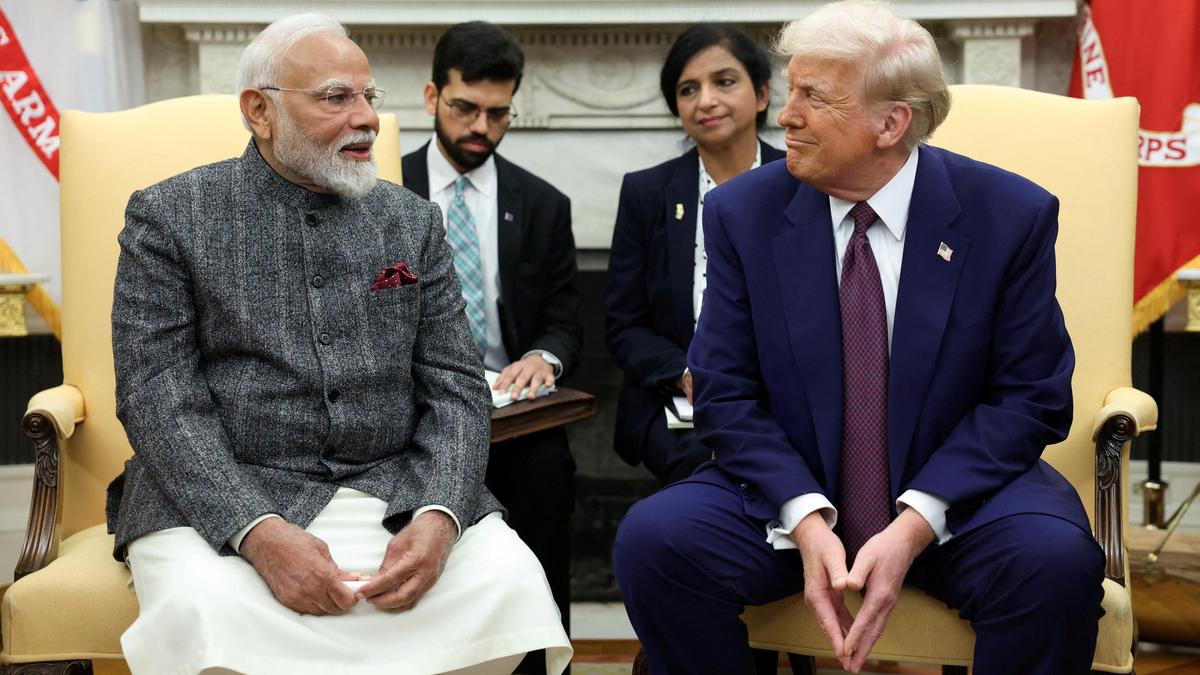
Sat Feb 07 01:21:00 UTC 2026: Headline: U.S. and India Move Towards Interim Trade Deal Amidst Regional Tensions
The Story:
On February 6, 2026, the White House released a Joint Statement outlining a framework for an interim trade agreement between the U.S. and India. This agreement builds upon the broader bilateral trade deal discussions initiated by President Donald Trump and Prime Minister Narendra Modi on February 13, 2025. Under the interim agreement, India will reduce or eliminate tariffs on a range of U.S. industrial, food, and agricultural goods. This development occurs amidst ongoing tensions between the U.S. and Iran, including potential new tariffs on countries doing business with Iran, even as talks between the U.S. and Iran are reportedly positive.
Meanwhile, on February 7, 2026, India rejected Pakistan’s allegations of involvement in a mosque bombing in Islamabad and dealt with domestic issues including deaths in an illegal mine in Meghalaya and the arrest of MP Rajesh Ranjan in Patna.
Key Points:
- A Joint Statement was released by the U.S. and India regarding an interim trade agreement on February 6, 2026.
- India will reduce tariffs on various U.S. goods, including industrial, food, and agricultural products.
- The trade agreement follows discussions initiated by President Trump and Prime Minister Modi in February 2025.
- India rejected Pakistan’s accusations related to the Islamabad mosque bombing.
- The government confirmed its complete payment of $120 million for the Chabahar port, ahead of the U.S. sanctions waiver expiring in April 2026.
- RBI holds rates steady at 5.25%
- India wins the ICC Under-19 World Cup.
Critical Analysis:
The timing of the U.S.-India trade announcement is notable given the ongoing tensions between the U.S. and Iran, highlighted by President Trump’s executive order on tariffs for countries doing business with Iran and Iran’s rejection of calls to halt uranium enrichment. The U.S. may be strategically strengthening ties with India, a significant player in the region, to balance its geopolitical interests while navigating complex negotiations with Iran. This suggests a multi-pronged approach where economic alliances are leveraged alongside diplomatic efforts and potential economic pressure.
Key Takeaways:
- The U.S. and India are actively pursuing closer economic ties despite global uncertainties.
- The U.S. is employing a strategy of balancing economic diplomacy with geopolitical maneuvering in the Middle East.
- India continues to assert its regional role, evidenced by its response to Pakistan’s allegations.
- The Chabahar port project continues, although there are uncertainties about its long-term future, even as India indicates it has made all contracted payments.
- Domestic Indian news continues.
Impact Analysis:
The interim trade agreement could significantly boost economic relations between the U.S. and India, potentially reshaping trade flows and investment patterns. The agreement could also impact regional geopolitics, positioning India as a key partner for the U.S. in a complex and volatile region. However, the effectiveness of the agreement will depend on the details and the long-term commitment of both countries, as well as the resolution of the U.S.-Iran tensions.
 First Piper