
Sat Feb 07 07:08:45 UTC 2026: # Manipur Protests Erupt After Kuki-Zo-Hmar MLAs Join State Government
The Story:
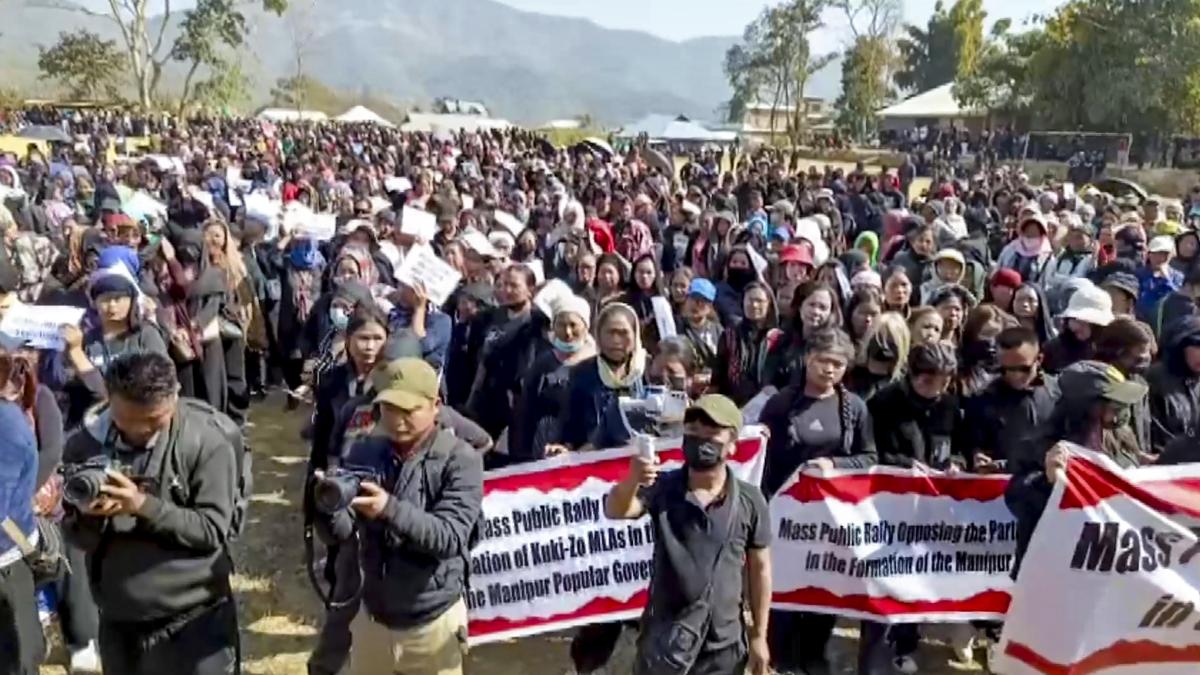
Normalcy is gradually returning to parts of Manipur’s Churachandpur district following two days of violent protests. The unrest was triggered by the decision of three BJP legislators from the Kuki-Zo and Hmar communities to join a government led by Meitei MLAs in the ethnically divided state. Demonstrations, spearheaded by tribal bodies, were largely confined to the Tuibong-Kangvai stretch in Churachandpur. The Kuki-Zo groups have been demanding a separate administrative unit since ethnic violence broke out in May 2023.
The Zomi Council, the apex body of the Zomi tribe, has summoned the three legislators to explain their actions, accusing them of betraying the interests of the community. The council has threatened organizational measures if the legislators fail to respond. The state had been under President’s Rule for a year before Y. Khemchand Singh took oath as Chief Minister on February 4, 2026.
Key Points:
- Protests occurred in Churachandpur district, Manipur, on February 5-6, 2026.
- The protests were against the participation of three Kuki-Zo-Hmar MLAs (Nemcha Kipgen, L.M. Khaute, and N. Sanate) in the state government.
- Nemcha Kipgen joined as Deputy Chief Minister.
- The Kuki-Zo groups are demanding a separate administrative unit due to the deep ethnic divisions since May 2023.
- Over 260 people have died and thousands have been displaced in ethnic clashes.
- The Zomi Council has summoned the three MLAs to explain their actions.
Critical Analysis:
The related context of “Manipur CM calls for calm amid protests in Kuki-majority areas” directly contextualizes the primary article. It suggests a top-down attempt to manage the crisis but highlights that the core issue of ethnic division and lack of representation remains unresolved. This shows the strategic depth that the government is facing as they try to manage the different ethnic groups, leading to current civil unrest.
Key Takeaways:
- The inclusion of Kuki-Zo-Hmar MLAs in the government, while potentially aimed at reconciliation, is perceived by some within their community as a betrayal.
- The demand for a separate administrative unit highlights the deep-seated ethnic divisions and lack of trust between communities in Manipur.
- The Zomi Council’s actions indicate a strong desire for accountability and community representation.
- The recurrence of protests, even after a period of President’s Rule and the formation of a new government, demonstrates the persistence of underlying grievances.
Impact Analysis:
This event series has significant long-term implications for the stability and governance of Manipur. The failure to address the root causes of ethnic division could lead to further unrest and deepen the divide between communities. The outcome of the Zomi Council’s summons and the government’s response to the protesters’ demands will be crucial in shaping the future trajectory of the conflict. Addressing the demand for a separate administrative unit is one of the most important problems that needs to be taken care of.
 First Piper