
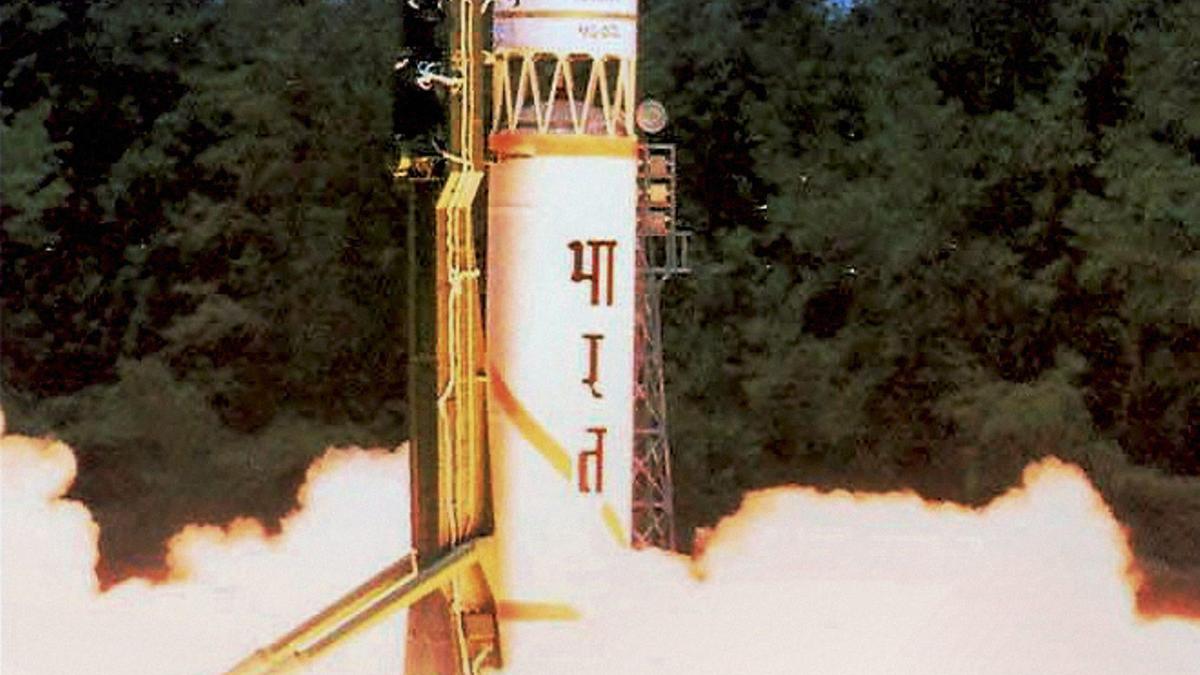
Sat Feb 07 01:40:29 UTC 2026: Headline: India Successfully Test-Fires Nuclear-Capable Agni-III Ballistic Missile Amidst Shifting Geopolitical Landscape
The Story:
On Friday, February 6, 2026, India successfully test-fired its Agni-III ballistic missile from Chandipur, Odisha. The missile, capable of delivering a nuclear payload over 3,000 kilometers, was launched by the Strategic Forces Command (SFC) as part of a routine training exercise. The test validated all operational and technical parameters, confirming the missile’s accuracy in hitting a pre-designated target in the Bay of Bengal.
The Agni-III, a two-stage solid-propelled missile, is a significant component of India’s strategic arsenal. Its successful test reinforces India’s commitment to maintaining a credible nuclear deterrent, especially within the context of evolving regional and global security dynamics.
Key Points:
- The Agni-III ballistic missile was test-fired on February 6, 2026, from Chandipur, Odisha.
- The missile has a strike range exceeding 3,000 kilometers and is nuclear weapons-capable.
- The launch was conducted by the Strategic Forces Command (SFC) as a regular training exercise.
- The test validated all operational and technical parameters of the missile.
- The missile is capable of carrying a 1.5-ton payload.
Critical Analysis:
The Agni-III test-fire occurs amidst a complex backdrop of international developments. The historical context reveals a recent India-U.S. interim trade deal, facilitated by Trump’s decision to lift tariffs related to Russian oil imports. Simultaneously, tensions are simmering between the U.S. and China over alleged secret nuclear explosive tests, and friction between India and Pakistan has increased. The test-fire sends a clear message of strength and readiness, and also could be viewed in light of the U.S. trade deal as an attempt to strengthen a relationship against an external threat such as China.
Key Takeaways:
- India continues to prioritize the development and maintenance of its nuclear deterrent capabilities.
- The timing of the test, amidst shifting geopolitical alignments, suggests a strategic signaling to both regional and global actors.
- India’s strengthening relationship with the U.S. while maintaining its strategic autonomy through independent military development is a key aspect of its foreign policy.
- The successful test reinforces the credibility of India’s nuclear posture.
Impact Analysis:
The successful Agni-III test has several long-term implications:
- Regional Security: It reinforces India’s position as a major power in the Indian Ocean region, potentially influencing the strategic calculations of other regional actors, particularly Pakistan and China.
- Deterrence Stability: By maintaining a credible nuclear deterrent, India contributes to strategic stability, although it may also trigger reciprocal actions from rival nations.
- Technological Advancement: Continued testing and development of missile systems drive technological progress in India’s defense sector, enhancing its overall military capabilities.
- International Relations: This test can influence India’s relationships with other countries, reinforcing its strategic importance for countries like the US.
 First Piper