
Fri Feb 06 15:39:37 UTC 2026: # Wandering Tiger from Tadoba-Andhari Reserve Tranquilized in Andhra Pradesh After 650km Journey
The Story:
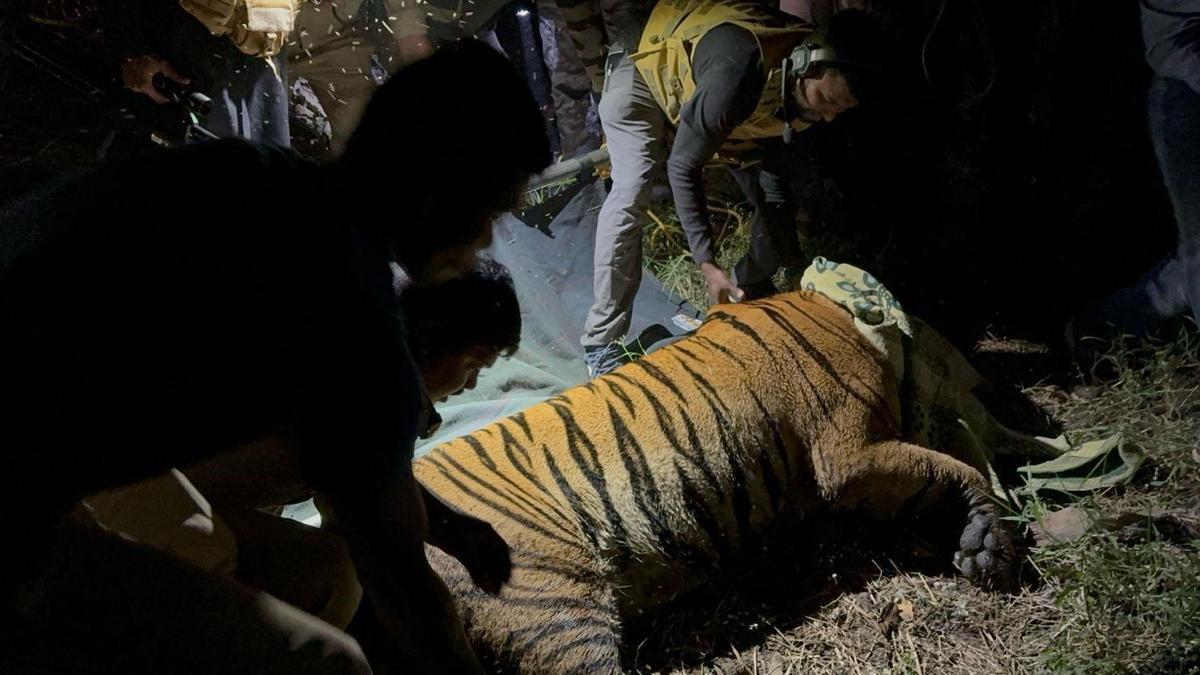
A transient male tiger, believed to have originated from the Tadoba-Andhari Tiger Reserve in Maharashtra, was successfully tranquilized in a cattle shed in Kurmapuram village, East Godavari district, Andhra Pradesh, on Friday, February 6, 2026. The tiger’s journey, which began approximately 53 days prior, covered over 650 km through Maharashtra, Chhattisgarh, and Telangana, before it entered Andhra Pradesh. The animal crossed major rivers, including the Godavari, and eventually made its way into Papikonda National Park.
Key Points:
- The tiger is believed to have dispersed from the Tadoba-Andhari Tiger Reserve in early December 2025.
- The tiger traversed across Maharashtra, Chhattisgarh, and Telangana before entering Andhra Pradesh.
- The animal traveled over 650 km and swam across the Godavari River.
- It was tranquilized in Kurmapuram village after preying on a buffalo.
- This tiger has not attacked any humans during its journey but has preyed on cattle.
- The tiger’s health is stable, and a decision is pending regarding relocation to a rescue center or zoo.
- Experts from the Pune-based RESQ Trust assisted with advanced tracking technology.
Critical Analysis:
The related historical context provides a concerning backdrop to this event. The news snippets mentioning “Tiger Found Dead With Gunshot Wound,” “Arunachal Cop Mauled To Death By Tiger,” and “Life in the territory of fear in Andhra Pradesh,” strongly suggest increasing human-animal conflict. This tiger’s extensive journey, coupled with the mentioned conflicts, may be driven by habitat loss, prey scarcity, or increasing tiger populations exceeding the carrying capacity of their native reserves. The tiger escaping tranquilization due to “screaming by locals” highlights a lack of public awareness and coordinated response procedures.
Key Takeaways:
- Long-distance dispersal of tigers highlights potential issues with habitat connectivity and resource availability in existing reserves.
- Increased human-animal conflict is a serious concern, potentially driven by factors such as habitat encroachment and prey depletion.
- Effective monitoring, tracking, and tranquilization efforts are essential to managing transient tiger populations.
- Public awareness and education are crucial for the safe management of human-wildlife interactions.
- The reliance on external experts like RESQ Trust indicates a potential need for increased resources and training for local forest departments in advanced tracking and monitoring techniques.
Impact Analysis:
The successful tranquilization of this tiger provides a temporary solution, but the underlying issues driving its dispersal remain. The incident underscores the need for long-term conservation strategies that address habitat fragmentation, promote wildlife corridors, and mitigate human-wildlife conflict. Failure to address these issues could lead to further tiger dispersal, increased conflict, and potential threats to both human safety and tiger populations. The future likely holds increasing pressure to balance conservation efforts with the needs and concerns of local communities living near tiger habitats.
 First Piper