
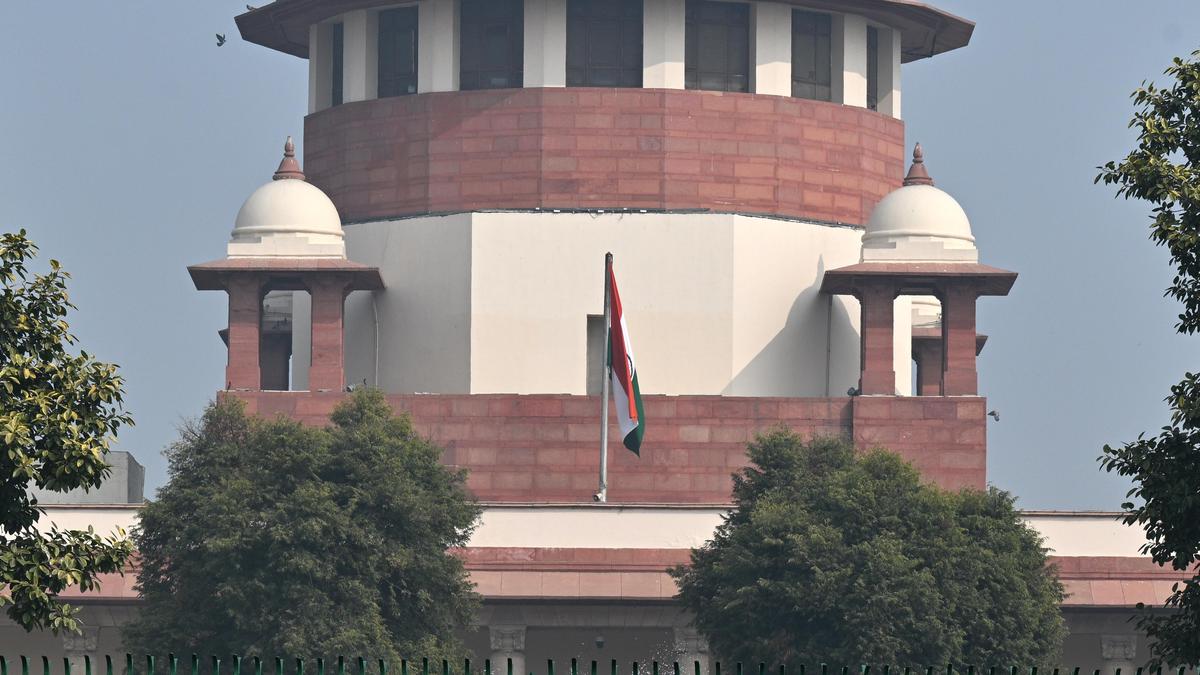
Fri Feb 06 10:37:42 UTC 2026: Headline: Supreme Court Warns Telangana Speaker on Defection Case Delay, Threatens Contempt
The Story:
The Supreme Court has issued a stern warning to the Telangana Assembly Speaker regarding the delayed decision on disqualification petitions against two Bharat Rashtra Samithi (BRS) legislators who defected to the ruling Congress party. The Court has granted a final three-week deadline for the Speaker to rule on the petitions, cautioning that failure to do so will result in contempt of court. This follows previous warnings issued in November 2025 and reflects the Court’s frustration with the Speaker’s protracted handling of the defection case.
The Speaker had previously rejected seven of the initial ten disqualification petitions in December 2025. The Supreme Court has consistently emphasized that the Speaker cannot indefinitely postpone decisions on these petitions, effectively allowing them to lapse by the end of the legislative term.
Key Points:
- The Supreme Court gave the Telangana Assembly Speaker three weeks to decide on disqualification petitions against two BRS legislators.
- The Speaker faces contempt of court if the deadline is missed.
- This is not the first warning; the Supreme Court cautioned the Speaker previously in November 2025.
- The Speaker rejected seven of the initial ten petitions in December 2025.
- The Court emphasized that the Speaker cannot delay the decisions indefinitely.
- Senior Advocate A.M. Singhvi, appearing for the State of Telangana, requested the additional time.
Critical Analysis:
The provided context does not significantly alter the interpretation of the article, because they are unrelated happenings.
Key Takeaways:
- The Supreme Court is actively monitoring the Telangana Speaker’s handling of defection cases.
- The anti-defection law’s effectiveness is being tested by delays in decision-making by presiding officers.
- The judiciary is asserting its authority to ensure timely resolution of defection matters.
- Political defections continue to be a challenge to legislative integrity and stability in India.
Impact Analysis:
The Supreme Court’s intervention underscores the judiciary’s role in upholding constitutional principles and preventing the undermining of democratic processes through defection. A ruling against the Speaker could set a precedent for stricter enforcement of the anti-defection law and greater judicial oversight of legislative proceedings, while a failure to act within the deadline could lead to a constitutional crisis and further erode public trust in the legislative process. It is also likely to impact the careers of the involved politicians.
 First Piper