
Fri Feb 06 10:57:42 UTC 2026: ### Indian Railways Shows Financial Improvement, Minister Vaishnaw Claims
The Story:
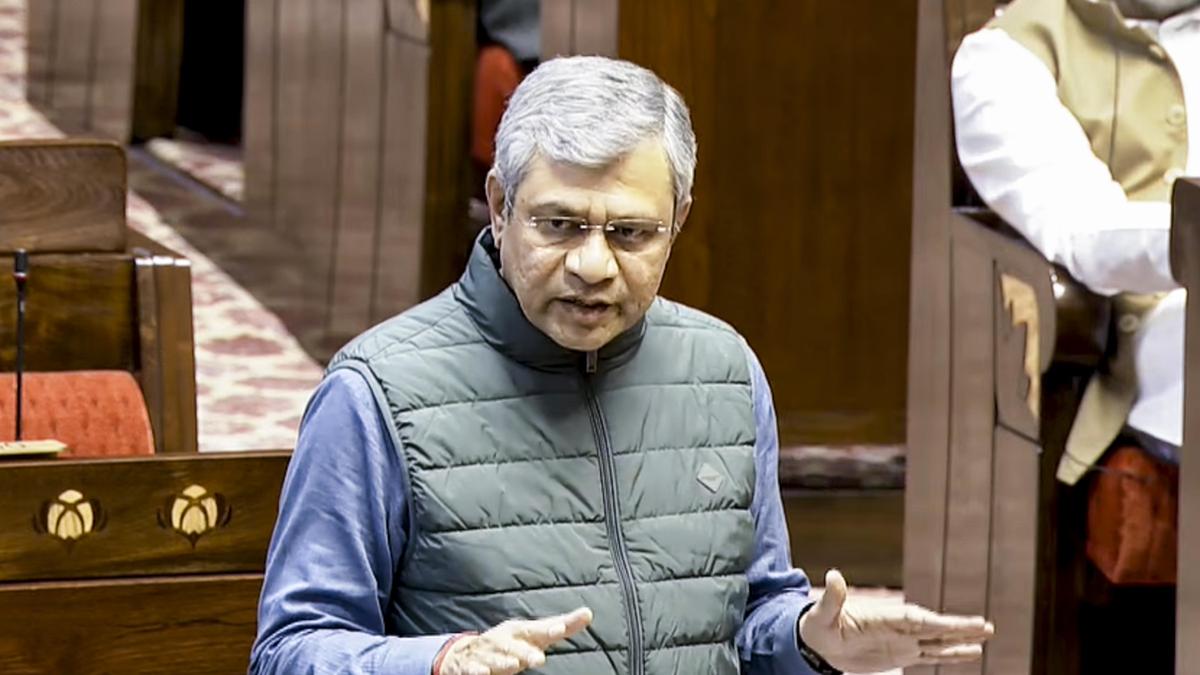
On February 6, 2026, Union Railways Minister Ashwini Vaishnaw addressed the Rajya Sabha during the Budget session, asserting a significant improvement in the Indian Railways’ financial health over the past decade. He highlighted a revenue surplus after covering all costs, attributing this success to concerted efforts in increasing freight traffic, enhancing passenger revenue, and controlling expenses under Prime Minister Narendra Modi’s leadership. The Minister also detailed the significant employment generation and cost-saving measures, including the electrification of the railway network.
Key Points:
- The Indian Railways has achieved a revenue surplus after meeting all costs.
- 5.04 lakh jobs were generated between 2014-2024, with another 1.5 lakh planned in the government’s third term.
- The operating ratio for the 2024-25 fiscal year was 98.22%, with gross traffic receipts of ₹2,65,114 crore and a surplus of ₹2,660 crore.
- Energy costs have reduced to about ₹32,400 crore from ₹37,841 crore four years ago, due to railway network electrification.
- The government provides a subsidy of ₹60,000 crore to all passengers, with a subsidy level of 45% in the railway fare.
- Budget for Northeast region has been increased to ₹11,486 crore from ₹2,000 crore under the UPA government.
Critical Analysis:
The announcement comes amid reports concerning the broader financial landscape of India, exemplified by the UDF’s (United Democratic Front) focus on Kerala’s financial crisis during their Puthuyuga Yatra. The Minister’s emphasis on employment generation within the Railways also coincides with reports of protests by ASHA workers in Bengal over pay, highlighting the complex interplay between government initiatives, labor concerns, and overall economic conditions.
Key Takeaways:
- The Indian government is actively promoting the narrative of improved financial stability in key sectors like railways.
- Infrastructure development and job creation are central to the government’s economic strategy.
- While progress is highlighted in specific areas, challenges related to fair wages and regional economic disparities persist across the country.
Impact Analysis:
The reported financial improvement in Indian Railways, if sustained, could have significant long-term implications:
- Increased Investment: A revenue surplus could attract further investment in railway infrastructure, modernization, and expansion.
- Enhanced Connectivity: Continued electrification and increased freight traffic could boost economic activity across the country, improving connectivity between regions.
- Job Market Stability: The creation of new railway jobs could help alleviate unemployment and contribute to overall economic stability, though wage satisfaction remains a critical factor to consider.
- Environmental Benefits: The move towards complete electrification of the railway network will lower the carbon footprint of the railways.
 First Piper