
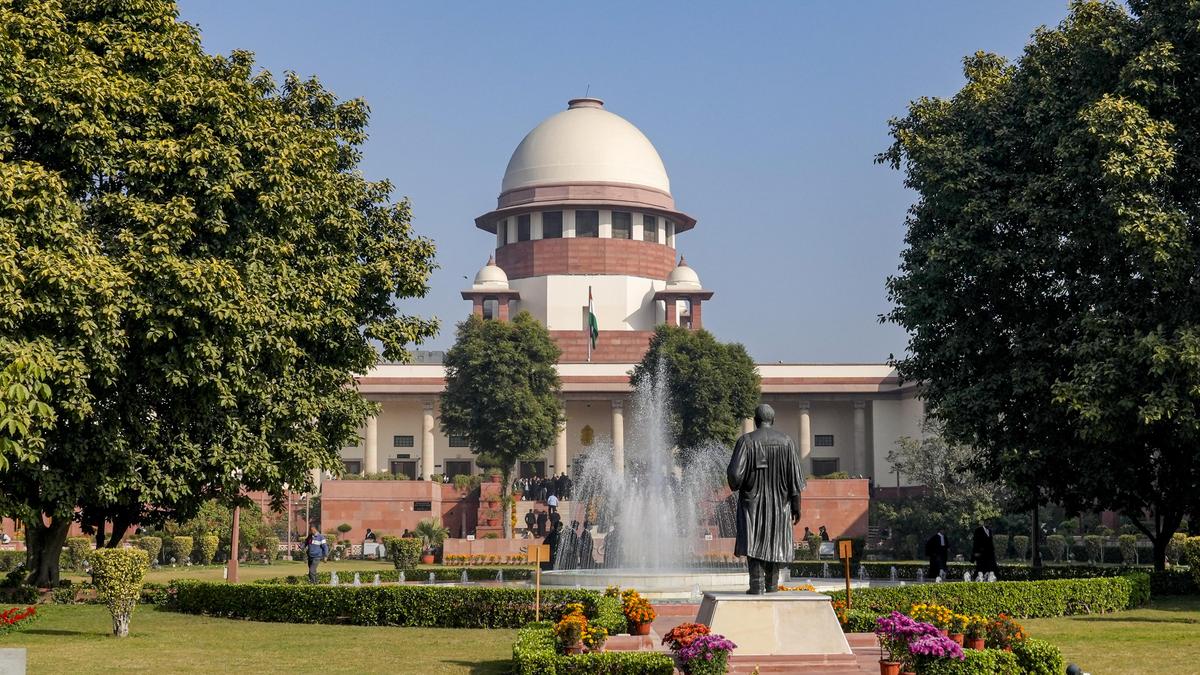
Fri Feb 06 07:41:22 UTC 2026: ### Headline: Supreme Court Rejects Jan Suraaj Party’s Plea to Overturn 2025 Bihar Assembly Elections
The Story
On February 6, 2026, the Supreme Court of India sharply criticized Prashant Kishor’s Jan Suraaj Party for attempting to use the judicial system to gain popularity after failing in the 2025 Bihar Assembly elections. The party alleged that the Nitish Kumar-led NDA government engaged in corrupt practices by disbursing ₹15,600 crore as “dole” through the Mukhyamantri Mahila Rojgar Yojana to approximately 1.5 crore women shortly after the announcement of the election schedule. Chief Justice Surya Kant, leading the bench, questioned the party’s motives and suggested that the matter should be pursued in the Patna High Court, as it pertains specifically to Bihar.
Key Points
- The Supreme Court rejected Jan Suraaj Party’s plea to set aside the 2025 Bihar Assembly elections.
- Jan Suraaj Party alleged that the Nitish Kumar government splurged ₹15,600 crore in violation of the Model Code of Conduct.
- The disbursement of ₹10,000 each to women under the Mukhyamantri Mahila Rojgar Yojana was cited as a corrupt practice.
- Chief Justice Surya Kant questioned the party’s motives and suggested they were seeking publicity after electoral defeat.
- The Court allowed the party to withdraw the petition and approach the Patna High Court.
Key Takeaways
- The Supreme Court is wary of political parties using the judicial system for political gain after failing in elections.
- Allegations of pre-election “freebies” and their impact on fair elections are a growing concern in India.
- The court acknowledged the importance of examining the distribution of irrational freebies but refused to do so at the behest of a losing political party.
- The Model Code of Conduct’s effectiveness in preventing undue influence through welfare schemes is under scrutiny.
- The Supreme Court is willing to address concerns about the election process as a whole but is hesitant to intervene on behalf of a political party that is trying to get publicity and attention after failing in the election cycle.
Impact Analysis
This event highlights the increasing tension between welfare schemes and electoral fairness in India. The Supreme Court’s reluctance to intervene directly indicates a cautious approach, emphasizing the importance of maintaining the judiciary’s impartiality. However, the underlying issues of financial irregularities and the impact of pre-election spending on voters raise significant questions about the integrity of the electoral process. This case could lead to stricter scrutiny of government welfare schemes during election periods and potentially influence future election laws and guidelines regarding pre-election spending and the enforcement of the Model Code of Conduct.
 First Piper