
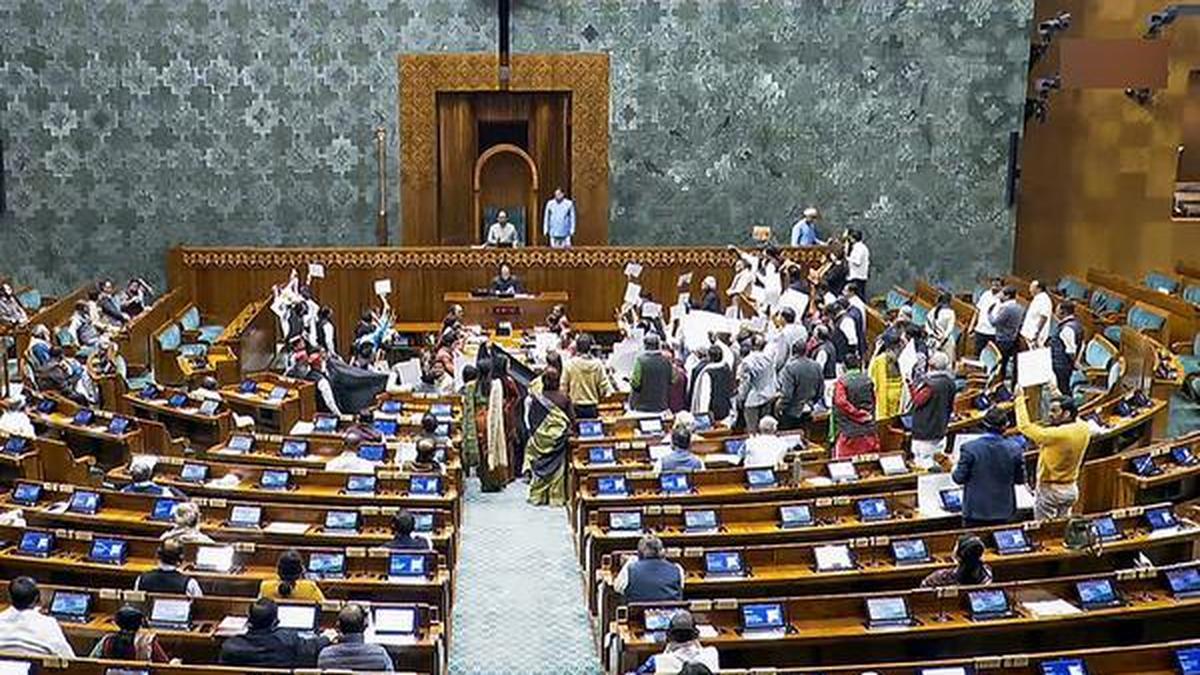
Fri Feb 06 04:53:03 UTC 2026: ### Headline: Indian Parliament Begins Budget Session Amidst Opposition Ruckus
The Story:
The Indian Parliament commenced its Budget session on February 6, 2026, following a tumultuous start marked by disruptions from opposition Members of Parliament during the previous day. The Lok Sabha is scheduled to engage in a general discussion regarding the Union Budget for 2026-27. Government business, including Question Hour and the laying of papers by several Union Ministers from key portfolios such as Health and Family Welfare, Law and Justice, External Affairs, Defence, and Ports, Shipping and Waterways, is on the agenda. Separately, Prime Minister Narendra Modi addressed the Rajya Sabha on the Motion of Thanks on the President’s address.
Key Points:
- The Lok Sabha will discuss the Union Budget for 2026-27 on February 6, 2026.
- The Budget session spans 30 sittings over 65 days, concluding on April 2, 2026.
- A recess is scheduled from February 13 to March 9, 2026, for Standing Committees to review the Demands for Grants of various Ministries.
- Private Members’ Business, including Constitution Amendment Bills and welfare-related Bills, will be taken up from 3:30 p.m. onwards.
- Opposition MPs caused disruptions in the Lok Sabha on February 5, 2026.
Critical Analysis:
The inclusion of Private Member’s Bills touching on a wide range of issues – from farmer welfare to AI and labor reform – suggests an attempt by individual MPs to shape the legislative agenda, potentially reflecting growing societal concerns in these areas. The government’s willingness to address these issues will be indicative of its responsiveness to public needs. The related context, including the GVMC’s budget boost to infrastructure and the aggression shown by a US budget airline suggests a wider trend of budget related growth across various sectors and geographies.
Key Takeaways:
- The Indian government is proceeding with its budgetary agenda despite opposition challenges.
- The emphasis on various sectors in the listed bills indicates a broad range of policy priorities for the government.
- The recess period allows for detailed scrutiny of budgetary allocations by Standing Committees, highlighting the importance of parliamentary oversight.
- The smooth functioning of the Budget session is critical for the government to implement its economic policies and development programs.
Impact Analysis:
The successful passage and implementation of the Union Budget will have a significant impact on India’s economic growth, social welfare programs, and overall development trajectory. The attention given to sectors like healthcare, education, and infrastructure suggests a focus on long-term sustainable development. Furthermore, addressing concerns around AI and digital platforms through legislation indicates forward-thinking policymaking aimed at navigating the challenges of the digital age. Any disruptions or delays could negatively impact investor confidence and hinder economic progress.
 First Piper