
Thu Feb 05 20:16:13 UTC 2026: ### Headline: JNU Rustication Controversy Escalates as MPs Demand Reinstatement of Students
The Story
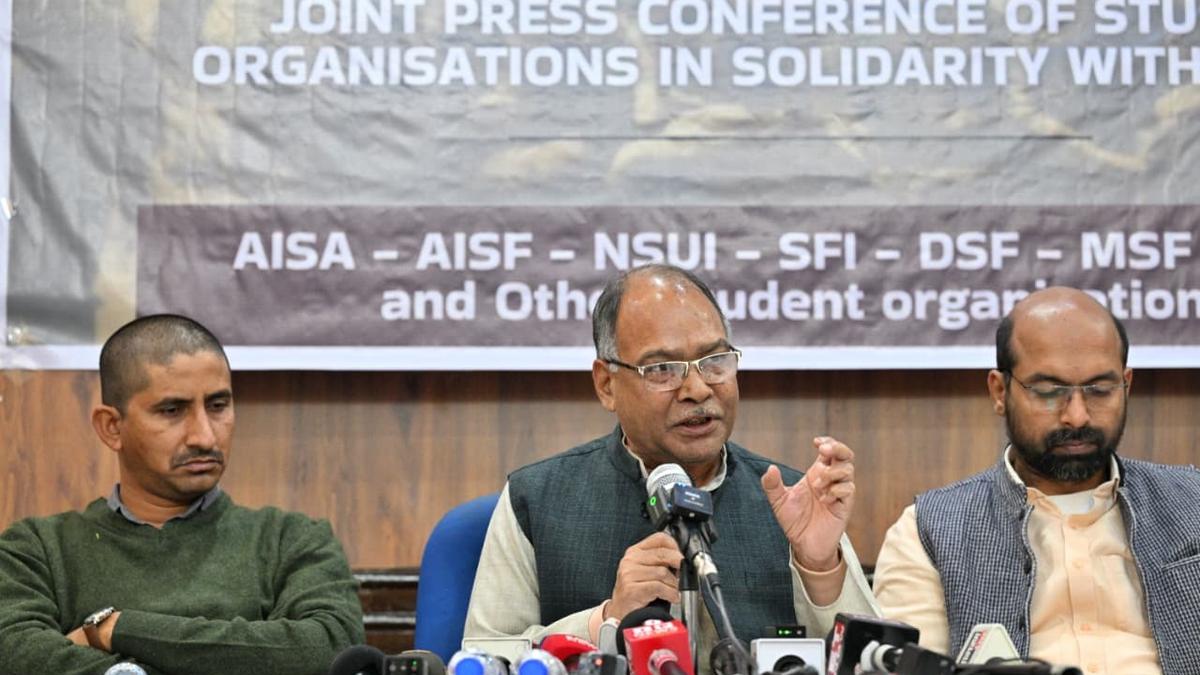
On Thursday, February 5, 2026, Members of Parliament from various political parties, including Congress, CPI-ML, Bharat Adivasi Party, and RJD, publicly called for the withdrawal of rustication notices issued to five Jawaharlal Nehru University (JNU) students. The MPs addressed mediapersons at the Press Club of India, asserting that the students’ rustication for alleged vandalism during a protest against biometric systems in the Dr. B.R. Ambedkar Central Library was unjust.
The MPs argued that the JNU administration was acting under political pressure and undermining the autonomy of public institutions. They emphasized that universities should foster dialogue rather than implement surveillance measures.
Key Points
- Five JNU students, including four JNU Students’ Union office-bearers and a former president, were rusticated for two semesters.
- The rustication stemmed from a protest against the installation of a biometric system in the university library in 2025.
- MPs from Congress, CPI-ML, Bharat Adivasi Party, and RJD voiced their support for the students’ reinstatement.
- MP Sashikanth Senthil (Congress) accused the JNU administration of being a tool for “political masters.”
- MP Manoj Kumar Jha (RJD) argued that universities should be spaces for dialogue, not “fortresses of surveillance.”
Critical Analysis
The rustication of the JNU students and the subsequent uproar from MPs highlights the ongoing tensions between student activism, university administration, and political influence. The protest against biometric systems likely reflects concerns about privacy and increased surveillance on campus. The involvement of MPs from diverse political backgrounds suggests a broad concern about academic freedom and the potential for universities to be used as instruments of political control.
Key Takeaways
- The incident underscores the sensitive nature of academic freedom and student activism in India.
- Political interference in university affairs is a recurring concern.
- The use of biometric systems in educational institutions raises questions about privacy and surveillance.
- The solidarity shown by MPs from different parties suggests a unified front against perceived injustices within the university system.
Impact Analysis
This event is likely to further polarize opinions on the role of universities in society and the extent to which student activism should be tolerated. It could also lead to increased scrutiny of university administrations and their relationship with political entities. The public debate spurred by this incident may influence future policies regarding student rights and the implementation of surveillance technologies on campuses. Furthermore, this could galvanize student movements across India to resist perceived infringements on their rights and freedoms.
 First Piper