
Fri Feb 06 16:52:01 UTC 2026: ### Congress Protests India-U.S. Trade Deal, Citing Epstein Files and Farmer Concerns
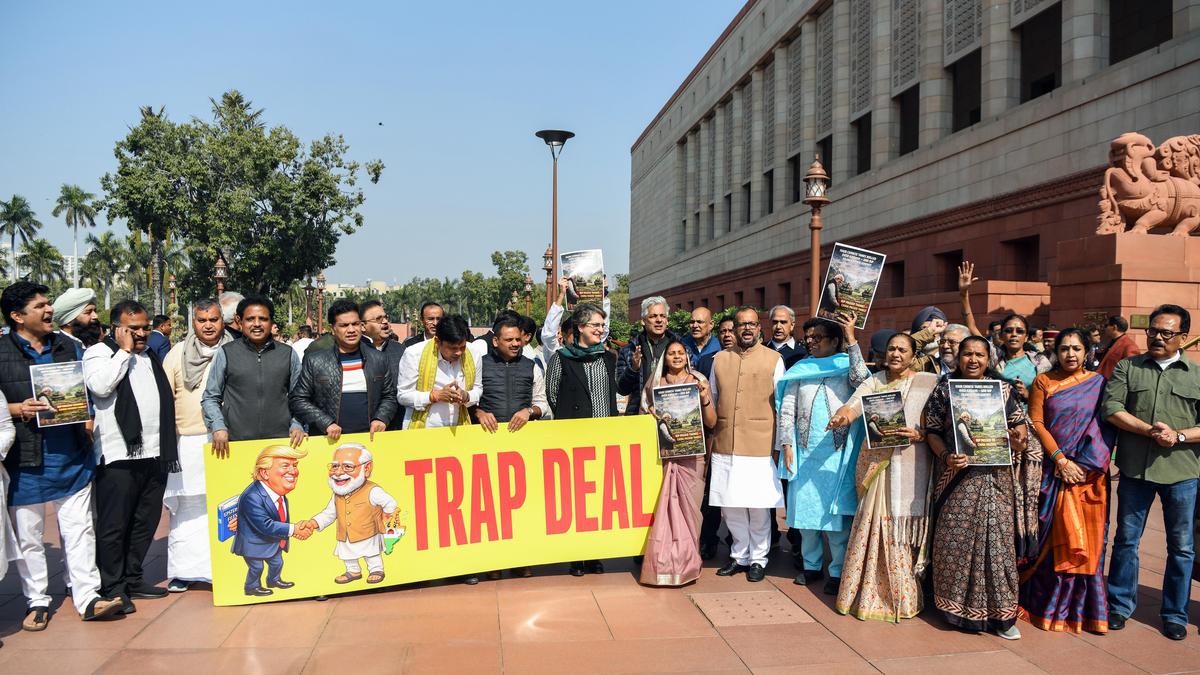
The Story: On February 6, 2026, the Indian National Congress staged a protest at Parliament against the Narendra Modi government’s recently signed trade deal with the United States. Congress leaders, including party president Mallikarjun Kharge and general secretary Priyanka Gandhi Vadra, accused Prime Minister Modi of sacrificing Indian farmers’ interests under pressure from U.S. President Donald Trump, allegedly due to potential revelations in the Jeffrey Epstein files implicating Modi. The protests involved suspended Lok Sabha MPs and included slogans and banners criticizing the trade agreement as a “Trap Deal” and accusing the government of authoritarianism.
Key Points:
- Congress MPs protested at the Parliament premises on February 6, 2026, against the India-U.S. trade deal.
- Mallikarjun Kharge claimed that PM Modi signed the trade deal under pressure from U.S. President Donald Trump because of the Epstein files.
- Protesters carried a banner reading “Trap Deal” to symbolize their disapproval of the agreement.
- Rahul Gandhi referenced General Naravane’s memoir, using the phrase “jo uchit samjho woh karo [do whatever you deem appropriate]” to mock PM Modi.
- The protests also addressed the suspension of eight MPs and controversy surrounding General Naravane’s unpublished memoir.
Key Takeaways:
- The Congress party is aggressively challenging the Modi government’s economic policies, specifically the India-U.S. trade deal.
- The Epstein files are being used as a political weapon to attack the Prime Minister’s credibility and decision-making.
- The protests highlight the deep political polarization within the Indian Parliament.
- The controversy surrounding General Naravane’s memoir adds another layer of complexity to the political climate.
Impact Analysis:
The protests and allegations surrounding the India-U.S. trade deal have the potential for significant long-term impacts:
- Economic Policy Review: The controversy may force a re-evaluation of the trade deal, potentially leading to renegotiations or modifications to address the concerns of Indian farmers and other stakeholders.
- Political Polarization: The intensity of the protests suggests a deepening divide between the ruling party and the opposition, potentially affecting the government’s ability to pass legislation and implement policies effectively.
- International Relations: Accusations of succumbing to pressure from the U.S. could strain Indo-U.S. relations and impact future trade negotiations.
- Electoral Repercussions: With upcoming elections (implied by the related context events), this issue could be a significant rallying point for the opposition and could sway public opinion.
 First Piper