
Fri Feb 06 02:05:57 UTC 2026: ### Headline: Telangana Agriculture Increasingly Reliant on Migrant Labor as Locals Seek Alternative Livelihoods
The Story:
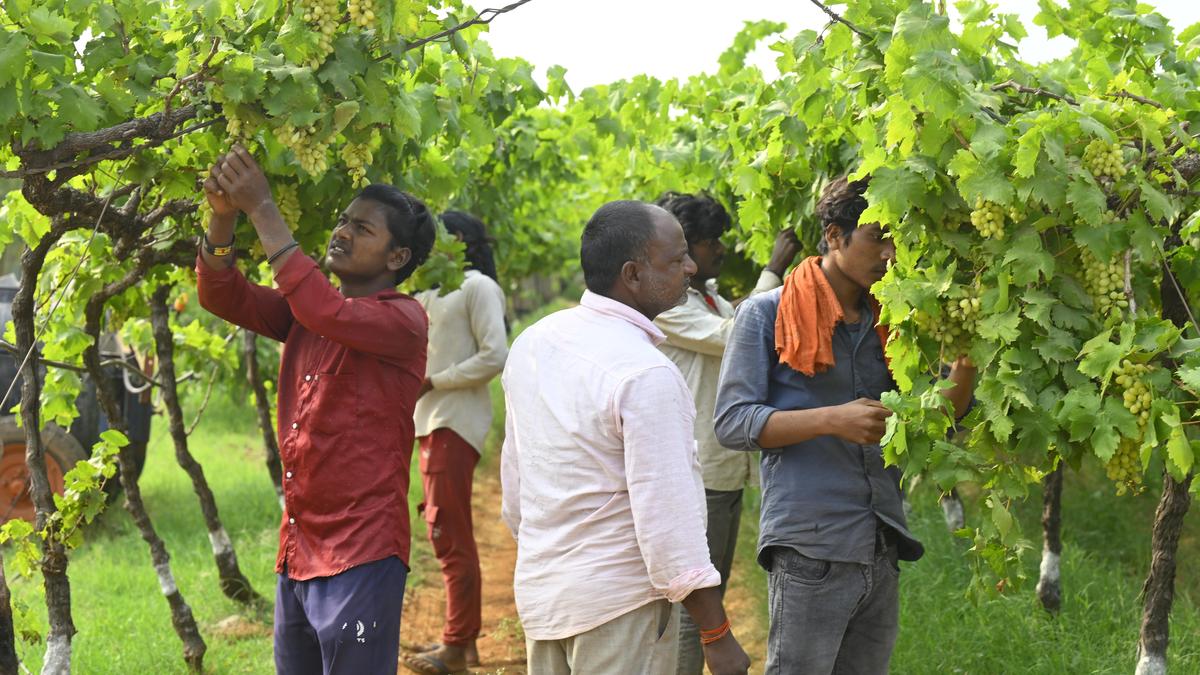
A growing trend in Telangana’s agriculture sector reveals an increasing dependence on migrant workers from states like Bihar, Odisha, and Chhattisgarh. As reported on February 6, 2026, local Telangana youth are increasingly opting for alternative employment opportunities, education, or managing their own small landholdings. This shift has created a labor gap that migrant workers are filling, attracted by the availability of work and the prospect of earning a livelihood. While this influx sustains agricultural activities, it also raises concerns about social security and potential displacement of local labor. Phulender Thakur, a migrant from Bihar who arrived in Telangana 25 years ago, exemplifies this trend, now supervising a group of workers from his native village at a grape farm.
Key Points:
- Telangana’s agricultural landscape covers over 276.95 lakh acres (112.08 lakh hectares), with 52.61% under cultivation in 2022-23.
- Migrant workers typically earn between ₹9,000 and ₹11,000 per month, along with shelter, food, and electricity.
- The Kaleshwaram Lift Irrigation Project and Mission Kakatiya have increased cultivation area from 1.31 crore acres in 2014 to 2.21 crore acres by financial year 2023, increasing the demand for agricultural labor.
- 91.4% of landholdings in Telangana are marginal and small farmers (less than two acres), operating 68.2% of the total area.
- Skilled agricultural workers are leveraging digital platforms to expand their reach and secure work across regions.
Critical Analysis:
The context provided hints at a potential national issue. The article on February 5, 2026, about opposition slamming the Tamil Nadu Agriculture Minister’s remarks against North Indian migrant workers suggests a broader unease or tension regarding the movement of labor between states. This could be due to concerns over resource allocation, cultural integration, or job displacement, contributing to negative rhetoric. Telangana’s growing dependence on migrant labor, while benefiting the agricultural sector, might also be vulnerable to similar social and political backlashes if not managed carefully.
Key Takeaways:
- Telangana’s agricultural sector is experiencing a significant shift in its labor dynamics, with increased reliance on migrant workers.
- Factors such as increased irrigation, alternative employment options for locals, and fragmented landholdings contribute to this dependency.
- While migrant workers fill a critical labor gap, the absence of social security nets creates vulnerabilities and raises ethical concerns.
- The growing trend of specialized agricultural skills and digital platform usage suggests a potential for improved labor market efficiency, but also exacerbates issues surrounding a lack of centralized worker protections.
- Tension across state lines needs to be monitored to prevent xenophobia and protect migrant workers.
Impact Analysis:
The increasing dependence on migrant labor could reshape Telangana’s agricultural policies and social dynamics. The state government might need to implement policies addressing social security for migrant workers, skill development for local youth to encourage participation in modernized agriculture, and strategies for sustainable resource management to accommodate the growing workforce. Failure to address these issues could lead to social unrest, economic imbalances, and potentially hinder long-term agricultural sustainability. The example of rising political tensions over migrant workers from Tamil Nadu suggest that these problems must be addressed proactively.
 First Piper