
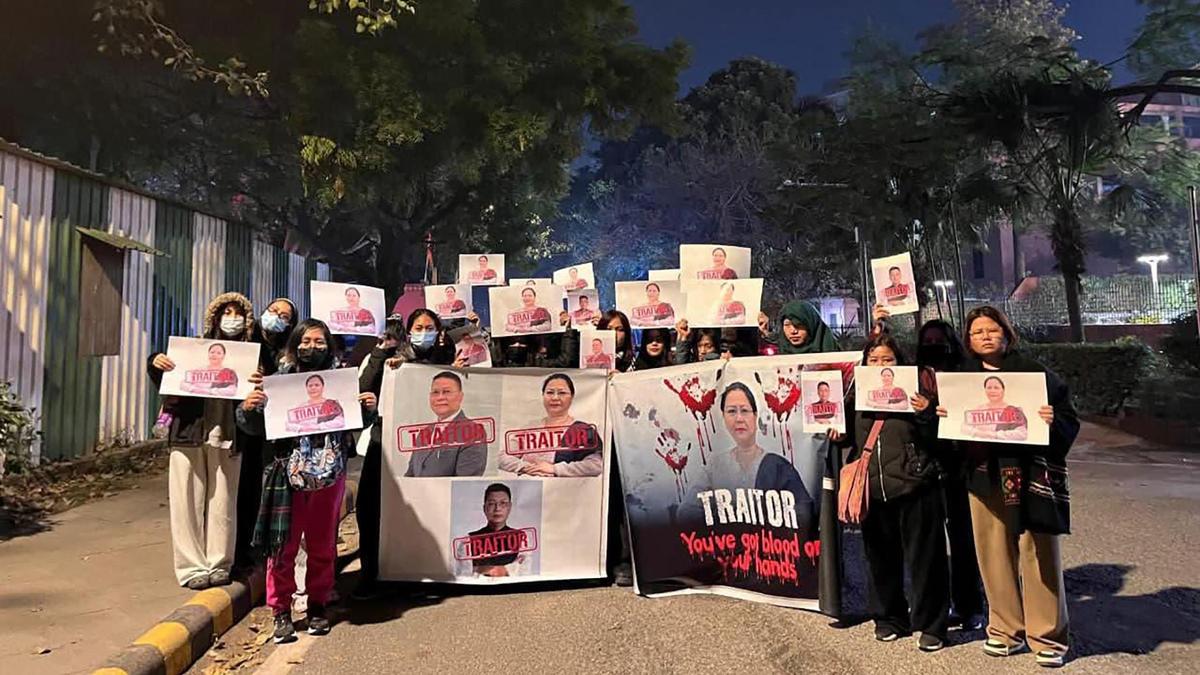
Thu Feb 05 20:49:48 UTC 2026: ### Kuki-Zo Groups Impose Social Boycott on Legislators Joining Manipur Government
The Story:
On February 5, 2026, Kuki-Zo tribal groups in Manipur declared a social boycott of their legislators who joined the newly formed Manipur government led by Yumnam Khemchand Singh. This action, accompanied by a dawn-to-dusk shutdown, protested the perceived “betrayal” by these MLAs. The boycott specifically targeted Nemcha Kipgen, the newly appointed Deputy Chief Minister (February 4, 2026), and MLAs L.M. Khaute and Ngursanglur Sanate, all members of the Bharatiya Janata Party. The Kuki-Zo Council (KZC), the apex body of the community, condemned the legislators for violating a prior resolution to abstain from government participation until a separate administration for the Kuki-Zo community was politically assured.
The protests disrupted normal life in several Kuki-Zo dominated districts, with reports of arson indicating the depth of the community’s anger. The Thadou Inpi Manipur (TIM), however, welcomed Nemcha Kipgen’s appointment while urging her to distance herself from separatist ideologies. Governor Ajay Kumar Bhalla addressed the Manipur Assembly, emphasizing the government’s priority to maintain law and order with coordinated efforts from various agencies.
Key Points:
- Kuki-Zo tribal groups declared a social boycott of Kuki-Zo legislators who joined the 2026 Manipur government.
- The boycott included a dawn-to-dusk shutdown in Kuki-Zo dominated districts (February 5, 2026).
- The boycott targets Nemcha Kipgen, Deputy Chief Minister, and MLAs L.M. Khaute and Ngursanglur Sanate.
- The Kuki-Zo Council (KZC) views the legislators’ actions as a betrayal of the community’s demand for a separate administration.
- The Thadou Inpi Manipur (TIM) supports Nemcha Kipgen’s appointment and urges her to protect Manipur’s territorial integrity.
Key Takeaways:
- The Kuki-Zo community is deeply divided over the issue of political representation within the Manipur government.
- The demand for a separate administration for the Kuki-Zo community remains a central point of contention.
- The actions of a few Kuki-Zo legislators have sparked significant backlash from their own community, demonstrating the influence of Kuki-Zo community organizations.
Impact Analysis:
The social boycott and the divisions exposed within the Kuki-Zo community could have long-term implications for Manipur’s political stability. The potential impacts include:
- Increased Political Instability: The boycott and internal divisions could undermine the legitimacy of the new government and lead to further unrest.
- Hindrance to Reconciliation: The accusations of betrayal and the social ostracization of legislators could deepen the rift between the Kuki-Zo and Meitei communities, making reconciliation more difficult.
- Reshaping Political Alliances: This event may lead to a realignment of political alliances within Manipur, particularly among tribal groups. It could influence future election outcomes and the formation of government.
- Strengthened Separatist Sentiments: If the Kuki-Zo community feels that their concerns are not being addressed within the existing political framework, it could strengthen support for separatist movements.
 First Piper