
Fri Feb 06 07:02:57 UTC 2026: ### Australia and Indonesia Forge New Security Treaty Amid Regional Tensions
The Story:
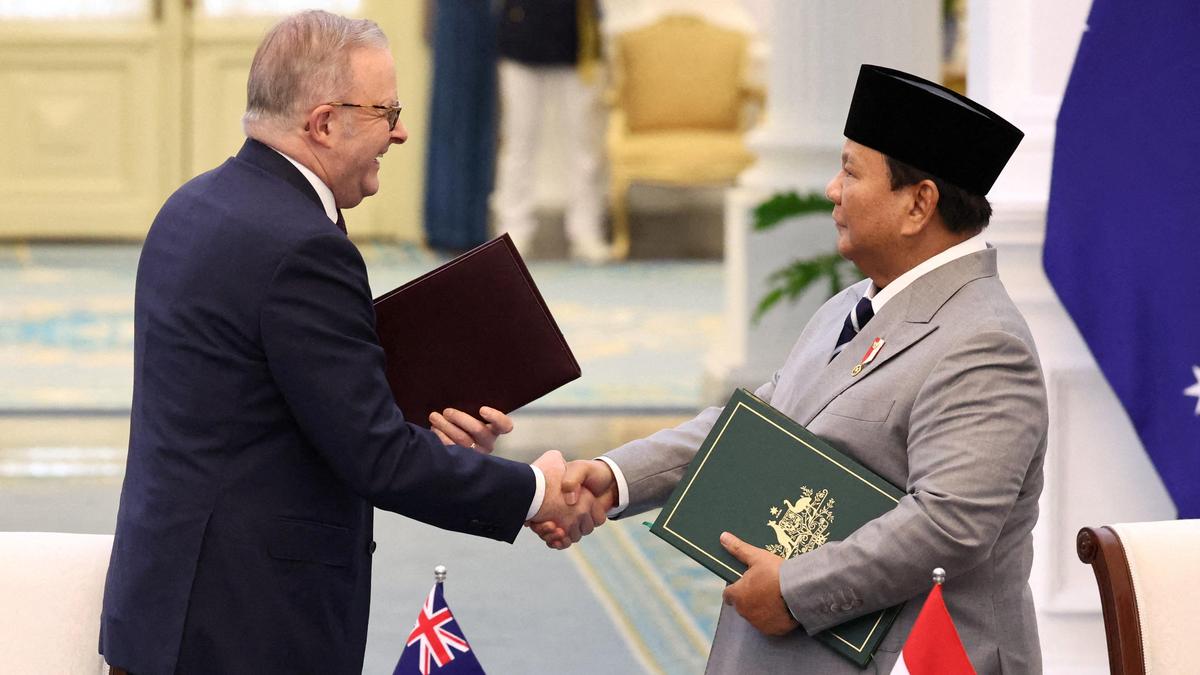
On February 6, 2026, Australian Prime Minister Anthony Albanese and Indonesian President Prabowo Subianto signed a new bilateral security treaty in Jakarta, Indonesia. Both governments hail the agreement as a significant step towards deepening ties between the two nations, despite their historically “testy” relationship. The treaty builds upon previous security agreements from 1995 and 2006, aiming to enhance cooperation on defense and security matters. While the full text remains unpublished, analysts suggest its primary significance lies in the political commitment to consult on security issues, particularly in the context of growing regional tensions with China.
The agreement is viewed by Albanese as a “watershed moment,” marking a major extension of existing security and defense cooperation, solidifying the relationship between Australia and Indonesia. While not a mutual defense treaty, its seen as a success because of Prabowo’s more open approach to Indonesian foreign policy traditions.
Key Points:
- A new bilateral security treaty was signed between Australia and Indonesia in Jakarta on February 6, 2026.
- The treaty aims to deepen ties despite historical strains and builds upon previous agreements from 1995 and 2006.
- Anthony Albanese views the treaty as a “watershed moment,” extending security and defense cooperation.
- Analysts see the agreement as a symbolic commitment to consult, particularly given regional tensions with China.
- The treaty is not a mutual defense pact and sits below Australia’s alliances with the United States and Papua New Guinea in terms of obligation.
- Prabowo is seen as more willing to break Indonesian foreign policy tradition, allowing the agreement to take place.
Critical Analysis:
Given the context that the primary news article contains, but the related historical context does not, here is the analysis.
The signing of this security treaty is clearly driven by growing concerns over China’s increasing influence in the region. The treaty is designed to formalize and strengthen the security relationship with Indonesia, which, while not a formal ally, is a strategically vital neighbor. Prabowo’s willingness to strike leader-led agreements signals a pragmatic shift in Indonesian foreign policy, potentially driven by similar anxieties about regional security. The need for Australia to improve cooperation beyond security into trade, investment, education and development suggests the agreement is broader than just defense.
Key Takeaways:
- The treaty reflects a strategic alignment between Australia and Indonesia in response to regional security concerns, primarily China.
- Indonesia’s willingness to engage in deeper security cooperation signals a potential shift in its traditional non-aligned foreign policy.
- While not a mutual defense pact, the treaty provides a framework for enhanced consultation and cooperation on security issues.
- The agreement is a “huge success” for Australia.
- The agreement is part of a broader push to expand cooperation beyond security.
Impact Analysis:
The treaty has several potential long-term implications. First, it strengthens Australia’s security posture in the Indo-Pacific region, providing a buffer against potential threats. Second, it sends a signal to China that Australia is actively building partnerships to counter its influence. Third, it could lead to increased military cooperation and intelligence sharing between Australia and Indonesia, enhancing their collective security capabilities. Finally, the treaty might encourage other Southeast Asian nations to seek closer security ties with Australia, further solidifying its role as a regional security partner.
 First Piper