
Fri Feb 06 04:50:15 UTC 2026: ### Headline: Tamil Nadu Government Unveils Digitized Records of Anti-Hindi Agitation, Revisiting a Pivotal Moment in State Politics
The Story:
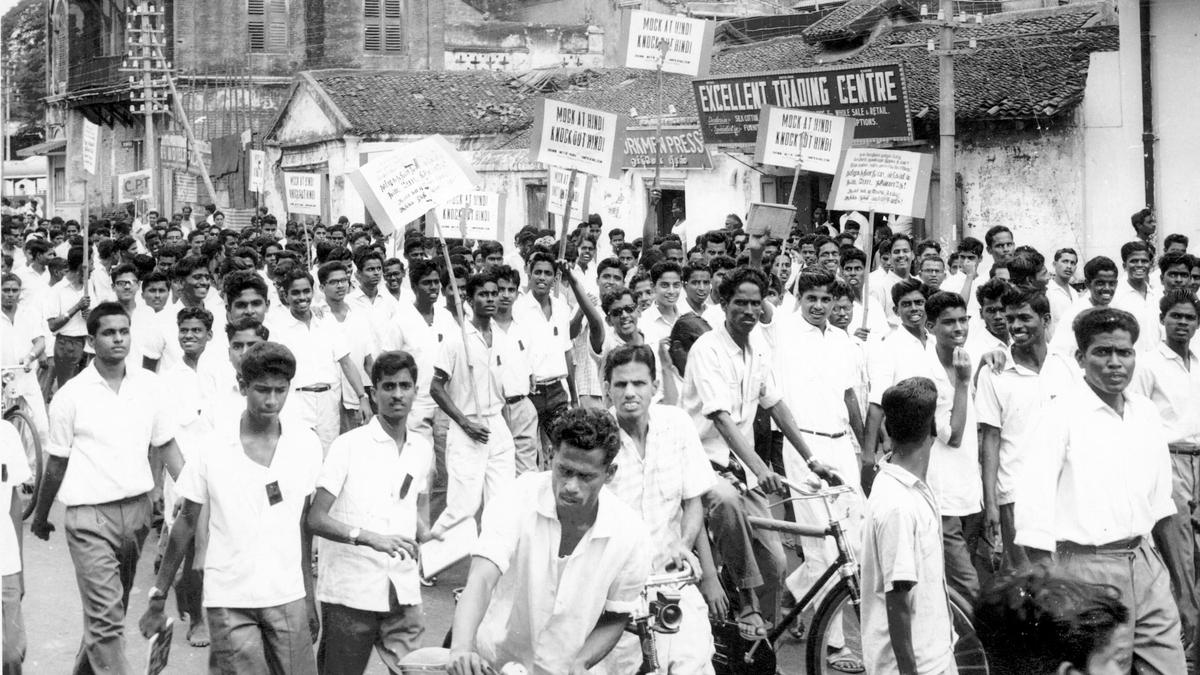
The Tamil Nadu government, led by Chief Minister M.K. Stalin, on December 22, 2025, released a comprehensive inventory of digitized documents related to the anti-Hindi agitations that swept the state between 1927 and 1969. This release coincides with renewed interest in the historical context of language politics in Tamil Nadu. The newly accessible records, totaling 649 items and 20,875 pages, include government orders, legislative assembly debates, and legislative council discussions, all of which shed light on a period that fundamentally reshaped the state’s political landscape. The documents aim to provide younger generations with a deeper understanding of this significant struggle, as explained by S. Malarvizhi, Commissioner of Tamil Nadu Archives and Historical Research.
The release highlights a controversial episode from 1967, when then-Chief Minister M. Bhaktavatsalam of the Congress party ordered the destruction of records pertaining to the anti-Hindi imposition agitation, just before losing power to the Dravida Munnetra Kazhagam (DMK). This act spurred immediate inquiry from the incoming Chief Minister C.N. Annadurai, who questioned the propriety of the destruction and sought to understand the motives behind it. The digitized records now allow a re-examination of this period and its lasting impact on Tamil Nadu’s political identity.
Key Points:
- M.K. Stalin‘s government released digitized records of the anti-Hindi agitations from 1927-1969 on December 22, 2025.
- In February 1967, Congress Chief Minister M. Bhaktavatsalam ordered the destruction of records related to the anti-Hindi agitation before the DMK came to power.
- The destroyed records included information on the detention of key DMK leaders like M. Karunanidhi and other prominent figures.
- C.N. Annadurai, upon assuming office in March 1967, questioned the destruction of the records and sought explanations from the Chief Secretary.
- The records comprise 649 files, totaling 20,875 pages, including Government Orders and debates from the Madras Legislative Assembly and Legislative Council.
Key Takeaways:
- The release of these records underscores the enduring significance of language politics in Tamil Nadu and its role in shaping the state’s political identity.
- The destruction of records by the outgoing Congress government highlights the intense political rivalry between the Congress and the DMK during this period.
- The digitized records provide valuable primary source material for researchers and the public to understand the anti-Hindi agitations and their impact.
- The incident underscores the tension between political prerogative and bureaucratic accountability in the handling of sensitive government documents.
Impact Analysis:
The release of these digitized records has several significant long-term implications:
- Historical Understanding: The records will provide a more nuanced understanding of the anti-Hindi agitations, moving beyond simplified narratives and allowing for critical re-evaluation of this pivotal period.
- Political Discourse: The release is likely to reignite discussions about language policy and regional autonomy in India, particularly in the context of ongoing debates about national identity and linguistic diversity.
- Archival Practices: The digitization project serves as a model for other states to preserve and make accessible their historical records, promoting transparency and historical awareness.
- Educational Resource: The digitized archives will be an invaluable resource for students, researchers, and the general public interested in Tamil Nadu’s political history and the broader dynamics of language politics in India.
 First Piper