
Fri Feb 06 17:11:24 UTC 2026: ### Headline: Home Minister Shah Boosts Border Security Amid UAV Threat in Jammu & Kashmir
The Story:
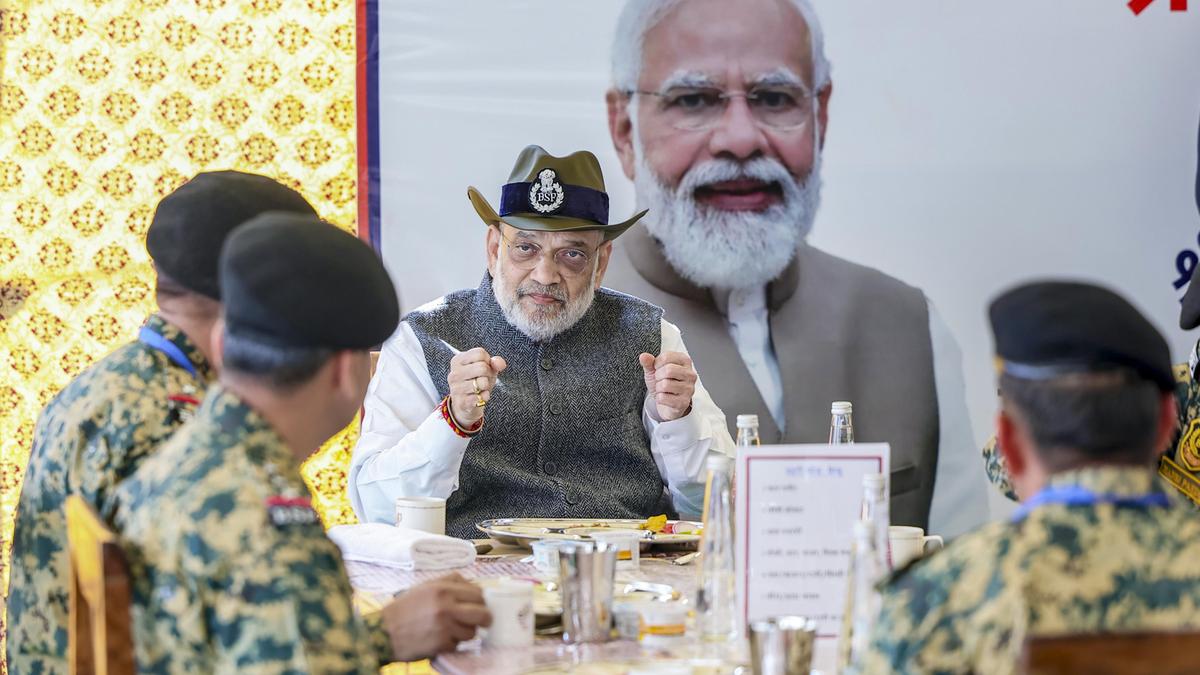
Union Home Minister Amit Shah visited border outposts in Jammu & Kashmir on February 6, 2026, emphasizing the need for advanced technological solutions to counter increased UAV activity along the International Border with Pakistan. The region has reported a surge in UAV sightings, suspected of being used to drop weapons, prompting a review of border security measures. Shah addressed Border Security Force (BSF) personnel, stressing vigilance and the integration of modern tools to strengthen defenses.
Shah lauded the armed forces’ role in ‘Operation Sindoor’ from 2025, where numerous enemy posts and terror launch pads were destroyed. He virtually inaugurated welfare schemes for border guards and chaired a high-level security review in Jammu, calling for strengthening security apparatus to maintain peace both on the borders and in the region.
Key Points:
- Amit Shah toured border outposts in Jammu & Kashmir on February 6, 2026.
- Increased UAV activity along the International Border is a primary concern.
- Five encounters between security forces and terrorists have occurred in the Jammu region this year, resulting in one soldier and three terrorists killed.
- Amit Shah emphasized the need for “advanced technological solutions” to counter emerging threats.
- ‘Operation Sindoor’ from 2025 saw the destruction of 118 enemy posts and three terror launch pads.
- Amit Shah chaired a high-level security review, calling for a “strengthening of the security apparatus in J&K.”
- Chief Minister Omar Abdullah is expected to attend a development review meeting on February 7.
Critical Analysis:
The article highlights the evolving nature of border security threats in Jammu & Kashmir. The increased use of UAVs to drop weapons is a significant shift from traditional infiltration methods. The Home Minister’s emphasis on technological solutions indicates a proactive approach to addressing this new challenge. The timing of the visit, coupled with the security review and planned meeting with Chief Minister Abdullah, suggests a coordinated effort to bolster security and development in the region. The other historical events listed, such as the call for efficient use of technology to check crimes and surrendering of illegal firearms, support the interpretation that the government is focused on the efficient and safe use of technology in crime and security.
Key Takeaways:
- Border security in Jammu & Kashmir is facing new challenges due to increased UAV activity.
- The Indian government is prioritizing technological solutions to counter these threats.
- Coordination between central and local authorities is emphasized to strengthen overall security.
- The visit is part of a broader strategy to maintain peace and security in the region.
- ‘Operation Sindoor’ served as a deterrent and highlighted the effectiveness of past security operations.
Impact Analysis:
The focus on advanced technological solutions and increased vigilance along the border suggests a long-term strategy to counter evolving threats. This could lead to increased investment in surveillance technology, enhanced training for security personnel, and potentially, further development of counter-UAV measures. The strengthening of the security apparatus is likely to have a ripple effect, impacting the overall security landscape in Jammu & Kashmir. The emphasis on maintaining peace, both on the borders and in the region, suggests a commitment to long-term stability and development. The political impact in Kashmir will likely depend on how these measures are implemented and perceived by the local population. If accompanied by community engagement and development initiatives, the measures could help to improve the security situation in the long-run.
 First Piper