
Thu Feb 05 15:02:11 UTC 2026: # Tiruchi Corporation Cracks Down on Illegal Sludge Dumping with Stiff Penalties and Revised Fees
The Story:
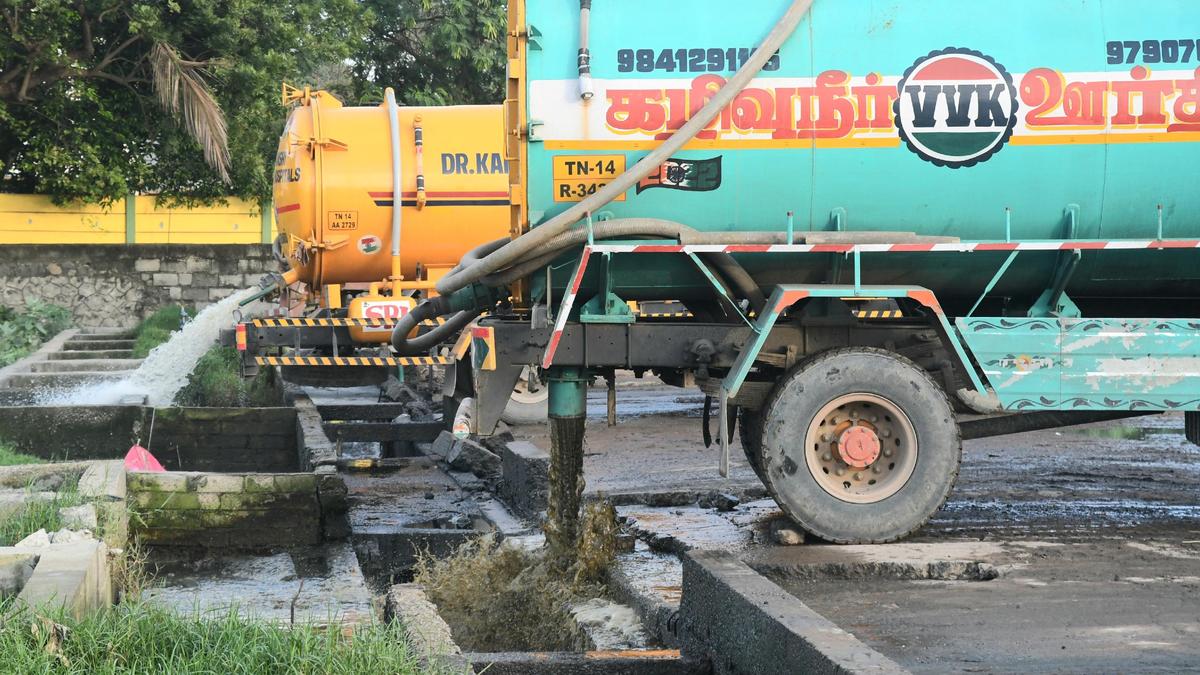
The Tiruchi Corporation is implementing stricter regulations and penalties to combat the illegal dumping of faecal sludge in unauthorized locations. This move includes a revision of user fees for desludging vehicles accessing designated decanting stations, increasing the cost to ₹200 per trip for up to 6,000 litres and ₹300 for larger loads, compared to the previous uniform charge of ₹100. The Corporation also plans to levy fines of ₹25,000 for first-time offenders and ₹50,000 for repeat offenders caught illegally dumping sludge.
Key Points:
* Revised user fees for desludging operators: ₹200 per trip (up to 6,000 litres) and ₹300 per trip (exceeding 6,000 litres).
* Penalties for illegal sludge dumping: ₹25,000 for the first offense and ₹50,000 for repeat offenses.
* Identification stickers are being pasted on registered desludging vehicles for easy verification by residents.
* GPS devices will be installed in all desludging vehicles to monitor their movements and ensure compliance.
* The Corporation is monitoring previously identified illegal dumping locations through its Integrated Command and Control Centre (ICCC).
* Currently, around 60 registered desludging operators are active in Tiruchi.
Critical Analysis:
The decision to crack down on illegal sludge dumping comes in the context of Tiruchi’s evolving urban landscape. The news of the Tiruchi Corporation raising ₹100 crore through municipal bonds for the Panjapur market indicates a focus on infrastructure development and revenue generation. Simultaneously, SUEZ taking over Kochi Corporation’s water supply distribution system suggests a trend towards outsourcing specialized services to improve efficiency. Given this context, the Corporation’s initiative to regulate desludging services and penalize illegal dumping can be seen as part of a broader strategy to improve sanitation, manage resources effectively, and protect the environment. Furthermore, the medical camp hosted for sanitation workers shows an effort to support the workforce responsible for managing sanitation infrastructure.
Key Takeaways:
* The Tiruchi Corporation is prioritizing improved sanitation and waste management practices.
* The revised fees and penalties aim to deter illegal dumping and ensure proper disposal of faecal sludge.
* Technology, such as GPS tracking and the ICCC, plays a key role in monitoring and enforcing regulations.
* The events highlight a multi-faceted approach to urban development, combining infrastructure projects, service outsourcing, and environmental regulations.
Impact Analysis:
The crackdown on illegal sludge dumping has the potential for long-term positive impacts on public health and the environment. By regulating desludging services and preventing unauthorized disposal of faecal waste, the Corporation can reduce the risk of water contamination, soil pollution, and the spread of disease. The financial penalties will likely generate additional revenue for the Corporation, which can be reinvested in sanitation infrastructure and services. The increased transparency through identification stickers and GPS tracking will enhance accountability and build public trust. This initiative could serve as a model for other urban centers in India facing similar challenges in managing faecal sludge and protecting the environment.
 First Piper