
Thu Feb 05 13:14:42 UTC 2026: ### Headline: Significant Stone Age Tool Discovery Reshapes Understanding of Prehistoric Tamil Nadu
The Story
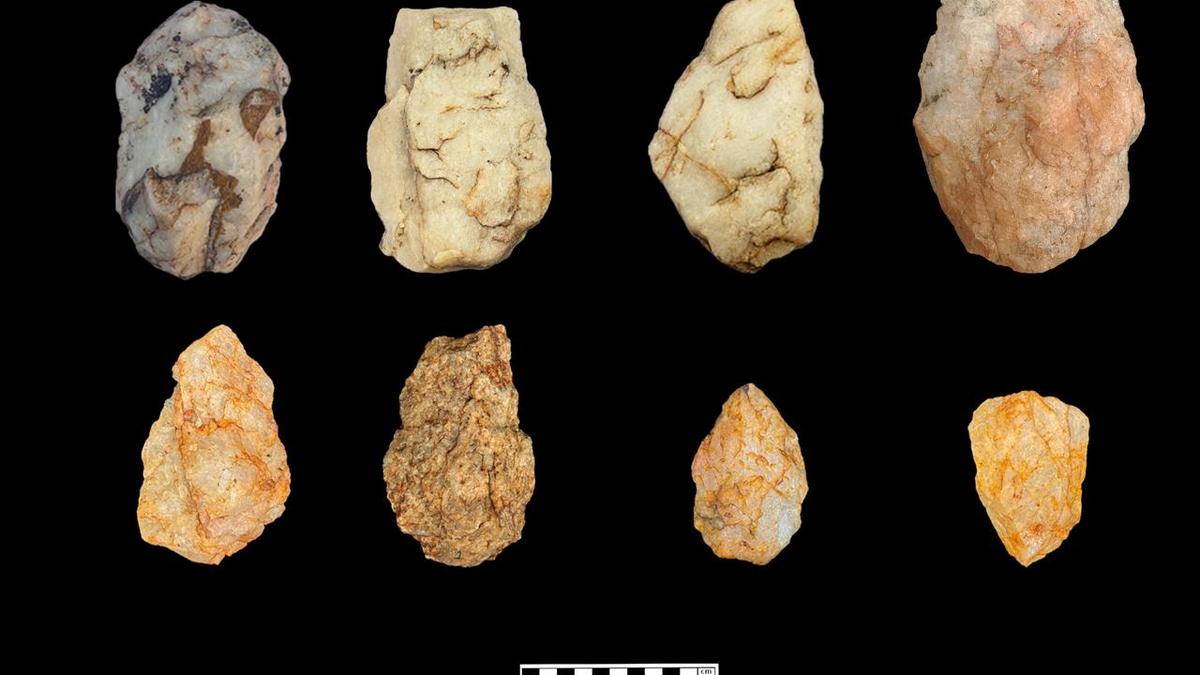
Archaeologists Bharath Krishnamoorthy and K. Pragatheeswaran, graduates of the University of Madras, have unearthed over 500 Stone Age tools in the Tiruchi, Pudukottai, and Namakkal districts of Tamil Nadu. The findings, dating back to the Lower and Middle Palaeolithic periods, include choppers, cleavers, and hand axes made primarily of quartz. This discovery is considered significant because it fills a major cultural gap in understanding the prehistoric occupation of this central region of Tamil Nadu, previously under-represented in Palaeolithic research.
The lithic assemblages, identified from sites like Kurumbappati, Mullipatti, and Sarugumalai, suggest both Lower and Middle Palaeolithic cultural phases, with the presence of microlithic tools indicating later prehistoric habitation. Jinu Koshy, excavation in-charge at the Department of Ancient History and Archaeology, University of Madras, confirmed the importance of these newly discovered and previously unrecorded sites, highlighting the shift in research focus from the Tiruvallur region to this central area.
Key Points
- Over 500 Stone Age tools discovered in Tiruchi, Pudukottai, and Namakkal districts.
- Tools date back to the Lower and Middle Palaeolithic periods.
- Discoveries include hand axes, cleavers, flakes, and cores.
- Sites identified as Kurumbappati, Kallikudi, Valkaradu, Veeramalai, Nadukattupatti, Mullipatti, Malampatti, Sarugumalai, Sitharmalai, and Thalaimalai.
- Discovery fills a significant gap in the understanding of prehistoric occupation in central Tamil Nadu.
Key Takeaways
- The discovery establishes central Tamil Nadu as an important prehistoric landscape.
- The finds suggest continuous human habitation in the region from the Lower Palaeolithic to later prehistoric phases.
- The research highlights the potential for further archaeological discoveries in previously under-explored regions of Tamil Nadu.
- The University of Madras plays a crucial role in archaeological research and training in the region.
Impact Analysis
This discovery has significant long-term implications for the study of Indian prehistory. It re-evaluates existing models of human migration and settlement patterns in South India. The finds may spur further archaeological investigations in central Tamil Nadu, potentially leading to the discovery of more sites and artifacts, enriching our understanding of early human life in the region. It could also affect tourism and educational programs focused on ancient history.
 First Piper