
Thu Feb 05 06:08:49 UTC 2026: ### Parliament Gridlocked as Opposition Protests Disrupt Budget Session
The Story:
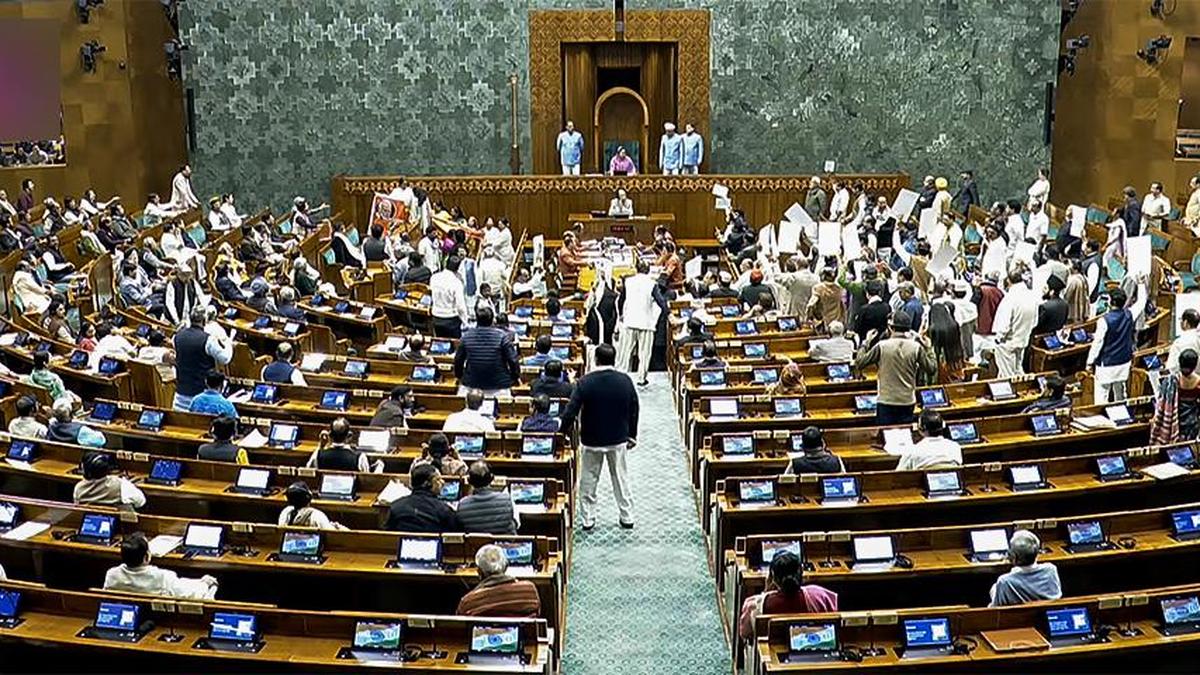
The Indian Parliament’s Budget Session continues to be fraught with disruptions as Opposition MPs created a ruckus in the Lok Sabha on February 4, 2026, leading to the adjournment of the House. The primary point of contention is the alleged silencing of the Leader of Opposition (LoP) in the Lok Sabha, Rahul Gandhi, regarding comments on the 2020 China standoff from former Army Chief General M.M. Naravane’s unpublished memoir. The Opposition is also demanding a discussion on the India-U.S. trade deal, with accusations that the government isn’t being transparent about its terms.
Amid the turmoil, both Houses are scheduled to continue the discussion on the motion of ‘Thanks to the President’s Address’ on February 5, 2026. Prime Minister Narendra Modi is expected to address the Rajya Sabha, however, the Lok Sabha’s proceedings remain stalled.
Key Points:
- Opposition MPs disrupted Lok Sabha proceedings, leading to adjournment on February 4, 2026.
- The Prime Minister’s reply to the Motion of Thanks in the Lok Sabha was cancelled due to disruptions.
- The Opposition is protesting the alleged silencing of LoP Rahul Gandhi regarding General Naravane’s memoir.
- The Opposition demands a debate on the India-U.S. trade deal, especially concerning oil imports and tariffs.
- Congress MP Manish Tewari moved an adjournment motion in the Lok Sabha, seeking a debate on the India-U.S. trade deal and energy understanding.
- The Budget session is scheduled to run for 65 days, adjourning on February 13 and reconvening on March 9.
Critical Analysis:
The historical context indicates an escalating pattern of parliamentary disruptions. With the Budget Session underway, the Opposition appears to be using every opportunity to challenge the government’s policies and transparency. The specific focus on the India-U.S. trade deal and the LoP’s alleged silencing suggests a coordinated strategy to undermine the government’s credibility on both domestic and international fronts. The mention of the Manipur assembly session starting simultaneously highlights potential regional tensions that could further complicate the national political landscape.
Key Takeaways:
- The Indian Parliament faces significant challenges in conducting its business due to persistent Opposition protests.
- The India-U.S. trade deal is a major point of contention, raising concerns about transparency and potential concessions made by the Indian government.
- The Opposition is strategically leveraging procedural rules and media attention to amplify their grievances.
- The adjournment of the Lok Sabha undermines the legislative process and creates uncertainty regarding key policy debates.
- The Budget session is at risk of being overshadowed by political maneuvering, hindering the government’s ability to pass crucial legislation.
Impact Analysis:
The continuous disruptions in Parliament could have several long-term implications. Firstly, the government’s legislative agenda may face significant delays, impacting economic reforms and other policy initiatives. Secondly, the constant bickering and lack of dialogue could erode public trust in the democratic process. Thirdly, the controversy surrounding the India-U.S. trade deal could strain bilateral relations if not handled with transparency and diplomacy. Finally, the silencing of the opposition could lead to further radicalization and polarization of the political landscape. These events signal a need for greater dialogue and compromise to ensure the effective functioning of the Indian Parliament.
 First Piper