
Thu Feb 05 07:32:09 UTC 2026: ### Parliament Adjourned Amidst Ruckus, Opposition Protests Disrupt Proceedings
The Story:
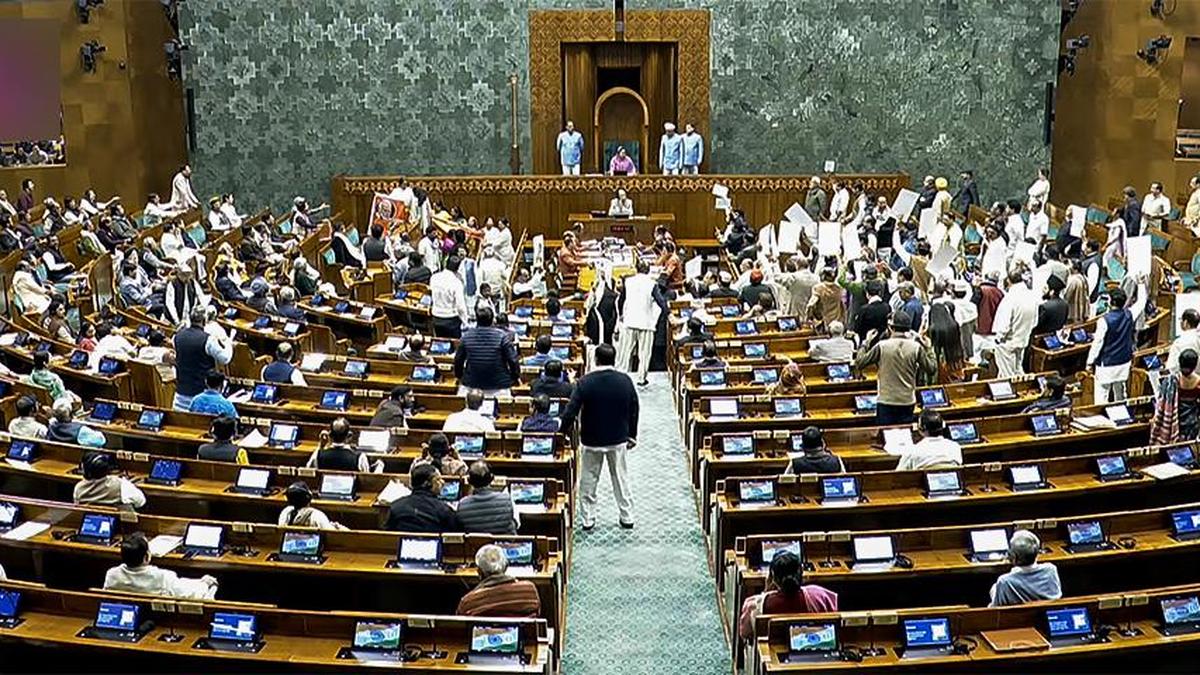
The Indian Parliament witnessed tumultuous scenes on February 5, 2026, with repeated adjournments in both the Lok Sabha and Rajya Sabha due to persistent protests by Opposition MPs. The Lok Sabha eventually passed the Motion of Thanks on the President’s address amidst the uproar, without a customary reply from the Prime Minister. The Opposition voiced concerns over various issues, including alleged restrictions on Rahul Gandhi’s speech in the Lower House, the India-U.S. trade deal, rising GPU costs for AI development, and the need for a Supreme Court Bench in Tamil Nadu.
Key Points:
* Lok Sabha adjourned multiple times (February 5, 2026) due to Opposition sloganeering.
* The Motion of Thanks on the President’s address passed in Lok Sabha without the Prime Minister’s reply.
* AAP MP Raghav Chadda raised concerns over rising GPU costs and India’s AI ambitions.
* AIADMK MP Dr. Thambidurai called for a Supreme Court Bench in Tamil Nadu and renaming the Madras High Court.
* Congress MP Manish Tewari moved an adjournment motion regarding the India-U.S. trade deal and energy understanding.
* Opposition MPs protested against not allowing Rahul Gandhi to speak in the Lok Sabha.
* Finance Minister Nirmala Sitharaman objected to Mallikarjun Kharge’s use of the word “lynching.”
Critical Analysis:
The series of adjournments and disruptive protests highlight a deep chasm between the ruling party and the opposition. The context reveals that this isn’t an isolated incident but a continuation of disruptions occurring throughout the budget session. The Opposition’s strategy seems to be aimed at drawing attention to their concerns, including Rahul Gandhi’s lack of speaking opportunity and the India-US trade deal, by disrupting normal parliamentary proceedings. The government, on the other hand, accuses the Opposition of being “unruly” and not allowing the House to function.
Key Takeaways:
* Parliamentary proceedings are being significantly hampered by political disagreements.
* The Opposition is employing disruptive tactics to voice their concerns.
* The government accuses the Opposition of creating hurdles in the functioning of the Parliament.
* Disputes over procedures and language used during debates are escalating tensions.
* The India-U.S. trade deal and domestic AI development are key areas of contention.
Impact Analysis:
The constant disruptions could have a long-term impact on the legislative process and public trust in the Parliament. Failure to address the concerns raised by the Opposition and reach a consensus on critical issues like the India-U.S. trade deal and AI development could lead to policy stagnation. Furthermore, if this pattern continues, it could erode public confidence in the government’s ability to govern effectively and lead to a deeper political divide.
 First Piper