
Thu Feb 05 05:13:38 UTC 2026: ### Headline: Opposition Disrupts Parliament Over India-U.S. Trade Deal and Alleged Russian Oil Agreement
The Story:
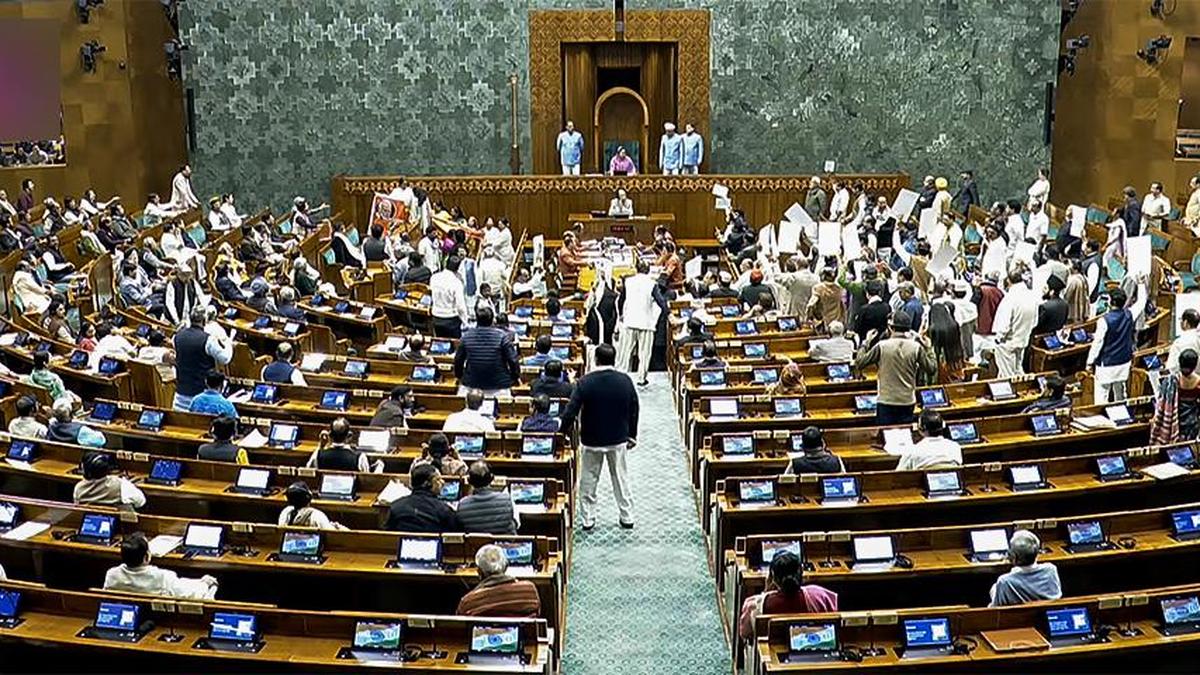
On February 5, 2026, India’s Parliament faced disruption during the Budget Session as Opposition MPs created a ruckus in the Lok Sabha, leading to the adjournment of proceedings on February 4, 2026. The disruption prevented Prime Minister Narendra Modi from replying to the Motion of Thanks on the President’s Address. The session is scheduled to continue with discussions on the Motion of Thanks, but Congress MP Manish Tewari has moved an adjournment motion seeking a debate on the India-U.S. trade deal and energy understanding.
Key Points:
- The Lok Sabha was adjourned on February 4, 2026, due to disruptions by Opposition members.
- Prime Minister Narendra Modi was unable to reply to the Motion of Thanks on the President’s Address due to the adjournment.
- Congress MP Manish Tewari moved an adjournment motion to debate the India-U.S. trade deal and alleged agreements regarding Russian oil imports.
- The India-U.S. trade deal reduces tariffs on Indian goods in the U.S. to 18%.
- The Budget session is scheduled to comprise 30 sittings over 65 days, concluding on April 2, 2026.
Critical Analysis:
The disruption in Parliament and the adjournment motion indicate growing tensions over the terms of the India-U.S. trade deal, particularly concerns that India is making significant concessions to the U.S., potentially at the expense of its relationship with Russia. The focus on Trump’s alleged claims suggests a partisan attempt to discredit the current administration by highlighting potential policy shifts and economic dependencies. The historical context does not explicitly indicate prior trade policy issues that would reveal any strategic depth, which limits a deeper analysis for this prompt.
Key Takeaways:
- Opposition parties are strategically using parliamentary procedures to challenge the government’s economic policies, especially trade agreements with the U.S.
- Energy security, particularly India’s relationship with Russia regarding oil imports, is a significant point of contention.
- The disruption highlights underlying concerns about the balance of power and potential economic disadvantages for India in the U.S. trade relationship.
- The mention of Venezuela suggests the trade deal is attempting to reconfigure established import patterns.
Impact Analysis:
The parliamentary disruptions and the adjournment motion could potentially delay or alter the course of the Budget session. Furthermore, the controversy surrounding the India-U.S. trade deal and energy understanding could impact future trade negotiations and diplomatic relations between India, the U.S., and Russia. The focus on trade terms and oil imports may lead to increased scrutiny of government policies and potential adjustments in trade strategies.
 First Piper